
Lobaria virens
Lobaria virens
Description
Symptoms
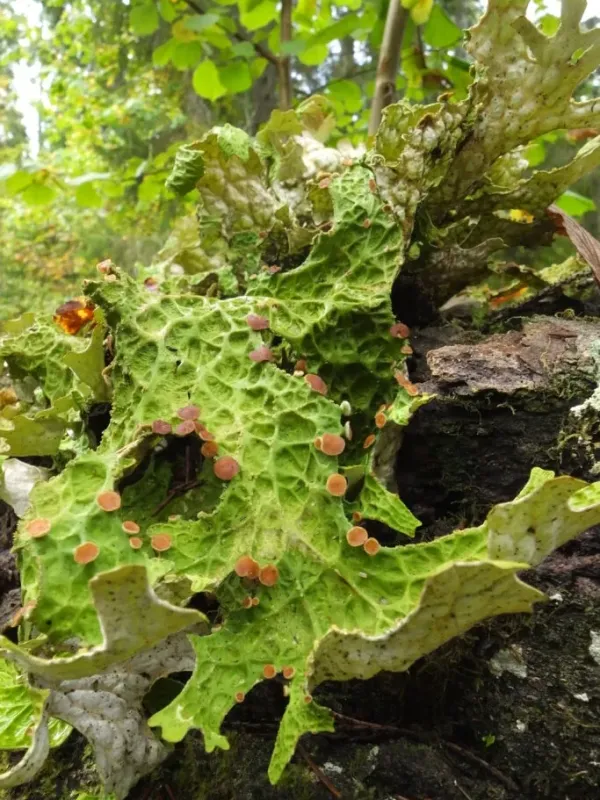
The main visible signs of Lobaria virens include its large, broad lobes that often form extensive, leafy patches on the bark.
The thallus color ranges from deep olive-green in wet conditions to a browner, more brittle appearance when dried out.
The surface is typically wrinkled or pitted, with a distinctive texture that separates it from common crustose lichens found in gardens.
The lichen is attached to the tree surface via rhizines, which do not penetrate deep into the woody tissues.
Unlike fungal infections, the presence of this lichen does not lead to rot, lesions, or sap flow issues on the host plant.
Pathogen
It is important to clarify that Lobaria virens is not a plant disease, a pathogen, or a parasite.
It is a large foliose lichen belonging to the Peltigeraceae family, formed through a symbiotic relationship between a fungus and a photosynthetic partner.
This organism does not infect plant cells, extract nutrients from tree sap, or damage the bark of its host.
Instead, it uses the tree trunk or branches solely as an anchor for its growth, which is a classic behavior of epiphytes.
Scientific studies classify this lichen as a reliable bioindicator of air quality and a healthy, stable ecosystem.
Conditions for development
Lobaria virens requires a high-humidity environment and stable microclimatic conditions to thrive.
It is typically found in shady, old-growth forests where it can colonize the bark of trees like oaks or hazelnuts.
Atmospheric purity is a critical requirement; the species is highly sensitive to air pollution, particularly sulfur dioxide.
The growth rate of this lichen is exceptionally slow, which is why it is almost exclusively seen on mature trees.
It prefers areas with limited direct sunlight and sheltered positions to maintain the moisture levels required for its metabolism.
Why it matters
Lobaria virens does not cause harm to agricultural or ornamental trees.
The common perception that lichens damage trees is a horticultural myth; they do not interfere with the plant's physiological processes.
Because the lichen is strictly an epiphyte, the underlying tree remains completely unaffected by its presence.
The only minor concern is that dense lichen cover might provide shelter for dormant insects, but this does not constitute a disease state.
Therefore, its presence should be viewed as a sign of environmental health rather than a target for pest or disease management programs.
Protection
No control measures are necessary for Lobaria virens, as it poses no threat to the vitality of the trees.
If the appearance of the lichen is considered undesirable for aesthetic reasons, it can be gently brushed off using a soft brush.
When removing it, care must be taken not to scratch or gouge the living bark, as open wounds can invite actual pathogens.
Chemical applications are strictly discouraged, as they are unnecessary and may harm the beneficial biodiversity of the garden.
Standard orchard maintenance, such as proper pruning for airflow and sunlight, will naturally limit the development of such epiphytes.
Discussion
No discussions yet — be the first.