
Lobaria
Lobaria
Description
Symptoms
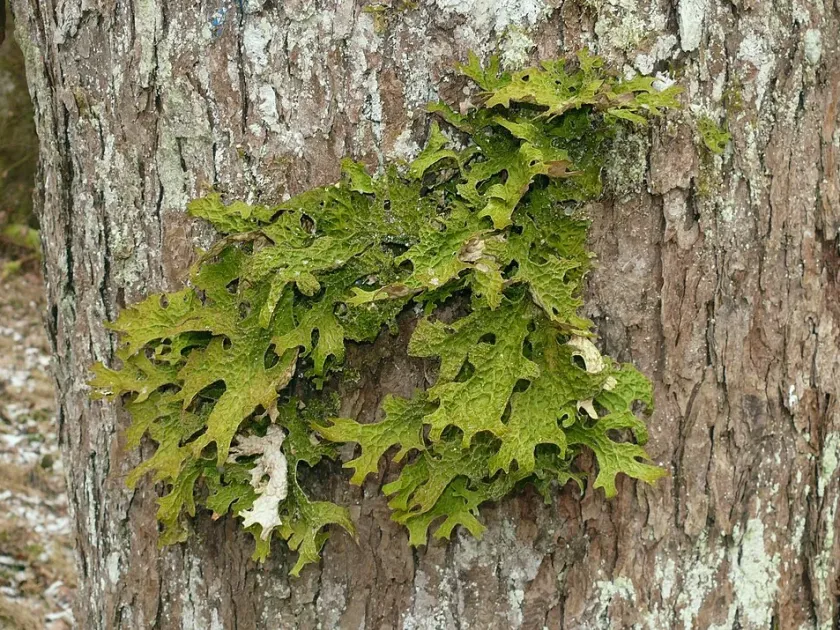
Lobaria is a genus of large, leafy lichens that are often mistaken for tree diseases. They appear as broad, lobe-like structures with a distinct green or brownish-green color when hydrated.
The thallus of Lobaria is leathery and firm. On the underside, you may notice tiny pore-like structures called cyphellae, which facilitate gas exchange for the organism.
It grows tightly pressed against the bark, but it does not penetrate the tree's internal tissues. Unlike fungal pathogens, it does not cause lesions, rot, or decay in the wood.
These lichens typically inhabit mature deciduous trees like oaks, maples, or beeches. They can live on the same tree for decades without causing any observable stress to the host.
Their presence is a sign of high air quality and consistent humidity. They are widely recognized as bioindicators, as they cannot survive in areas with high levels of atmospheric pollution.
Pathogen
Lobaria is not a plant pathogen. It is a symbiotic organism comprised of an ascomycete fungus, green algae, and nitrogen-fixing cyanobacteria of the genus Nostoc.
Biologically, it is classified as an epiphyte. It utilizes the tree exclusively as a physical support structure, relying on its own biological processes for survival and growth.
The nutrients required for its metabolism are obtained from atmospheric dust, precipitation, and nitrogen fixation by the cyanobacteria, rather than the tree's sap.
Because it lacks haustoria (parasitic feeding structures), it does not extract water or minerals from the host tree. It is an independent organism simply using the bark as a surface.
Classifying Lobaria as a disease is a common misconception. It plays no role in the infection cycles of trees and does not interact with the plant's immune system.
Conditions for development
The growth of Lobaria requires specific environmental conditions, primarily high levels of atmospheric moisture. It thrives in humid, cool, and well-ventilated forest environments.
Temperature stability is crucial. The lichen is sensitive to extreme heat and prolonged desiccation, which is why it is rarely found in open, dry orchard environments.
Air purity is the most significant factor. Even minor concentrations of sulfur dioxide or other industrial pollutants are toxic to Lobaria, causing it to die off rapidly.
Lobaria requires a long time to establish a colony. It is typically found on older trees with stable, non-growing bark, as it cannot compete on fast-growing young saplings.
It prefers areas that are sheltered from direct, scorching sunlight, which explains why it is most commonly found on the shaded sides of tree trunks or in dense canopies.
Why it matters
Lobaria causes no harm to fruit or ornamental trees. It does not inhibit growth, reduce yield, or cause any structural damage to the bark or heartwood.
Claims that lichens "suffocate" trees are scientifically unfounded. They do not block lenticels or interfere with the tree's ability to undergo gas exchange.
There is no economic loss associated with this lichen. It does not compete for space or nutrients, making it a harmless, albeit visible, guest on the tree trunk.
Compared to true tree diseases like cankers or rots, Lobaria is completely benign. It does not contribute to plant death or tree decline in any capacity.
Its presence is purely aesthetic and ecological, reflecting a balanced ecosystem where the tree and the lichen coexist without any parasitic relationship.
Protection
No control measures are necessary for Lobaria, as it does not pose a threat to plant health. Attempting to eradicate it is ecologically counterproductive.
If you prefer to clean the bark for aesthetic reasons, use only mechanical removal with a soft brush during the dormant season, taking care not to damage the bark.
The application of fungicides is strongly discouraged. It serves no purpose in "curing" the tree and can harm beneficial microorganisms in your garden's ecosystem.
Focus on maintaining tree vigor through proper pruning, irrigation, and balanced fertilization. A healthy, well-maintained tree is naturally resilient to genuine diseases.
Appreciate the presence of Lobaria as an indicator of a healthy environment. It is a natural part of the forest ecology that poses no risk to your horticultural efforts.
Discussion
No discussions yet — be the first.