
Lichinaceae
Lichinaceae
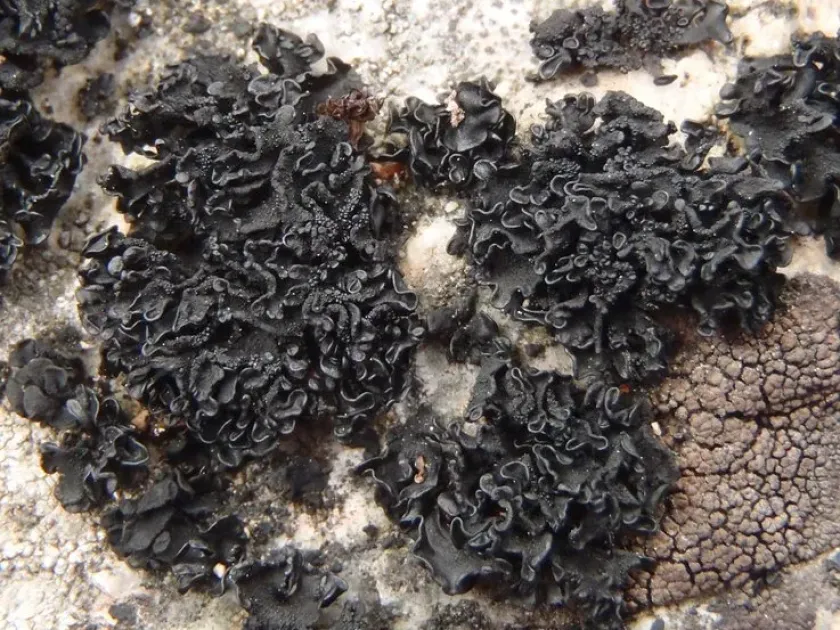
Description
Symptoms
Lichinaceae is a family of lichens that typically colonize the bark of old trees, rocks, or soil. They are characterized by their dark, often black or dark brown appearance, frequently presenting a granular or crustose structure.
The most visible sign of their presence is the formation of compact colonies on the trunks and branches of fruit trees. Unlike parasitic fungi, they do not cause necrosis, sunken lesions, or decay, as they are not true pathogens.
Their color ranges from deep gray to coal-black, which makes them stand out on the lighter bark of various fruit species. During rainy weather, these lichens often become more saturated in color and slightly swollen, which is a hallmark of the family.
It is crucial to distinguish Lichinaceae from actual fungal pathogens like black rot or other forms of tree bark diseases. Lichens are strictly superficial and do not penetrate the internal wood tissues.
They are primarily found on older trees with slower bark renewal processes. Their presence is usually an indicator of high ambient humidity and poor air circulation in the garden rather than an active infection.
Pathogen
From an agronomic and biological perspective, Lichinaceae are not plant pathogens. They are symbiotic organisms consisting of a fungal partner and cyanobacteria, which use the tree merely as a substrate for attachment.
They thrive by absorbing moisture and nutrients from the air and dust, meaning they do not derive energy from the tree itself. Thus, they are not causative agents of plant disease in the traditional sense.
While they are not parasites, their colonization often indicates that the tree is growing slowly or is in a neglected state. Therefore, they are often associated with trees that are susceptible to other, more harmful fungal diseases.
The biology of the Lichinaceae family is uniquely tied to their cyanobacterial component, which allows them to photosynthesize. This independence from the host plant's internal resources confirms their role as epiphytes rather than parasites.
In summary, these organisms should be viewed as ecological indicators, not as primary infectious agents responsible for the degradation of agricultural crops.
Conditions for development
The development of Lichinaceae lichens is favored by high humidity, shade, and poor ventilation. Densely planted orchards with thick, untrimmed canopies provide ideal conditions for these organisms to thrive.
Trees with rough, aging bark are the most common hosts. In older gardens where maintenance and bark care have been neglected, these lichens establish themselves easily on the stable surfaces of the bark.
Moderate temperatures combined with frequent precipitation facilitate their metabolic activity. They are highly resilient and can survive dry spells by entering a dormant state, resuming growth once conditions improve.
Poor agricultural practices, such as lack of pruning, lead to stagnant air pockets within the tree crown, which is a key factor in promoting the growth of various lichen species.
Lack of proper soil management and excessive ground moisture can also contribute to the creation of a microclimate that supports lichen growth on the lower parts of tree trunks.
Why it matters
Direct damage caused by Lichinaceae is minimal; however, they can create a niche for harmful pests. The crust-like layers of lichens provide excellent overwintering sites for mites, aphids, and spores of true pathogenic fungi.
By covering the bark in dense layers, they may slightly interfere with gas exchange through the lenticels, although this rarely causes significant stress to a healthy, mature tree.
A secondary issue is their ability to retain moisture on the bark surface. In the presence of bark fissures or frost cracks, this retained moisture can promote the development of rot and opportunistic infections.
Visually, heavy lichen growth gives an orchard an unkempt and aged appearance, which may reduce the perceived value and aesthetic appeal of the nursery or orchard.
Overall, they serve as a marker for trees that might require professional attention, rejuvenation pruning, and better orchard sanitation.
Protection
Mechanical cleaning of trunks and main branches is the most effective method for removal. Using specialized scrapers or stiff brushes during the dormant season helps to remove dead bark and lichen colonies effectively.
Whitewashing tree trunks with a lime solution supplemented with copper sulfate provides a long-lasting protective barrier that discourages the re-colonization of lichen spores.
Annual sanitary and thinning pruning is essential to improve airflow throughout the canopy. This reduces humidity levels, making the environment much less hospitable for lichen growth.
Applying copper-based fungicides at the start of the season is a standard horticultural practice that helps suppress lichen development as part of an integrated disease management program.
- Periodic removal of dead or loose bark.
- Regular pruning to improve crown ventilation.
- Balanced fertilization to promote tree vigor and rapid bark turnover.
Discussion
No discussions yet — be the first.