
Lichina confinis
Lichina confinis
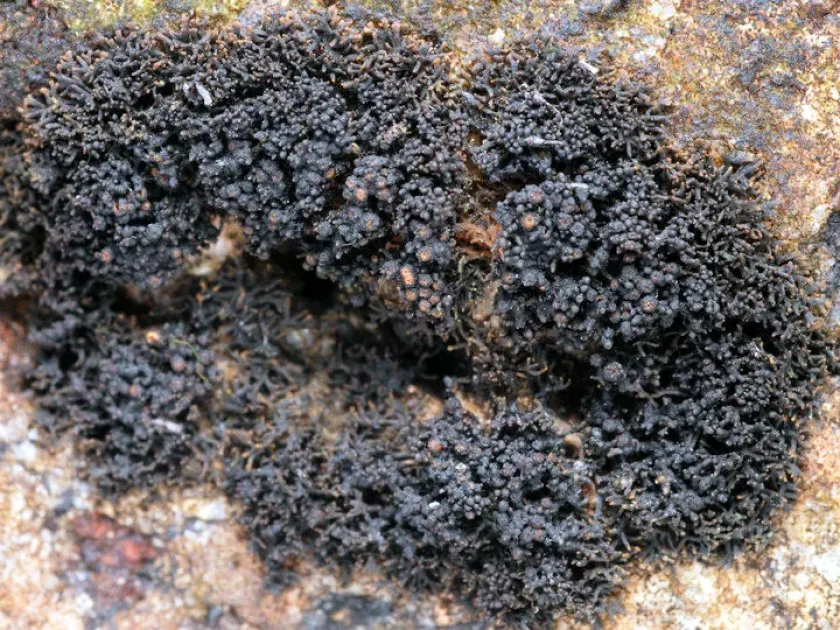
Description
Pathogen
Lichina confinis is not a plant disease and does not cause harm to agricultural crops or garden plants.
It is a biological species of lichen, a symbiosis between a fungal partner and cyanobacteria from the genus Calothrix.
The organism is scientifically categorized as a marine lichen that thrives in specific rocky coastal environments.
Its thallus morphology consists of dark, hair-like branched structures that are well-adapted to the intertidal zone.
In biological terms, it is a non-pathogenic organism that plays an important role in coastal ecology.
Conditions for development
The growth and spread of Lichina confinis are determined by salt spray and regular tidal inundation.
It prefers hard substrates, specifically rocky surfaces located in the upper littoral zone of the shoreline.
The species requires high levels of ambient humidity to maintain its metabolic activities between tides.
It is extremely tolerant to high salinity levels and desiccation during low tide periods.
Optimal environmental conditions include moderate wave action and exposure to marine aerosol.
Why it matters
Lichina confinis presents zero risk to agricultural productivity as it does not parasitize vascular plants.
There is no evidence of phytotoxic activity associated with this lichen species towards terrestrial crops.
The organism is entirely restricted to marine environments, far from arable land or protected greenhouses.
It does not colonize living plant tissues, making it harmless to orchards, fields, or vegetable gardens.
Misidentifying this lichen as a pathogen is a mistake, as it remains a natural inhabitant of the coast.
Protection
No protective measures or pesticides are required as the species is ecologically neutral to human activities.
Mechanical removal is the only possible way to clear it from artificial stone structures near the shore.
Chemical control programs are completely unnecessary and counterproductive to ecosystem health.
There is no agronomical justification for targeting this species with herbicides or fungicides.
Preventive measures are irrelevant because the lichen does not pose a threat to plant health management.
Discussion
No discussions yet — be the first.