
Lichenotheliaceae fungi
Lichenotheliaceae
Description
Symptoms
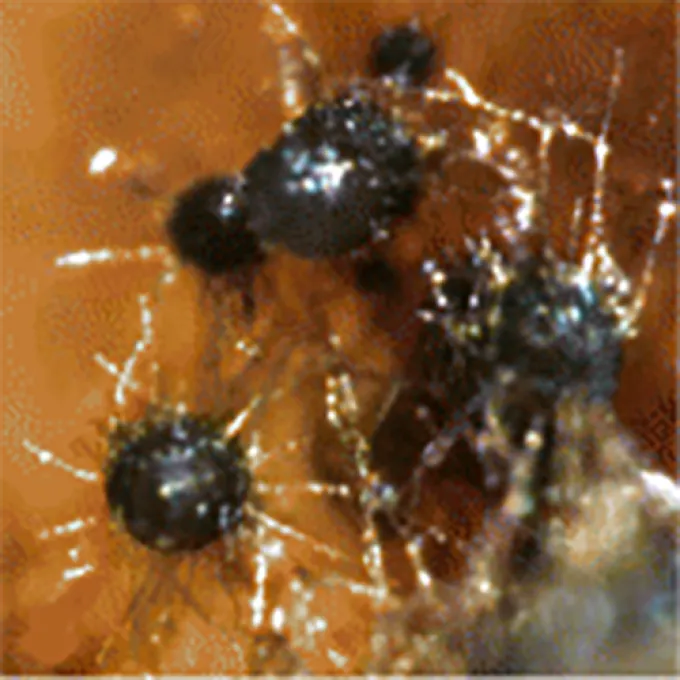
Symptoms often manifest as small, punctate, dark-colored fruiting bodies scattered across the surface of the plant epidermis, specifically on bark or twigs.
Discoloration of the surrounding plant tissue may occur, appearing as faint necrotic spots or irregular darkened patches. These areas often lack healthy tissue texture.
In advanced cases, the bark might show micro-cracking or peeling, which provides entry points for additional pathogens, complicating the diagnosis.
Growth is often slow, and signs may be subtle, appearing as a crust-like or granular layer that blends into the natural texture of the host plant's surface.
- Small dark fruiting bodies (ascomata).
- Localized epidermal necrosis.
- Micro-cracking of the bark.
- Reduced vigor of young shoots.
Pathogen
The family Lichenotheliaceae belongs to the order Lichenotheliales within the class Dothideomycetes. These fungi are recognized as microscopic pathogens and saprotrophs that inhabit the surfaces of various plant species.
The pathogen is characterized by the production of small, often black, immersed or superficial ascomata. These structures are adapted to withstand fluctuating environmental conditions.
Biologically, these fungi are frequently associated with the bark of trees and shrubs, where they colonize the outer layers and may penetrate deeper tissues if the plant is weakened.
Research suggests that their distribution is global, facilitated by the high resistance of their spores to heat and desiccation, which allows them to persist in unfavorable environments.
In a pathological sense, they serve as opportunistic colonizers that thrive on nutrient-rich surfaces exposed by structural damage or physiological stress of the host plant.
Conditions for development
Development of Lichenotheliaceae is primarily driven by high atmospheric humidity and persistent surface moisture, which are essential for spore germination.
Poor ventilation and dense canopy growth create ideal microclimates for these fungi, where moisture remains trapped for extended periods.
Optimal temperatures for proliferation typically range within moderate limits, allowing for steady growth during the active growing season.
Mechanical injuries, such as frost cracks, pruning wounds, or pest damage, significantly increase the susceptibility of plants to infection by these fungi.
Shaded environments with low light intensity are particularly conducive to the establishment and spread of fungal colonies on the trunks of trees.
Why it matters
The harm caused by these fungi involves the disruption of normal epidermal functions, potentially interfering with gas exchange and protection of the plant against environmental stress.
By colonizing the bark, these pathogens can impede the transport of nutrients and lead to the weakening of branches, causing dieback in severe infestations.
Their presence weakens the plant's overall defense system, making it a target for secondary infections by more aggressive bacterial or fungal pathogens.
In ornamental and orchard crops, the aesthetic and commercial value is reduced due to the visible presence of fungal structures and necrotic bark lesions.
If left unmanaged, chronic infections contribute to the premature senescence of branches and reduced overall plant longevity in commercial plantations.
Protection
Sanitary management, including the removal and destruction of heavily infected limbs, is the most effective approach to reducing the inoculum level.
Proper pruning practices that open the canopy to air and light are essential to prevent the accumulation of humidity required by the fungi.
Application of copper-based fungicides in the early spring can significantly reduce spore populations and prevent the establishment of new colonies.
Ensuring that all pruning wounds and mechanical injuries are promptly treated with protective sealants helps to block entry pathways.
Maintaining optimal plant health through balanced fertilization and stress management helps the plant develop stronger protective barriers against colonization.
Discussion
No discussions yet — be the first.