
Rudbeckia leptosphaeria leaf spot
Leptosphaeria purpurea
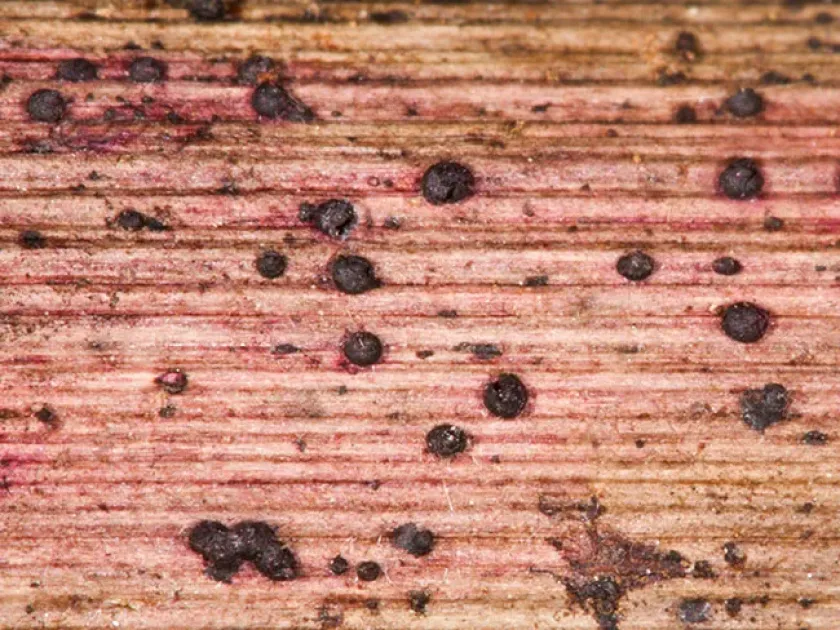
Description
Symptoms
The main symptoms of the disease are characterized by the appearance of irregular spots that primarily affect the leaves of the plant.
Initially, small brown or tan spots appear, which gradually expand and merge, eventually covering large portions of the leaf tissue.
As the infection progresses, the fungal fruiting bodies, known as pseudothecia, develop as tiny dark dots within the necrotic areas.
Heavy infection frequently causes leaves to wither and drop prematurely, severely impacting the plant's overall aesthetic value.
Under conditions of high humidity, a faint grayish mold may appear on the lesions, which consists of the fungus's reproductive spores.
Pathogen
The causative agent of this disease is the ascomycete fungus Leptosphaeria purpurea, which often features a Phoma anamorph state.
It is a hardy pathogen capable of surviving in the soil or on infected plant debris through the winter as mycelium or as fruiting bodies.
The fungus is host-specific to members of the Asteraceae family, with a notable preference for the Rudbeckia genus.
The life cycle of the pathogen is highly dependent on environmental conditions, with spores spreading via wind currents and rain splashes.
Upon infecting the host, the fungal mycelium grows intercellularly, systematically degrading the leaf structure and hindering plant metabolism.
Conditions for development
The disease thrives in high humidity environments, particularly during rainy seasons or when overhead irrigation is used frequently.
The optimal temperature range for the development and spread of this fungus is between 18°C and 25°C (64°F to 77°F).
Poor ventilation in densely planted areas creates a stagnant microclimate that encourages spore germination and rapid plant infection.
Prolonged presence of water droplets on the leaf surface is a critical environmental factor for the initiation of a new infection cycle.
Plants that are stressed, malnourished, or suffering from improper care are significantly more susceptible to the fungal invasion.
Why it matters
The infection leads to a significant decline in the visual appeal of Rudbeckia plants, making them unsuitable for landscaping purposes.
Reduction in the active photosynthetic leaf area weakens the plant's overall vigor and makes it vulnerable to secondary pathogens.
Massive outbreaks can significantly shorten the blooming period and reduce the overall lifespan of the plant in the landscape.
In severe cases, the infection causes the death of individual stems, compromising the structural integrity and density of the clump.
Infected individuals serve as an inoculum reservoir, potentially spreading the fungal spores to other sensitive plants in the area.
Protection
The primary control measure is strict sanitation, which involves removing and destroying all infected plant debris at the end of the season.
Proper horticultural practices, such as maintaining correct spacing between plants, are essential to ensure adequate air circulation.
If symptoms appear, systemic or contact fungicides containing copper or triazoles can be effective in managing the spread of the disease.
Avoid overhead watering to keep foliage as dry as possible, shifting to drip irrigation methods to reduce the risk of infection.
- Sourcing healthy and certified planting material.
- Practicing crop rotation to avoid pathogen accumulation.
- Promptly rogueing and removing severely infected plant parts.
- Regular inspection of the garden for early disease signs.
- Use of biological control agents as a preventative measure.
Discussion
No discussions yet — be the first.