
Phoma stem canker
Leptosphaeria fusispora
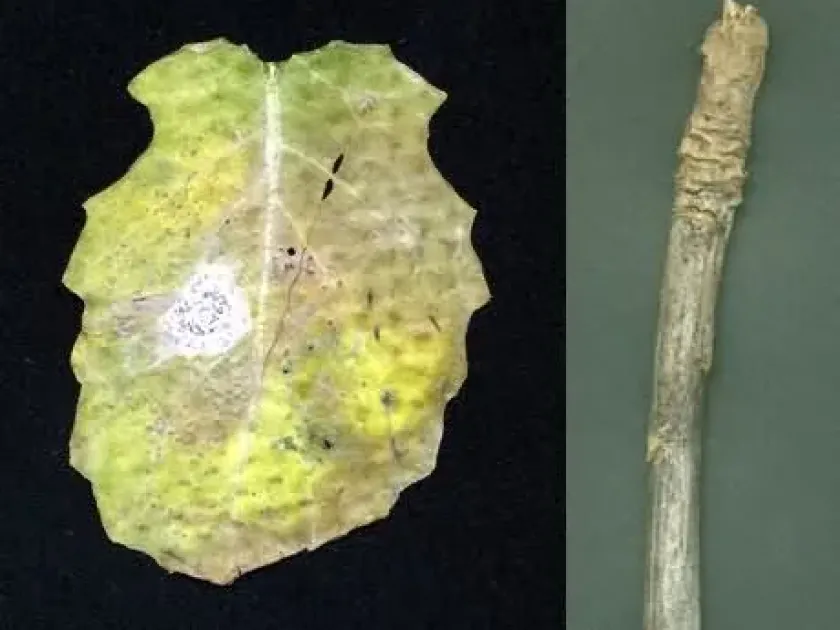
Description
Symptoms
Initial symptoms appear as circular, light-colored leaf spots dotted with small black pycnidia. These spots are usually the first warning sign that the pathogen is active in the canopy.
The most serious symptom is the development of a canker at the stem base, near the root collar. This necrotic lesion darkens, dries out, and eventually causes the plant to girdle and collapse.
Internal examination of the stem base typically reveals a dry, woody necrosis, which interferes with the vascular system and restricts the transport of water and nutrients to the plant apex.
Severely infected plants often show signs of premature ripening and pod shriveling. In late stages, the infected stem tissue may become brittle, leading to significant lodging during windy conditions.
Young seedlings infected during the early stages may exhibit stunted growth, chlorosis, and in many cases, total plant mortality, leading to gaps in the field population.
Pathogen
The disease known as Phoma stem canker or blackleg is caused by the fungus Leptosphaeria fusispora (anamorph Phoma lingam). It is recognized as one of the most destructive diseases affecting oilseed rape and other cruciferous crops globally.
The pathogen survives on infected crop residues in the soil for several years by producing durable structures like pycnidia and pseudothecia. These structures serve as the primary source of infection in subsequent growing seasons.
During wet weather, ascospores are released and spread by wind over long distances to infect healthy leaves of young plants. Once infection occurs on leaves, the fungus moves systemically through the plant tissues towards the stem base.
The disease life cycle is highly specialized, allowing it to remain dormant in crop debris while waiting for suitable environmental conditions to re-infect susceptible host plants.
Research confirms that Leptosphaeria fusispora exhibits high genetic variability, which poses challenges for breeding resistant cultivars and maintaining long-term efficacy of fungicides.
Conditions for development
Phoma stem canker development is favored by mild temperatures (15-20°C) and consistent moisture. High humidity and frequent rainfall are essential for the dispersal of spores from debris to leaves.
Dense crop stands create a humid microclimate that promotes infection rates. Furthermore, early sowing dates often result in larger leaf areas being exposed to ascospore showers during the autumn infection window.
Mechanical damage to the leaf surface, caused by hail, insect grazing, or agricultural machinery, provides easy entry points for the fungal mycelium to invade healthy plant tissues.
Continuous cropping without appropriate rotation cycles increases the inoculum pressure in the soil. Even a 3-year gap between Brassica crops significantly reduces the incidence of the disease.
Alternative hosts, such as wild cruciferous weeds, act as reservoirs for the pathogen, allowing the fungus to survive between oilseed rape harvest and the next planting season.
Why it matters
The disease causes substantial yield losses, sometimes exceeding 50% in severe cases. This is primarily due to reduced plant population, poor canopy structure, and compromised seed filling.
Lodging caused by the stem canker makes mechanical harvesting difficult and leads to high levels of grain loss during the cutting process, effectively reducing the recoverable yield.
Infection leads to poor oil content and lower thousand-seed weight, which significantly impacts the market quality and value of the harvested oilseed rape crop.
Seed-borne transmission remains a concern, as contaminated seeds can introduce the pathogen into new areas, potentially leading to poor emergence and seedling blight in the next generation.
By weakening the plant's structural integrity, the pathogen increases susceptibility to other secondary fungal infections and environmental stresses, compounding the negative impact on the crop.
Protection
Integrated disease management starts with the use of clean, fungicide-treated seeds. This practice is vital to prevent the introduction of primary infection via the seed coat.
Crop rotation is the most effective cultural practice. Implementing a rotation of at least 4 years between oilseed rape crops drastically reduces the availability of inoculum in the field.
Deep cultivation or stubble burial immediately after harvest speeds up the decomposition of crop residues, thereby depriving the fungus of its host substrate for winter survival.
Fungicide application during the autumn and spring growth stages is crucial for managing the disease in susceptible varieties. Timing the application based on regional risk assessments is key.
Selecting and planting resistant cultivars is a fundamental long-term strategy to minimize Phoma incidence. Combining genetic resistance with good agricultural practices provides the best protection.
Discussion
No discussions yet — be the first.