
Phoma stem canker
Leptosphaeria cylindrospora
Description
Symptoms
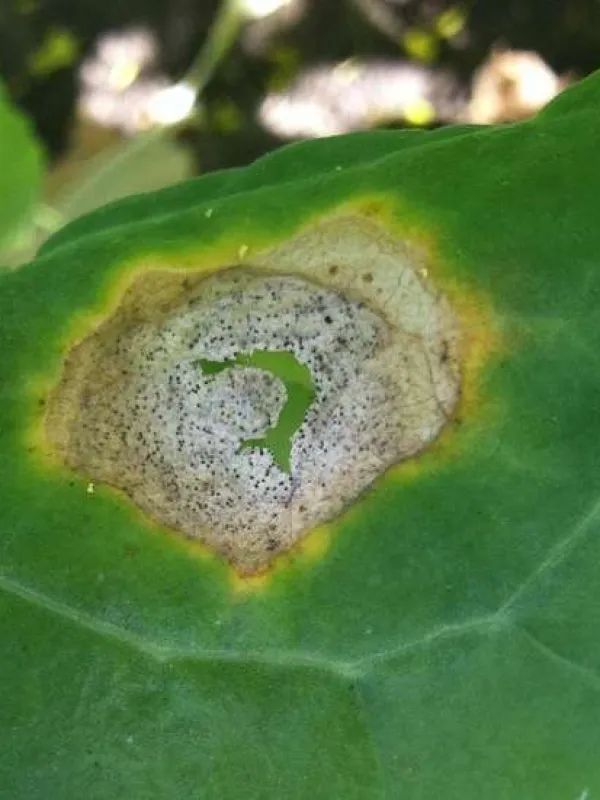
The initial symptoms of the disease appear on cotyledons and leaves as circular, grayish-brown spots with a darker margin. As the disease progresses, small black dots called pycnidia form on the surface of these spots.
On stems, especially at the base near the root collar, the infection presents as a dry rot or grayish lesions with a characteristic metallic sheen. These lesions often lead to stem cracking and premature wilting of the plant.
Root systems of severely affected plants turn black and become brittle. The decay of the cortical tissue at the crown leads to the classic "blackleg" symptom, which can cause the plant to collapse under its own weight.
Plants infected early in the season often show stunted growth, distorted leaves, and a poorly developed root system. Many of these plants may die before they reach the stage of pod development.
On mature pods, lesions appear as sunken, dark spots. Seeds within such pods are often shriveled, underdeveloped, and heavily infected with the pathogen, ensuring the spread of the disease to the next crop.
Pathogen
The pathogen responsible for this disease is the ascomycete fungus Leptosphaeria cylindrospora (anamorphic stage Phoma lingam). It is a persistent pathogen capable of surviving in the environment for several years.
Infection is maintained in soil on infected crop residues, contaminated seeds, and cruciferous weeds. Ascospores can be dispersed by wind over long distances, posing a threat to neighboring fields.
The fungus maintains a dual lifestyle, existing as a parasite on living tissues and as a saprophyte on dead plant material. This flexibility allows the pathogen to remain viable in the field throughout the year.
Pycnidia produced on infected tissues release conidia, which spread via rain splashes. These spores quickly colonize new tissues if favorable moisture conditions are present.
The pathogen is highly aggressive and infects plants at any stage of growth. The fungal mycelium primarily enters the host through stomata or mechanical wounds caused by insects or field machinery.
Conditions for development
Moderate temperatures and high humidity are the primary drivers of disease development. The fungus thrives at temperatures between 18 and 25 degrees Celsius, especially when combined with frequent rainfall.
Prolonged wet weather is critical for the widespread dissemination of conidia. Wind-borne ascospores can initiate infections in new areas, leading to severe outbreaks if the canopy remains humid.
Dense crop stands create a microclimate that prevents airflow and promotes high humidity within the lower canopy. This environment is highly conducive to the rapid spread and penetration of the pathogen.
Mechanical injuries are a major factor in disease susceptibility. Wounds from insect feeding or improper cultivation practices create easy access for the fungus to enter the vascular system of the stem.
Poor crop rotation practices, where brassica crops are grown too frequently on the same land, lead to a massive accumulation of inoculum in the soil, significantly increasing the infection risk.
Why it matters
Phoma stem canker is one of the most destructive diseases in oilseed rape, potentially causing yield losses of up to 50% in severe cases. It directly impacts seed quality and oil content.
Damage to the root collar disrupts water and nutrient transport, leading to lodging and premature senescence. The breaking of weakened stems often results in significant losses during mechanical harvesting.
Seeds harvested from infected fields have reduced germination energy and viability. Using untreated or infected seed batches guarantees that the disease will be introduced into the next growing season.
The disease severely compromises the winter hardiness of oilseed rape. Infected plants are much more likely to succumb to frost, leading to stand thinning and the need for costly crop replanting.
Economic damage includes both direct yield reduction and the mandatory investment in fungicide applications, which are necessary to prevent total crop failure in susceptible regions.
Protection
Crop rotation is the most effective cultural practice. A gap of at least 3–4 years between brassica crops significantly reduces the soil-borne inoculum pressure on the field.
The use of certified, fungicide-treated seeds is essential to prevent early-season infections. Systemic seed treatments provide a vital layer of protection during the critical seedling emergence phase.
Thorough incorporation of crop residues into the soil immediately after harvest accelerates decomposition and reduces the survival of the pathogen in stubble.
Proactive fungicide application during key growth stages, such as the 4–6 leaf stage and early flowering, is necessary to keep infection levels below the economic threshold. Rotate chemistry to prevent resistance.
Integrated pest management, including the control of insects that damage stems, reduces the number of infection sites. Eradicating cruciferous weeds further limits the availability of host material for the fungus.
Discussion
No discussions yet — be the first.