
Rough-stemmed bolete
Leccinum duriusculum
Description
Symptoms
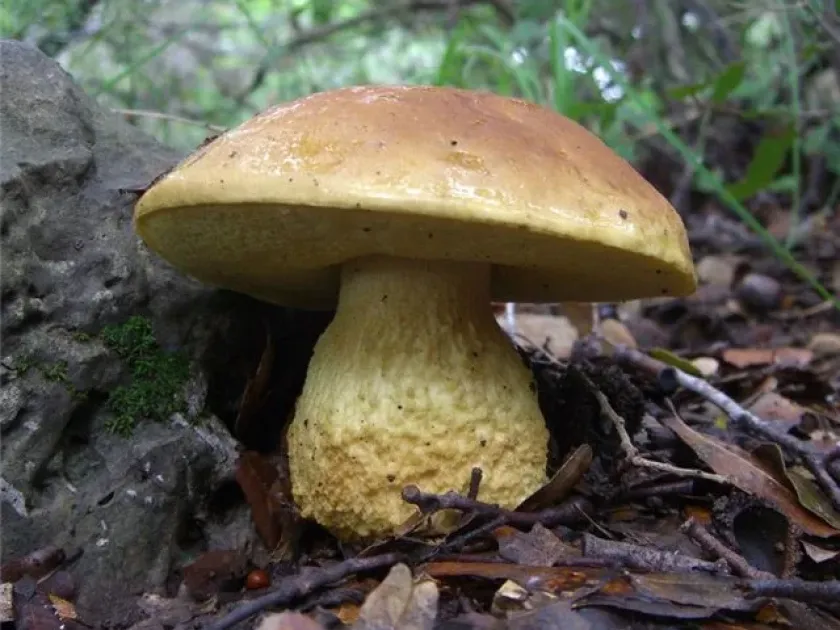
The mushroom features a firm, dense cap that typically ranges from gray to brownish in color, often showing signs of suede-like texture.
The stem is thick and covered with distinct, dark scabers or scales, which darken further upon bruising or handling.
When the flesh is sliced, it shows a dramatic color change, rapidly turning from white to a deep, intense black.
The pore surface underneath the cap is initially pale and shifts toward a grayish-brown hue as the mushroom matures.
The fruit body maintains a firm, solid texture throughout its growth, making it easily distinguishable from softer mushroom species.
Pathogen
The Rough-stemmed bolete, scientifically known as Leccinum duriusculum, is not a plant disease but a beneficial mycorrhizal fungus.
It belongs to the Boletaceae family and forms a symbiotic relationship with specific tree species, primarily poplars and aspens.
The mycelium of the fungus attaches to tree roots, significantly improving their nutrient uptake and water absorption capacity.
Unlike pathogenic fungi, it does not infect or decay living plant tissue, acting as a partner rather than a parasite.
Understanding its ecological role is essential for differentiating it from actual agricultural pathogens.
Conditions for development
This species is strictly associated with trees of the Populus genus, commonly found in poplar woodlands and shelterbelts.
It thrives in well-drained soils that contain a significant amount of leaf litter and organic matter.
Moderate rainfall and cool to mild temperatures from late summer through autumn provide the ideal environment for fruiting.
The fungus is sensitive to soil disturbance and chemical pollution, requiring stable ecosystem conditions.
It is rarely found in highly cultivated agricultural fields unless those fields have remnant tree lines or buffer zones.
Why it matters
There is no harm associated with Leccinum duriusculum; it is a harmless and environmentally beneficial fungus.
It does not pose any threat to crops, forests, or ornamental plantings, as it lacks pathogenic capabilities.
In fact, its presence supports the vitality and resilience of the trees it forms associations with.
No agricultural damage has ever been attributed to this species, reinforcing its status as a forest asset.
Concerns regarding this fungus are purely based on misclassification of it as a threat to plant health.
Protection
No control measures are required or recommended, as the fungus is not a pest or a disease agent.
In forest management, the focus should remain on protecting the habitat rather than eradicating such mushrooms.
The use of broad-spectrum fungicides should be avoided to preserve the integrity of the soil microbiome.
Natural biodiversity should be promoted, as it supports the symbiotic balance in healthy landscapes.
Management practices should be directed toward identifying true pathogens instead of disrupting natural mycorrhizal networks.
Discussion
No discussions yet — be the first.