
Brown spot needle blight
Lecanosticta guatemalensis
Description
Symptoms
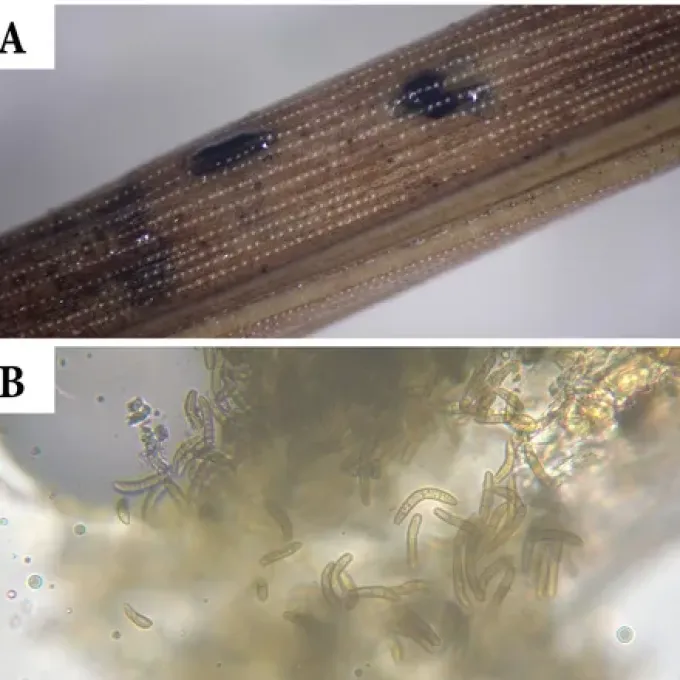
The disease begins with the appearance of small, light-green or yellow spots on the needles. As the infection progresses, these spots turn into dark brown or tan bands often surrounded by a chlorotic yellow halo.
Tiny black structures, the pycnidia, become visible on the surface of the brown spots. During wet weather, these structures release masses of spores, which may appear as jelly-like droplets under microscopic examination.
Severely infected needles turn yellow, then brown, and eventually drop prematurely. The infection typically starts in the lower canopy, as the lower needles are more likely to be covered in dew and moisture, which favors the fungus.
Significant needle loss leads to a sparse, thin crown appearance. Over time, the loss of needles reduces the tree's photosynthetic capacity, causing stunted growth and poor health.
- Light-green to brown spots on needles.
- Characteristic yellow bands around lesions.
- Presence of black pycnidia on the foliage.
- Premature needle casting.
- Dieback of tips in severe cases.
Pathogen
Brown spot needle blight is caused by the fungus Lecanosticta guatemalensis (formerly known as Mycosphaerella dearnessii). This pathogen is a serious threat to various pine species, leading to premature needle cast and weakened tree health.
The fungus propagates through the production of conidia within black, pimple-like fruiting bodies called pycnidia, which emerge on infected needles. These spores are primary agents of infection, disseminated by rain splashes and wind during the growing season.
The pathogen survives the winter in infected needles remaining on the ground. When spring weather becomes warm and moist, the old debris serves as a source of inoculum that reinfects the new growth of young needles.
Infection occurs when spores germinate and enter the needles through the stomata. The mycelium grows inside the needle tissues, gradually breaking down the structure and resulting in the characteristic brown lesions.
Lecanosticta guatemalensis is known for its ability to persist in diverse environments. It is a major concern for nurseries and forest managers, requiring strict quarantine measures to prevent regional outbreaks.
Conditions for development
Warm and humid conditions are the primary drivers of brown spot needle blight development. Prolonged periods of rainfall during late spring and early summer create an ideal environment for spore dissemination.
Limited air movement within dense forest stands or poorly spaced ornamental plantings increases the duration of needle wetness. Extended wet periods allow the fungus more time to penetrate the plant tissues.
Stressed trees, whether due to drought, poor soil conditions, or other pathogens, are significantly more susceptible to Lecanosticta guatemalensis. Weakened defense systems provide an easier pathway for the fungus to colonize.
High humidity and temperatures between 15°C and 25°C are optimal for the growth of the fungus. Rapid shifts in temperature combined with heavy rain can often trigger sudden outbreaks of the disease.
The fungus is highly mobile in water droplets, which means that any condition causing moisture to run down the branches effectively distributes the infection across the tree.
Why it matters
The major impact of brown spot needle blight is the significant loss of foliage. Since needles are essential for photosynthesis, their premature drop directly reduces the tree's energy storage and annual growth increment.
Chronic infection results in deformed crowns and severe growth inhibition. For young saplings, the disease can be fatal, leading to mass mortality in nurseries and plantations within a few years of infection.
Economically, the blight causes major losses for the timber industry, as the growth rate of infested trees is drastically reduced. Furthermore, the cost of managing the disease adds to the burden on forest owners.
In landscaping, the disease destroys the visual appeal of pine trees, making them unsuitable for parks, gardens, and public recreational areas due to the dying branches and sparse canopy.
The disease creates an environment where secondary pests, such as bark beetles, can easily establish themselves. This "double attack" often results in the complete death of the host tree.
Protection
Sanitation is the cornerstone of managing brown spot needle blight. Removing and destroying infected needles from the ground helps to significantly reduce the inoculum pool for the following season.
Chemical control usually involves the application of copper-based fungicides. These should be applied during the period when new needles are emerging, as this is when they are most vulnerable to the fungal spores.
In forest nurseries, systemic fungicides may be used to provide long-lasting protection. Programs must be well-timed, ensuring full coverage of the new growth during high-risk humidity events.
Proper site management includes thinning stands to improve airflow, which ensures that needles dry out more quickly after rainfall, making the environment less hospitable for fungal infection.
Future plantings should use resistant pine species where possible. Careful planning during the reforestation process can minimize the spread of the fungus and reduce the need for chemical intervention.
Discussion
No discussions yet — be the first.