
Lecanorales
Lecanorales
Description
Symptoms
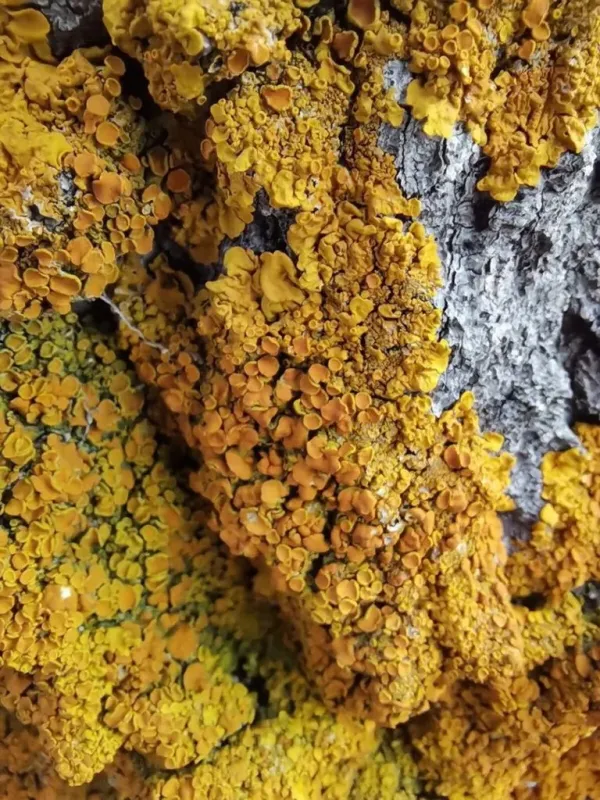
Lecanorales are recognized by the appearance of crustose or squamulose growths on tree bark. These formations vary in color from light gray to greenish-yellow and are often tightly attached to the substrate.
A key visual feature is the presence of apothecia, which are the fungal fruiting bodies shaped like small, often brightly colored discs. They appear as patches or flakes that expand slowly over the life of the tree.
Unlike true plant pathogens, these organisms do not cause necrosis or discoloration of the living tissue underneath. The bark remains firm, though its texture becomes rough and uneven due to the covering.
The accumulation of dust and moisture under the lichen thallus can create a distinct micro-topography on the bark surface. Visually, this creates a mottled appearance that masks the tree’s natural bark texture.
It is important to distinguish between lichen colonization and actual fungal infections. Lichen thalli are superficial and generally do not affect the internal health of the tree directly, but they can be a sign of slow bark turnover.
Pathogen
Lecanorales represent a large order of Ascomycete fungi that form symbiotic relationships with algae to create lichens. They function as epiphytes, meaning they use the tree only as a physical support system.
The fungus provides structure and mineral absorption, while the algae supply the organic matter through photosynthesis. This partnership allows them to inhabit the bark environment for many years without parasitic activity.
This order contains many families, such as Lecanoraceae, which do not produce toxins or extract nutrients from the tree's vascular system. They are not plant pathogens, though their impact is relevant in orchard management.
Reproduction occurs primarily through airborne spores. Once these spores land on a suitable bark surface, they germinate and begin to develop a new thallus, which slowly expands across the host plant.
Their high adaptive capacity to different environmental conditions makes them common in many landscapes. They are highly dependent on the stability and quality of the bark, which serves as their permanent anchor.
Conditions for development
High humidity and consistent air moisture are the primary drivers for the growth of Lecanorales. Orchards with overly dense canopies or poor air circulation are particularly prone to colonization.
Trees with slow-growing or aging bark are most susceptible, as the bark surface does not refresh quickly enough to prevent the lichen from establishing a firm hold. Healthy, fast-growing trees often remain clear of them.
Optimal light exposure is essential for the photosynthetic algae component. Consequently, these lichens are frequently observed on the sunny sides of trunks and branches where light availability is highest.
Lack of regular pruning contributes to a stable micro-environment where moisture can linger. This dampness encourages spore germination and supports the long-term survival of the lichen thallus.
Air quality also plays a role in their distribution. Many species within this order are sensitive to atmospheric pollution, meaning their presence often correlates with cleaner environments and moderate humidity.
Why it matters
While they are not direct parasites, excessive lichen growth can be problematic. A dense layer of lichen may restrict gas exchange through the lenticels, potentially stressing the tree's outer layer.
The thallus can serve as a refuge for various pests, including scale insects and mites. This cover shields them from contact with pesticides and environmental controls, making pest management more difficult.
The constant moisture trapped beneath the lichen can promote the development of secondary bacterial or fungal infections. These secondary agents can attack the wood and cause actual damage to the tree's structure.
Indirect harm includes the aesthetic degradation of the orchard and signs of tree decline. In many cases, a heavy infestation acts as a biological indicator that the tree's growth has slowed down significantly.
Managing these organisms is often necessary in high-value orchards to maintain tree health and ensure that secondary pests do not gain a protected breeding ground on the trunks or main branches.
Protection
The most effective strategy is proper crown management. Regular pruning increases air circulation and light penetration, which dries out the bark and creates conditions unfavorable for lichen development.
Mechanical cleaning is performed using scrapers or stiff wire brushes. Care must be taken to remove the lichen layers without damaging the inner bark or cambium of the tree.
Chemical control involves applying a 3-5% iron sulfate solution to the trunks. This treatment is highly effective at killing off lichen spores and clearing the bark surface of unwanted growth.
Painting tree trunks with a lime-based whitewash (often with added copper sulfate) is a traditional, effective preventative measure that creates a hostile environment for lichen spores to attach.
Overall plant care, including balanced fertilization and proper irrigation, promotes healthy bark turnover. Vigorous trees are far less likely to suffer from severe lichen colonization compared to neglected or declining ones.
Discussion
No discussions yet — be the first.