
Lecanora conizaeoides
Lecanora conizaeoides
Description
Symptoms
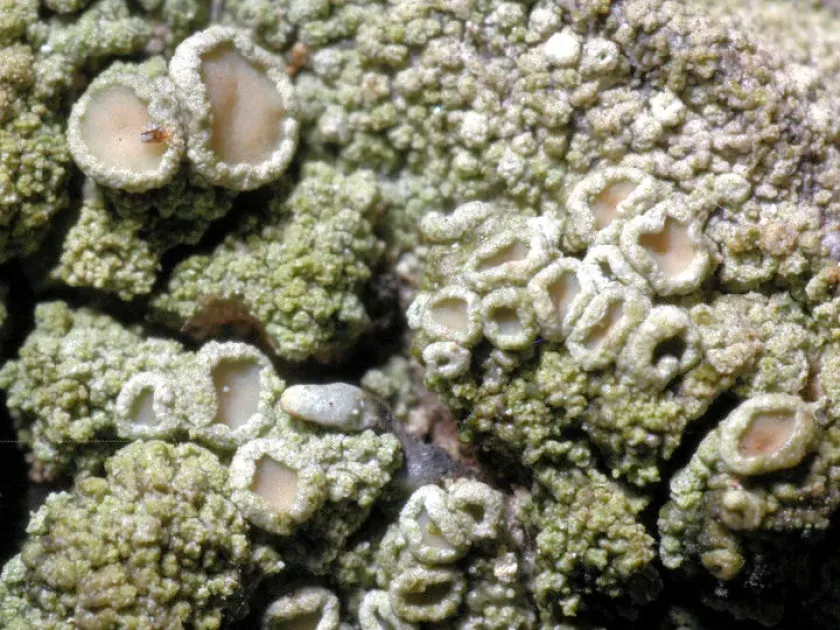
Lecanora conizaeoides appears as a crustose lichen, forming a thin, tightly attached layer on the surface of tree bark or wooden substrates.
The thallus typically exhibits a grayish-green or yellowish-green color, often with a powdery texture due to the presence of numerous soredia.
Apothecia, the fruiting bodies, are commonly observed and appear as small, brownish to reddish-brown discs scattered across the surface.
When colonization is extensive, the lichen forms a distinct, sometimes patchy crust that contrasts sharply with the texture of the host bark.
The presence of this lichen is easily identifiable by its preference for colonizing acidic bark, particularly on coniferous species like spruce and pine.
Pathogen
Lecanora conizaeoides is not a plant pathogen; it is a symbiotic lichen species that lives as an epiphyte on the bark of woody plants.
It derives its moisture and nutrients from the air and precipitation, using the tree merely as a substrate for physical support and colonization.
This species is biologically notable for its remarkable tolerance to sulfur dioxide, which allows it to thrive in polluted areas where others die.
The fungal component of the lichen creates a protective structure that secures it against the substrate while managing the algal photosynthesis.
Dispersal is primarily vegetative, achieved through the production and spread of soredia, which are easily transported by wind or moisture currents.
Conditions for development
The development of this species is heavily influenced by atmospheric sulfur levels, which often eliminate competing lichen species in polluted areas.
It thrives in humid environments but maintains a high degree of resilience, capable of surviving periods of bark surface desiccation.
Acidic bark environments provide the ideal ecological niche for the lichen, which is why it is frequently found on conifers and some deciduous trees.
Urban and industrial landscapes, characterized by poor air quality, serve as primary habitats for this species, leading to its widespread recognition.
Exposure to light is a significant factor, as the species tends to colonize the better-lit parts of tree trunks, especially on the windward side.
Why it matters
While not parasitic, dense lichen coverage on young or thin-barked trees can occasionally interfere with the bark's normal respiratory gas exchange.
Heavy accumulation of lichen crusts can trap moisture against the bark, potentially creating a microclimate suitable for secondary fungal growth.
The presence of large populations of this lichen is primarily harmful in terms of what it signals: high levels of environmental contamination.
In ornamental landscaping, the visual impact of pervasive crusts on bark can reduce the aesthetic quality of prized landscape trees and shrubs.
There is no evidence of direct toxic effects on the host tree's physiology, as the lichen interacts only with the outer layers of the periderm.
Protection
Standard forestry practices do not typically involve the removal of lichens, as they are generally considered harmless to tree health.
For ornamental trees, manual removal using soft brushes during the dormant season is a safe way to clean the trunk surface if necessary.
Improving tree vitality through appropriate nutrition and soil management helps the tree maintain healthy bark, which inhibits excessive colonization.
Pruning techniques that open the canopy can improve airflow and reduce humidity, making the environment less favorable for lichen growth.
Chemical control with copper-based fungicides may be effective but is rarely recommended due to broader environmental considerations and minimal need.
Discussion
No discussions yet — be the first.