
Description
Symptoms
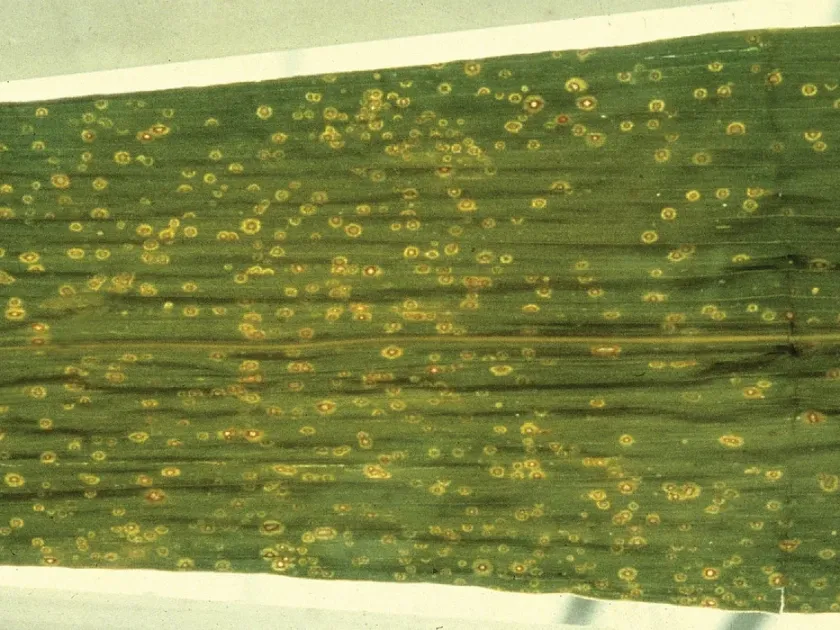
Symptoms of Curvularia infection typically manifest as small, circular or oval spots on the leaves, which gradually increase in size.
These spots often exhibit a necrotic brown or black center, frequently surrounded by a distinct halo, which is a classic indicator of the fungus.
In Cattleya orchids, the disease can cause rapid necrosis of leaves and pseudobulbs, leading to wilting and premature tissue death.
Under high humidity, a fine, dark olive or black powdery layer of spores can be observed on the surface of the affected spots.
Severe infestations cause leaves to yellow and drop prematurely, severely impacting the aesthetic and physiological health of the plant.
Pathogen
The disease is caused by various species of the Curvularia fungus, which are ubiquitous opportunistic plant pathogens.
These fungi thrive by breaking down plant cell walls through the production of enzymes, facilitating deep penetration into plant tissues.
Spores (conidia) are primary dispersal units, easily spread by air currents, splashing water, and mechanical handling.
The fungus is capable of surviving for long periods in soil, plant debris, and as a latent infection on asymptomatic plant material.
Its ability to infect a broad range of hosts makes it a persistent challenge in both commercial greenhouses and domestic plant collections.
Conditions for development
Curvularia thrives in environments characterized by high humidity levels, usually exceeding 75%, and moderate to warm temperatures.
The optimal temperature range for the rapid development of the fungus is between 22 and 28 degrees Celsius.
Poor ventilation and air stagnation in indoor spaces or greenhouses provide the perfect conditions for spore germination and lesion expansion.
Plants weakened by inadequate light, improper fertilization, or previous mechanical damage are significantly more susceptible to the infection.
Fluctuating temperatures that lead to leaf condensation facilitate the entry of the fungus into the plant tissue through stomata or wounds.
Why it matters
The primary damage caused by Curvularia includes significant disfigurement of foliage, which reduces the market value of ornamental plants.
In cereal crops, the pathogen can cause seedling blight and root rot, leading to reduced stand density and diminished overall yields.
The destruction of chlorophyll-rich tissue negatively impacts the plant's photosynthetic capacity, resulting in stunted growth.
Once established, the infection can become systemic in sensitive species, making it difficult to control without significant intervention.
For high-value plants like Cattleya, the infection can destroy apical meristems, potentially resulting in the death of the entire plant.
Protection
The most effective strategy is the removal and safe disposal of all infected plant parts to reduce the localized spore load.
Cultural practices should focus on maintaining low humidity around the foliage and ensuring excellent air circulation.
- Apply broad-spectrum fungicides containing mancozeb or copper-based compounds for control.
- Ensure strict sanitation by disinfecting tools with alcohol or a 10% bleach solution after each use.
- Avoid overhead irrigation to keep leaf surfaces dry, preventing spore germination.
Improving the plant's vigor through balanced nutrition and adequate lighting can help the host resist minor infections.
Always quarantine new plant acquisitions for several weeks to ensure they are free of symptoms before introducing them to the main collection.
Pathogens and affected parts
Affects crops · 1
Discussion
No discussions yet — be the first.