
Salmon lactarius
Lactarius salmonicolor
Description
Symptoms
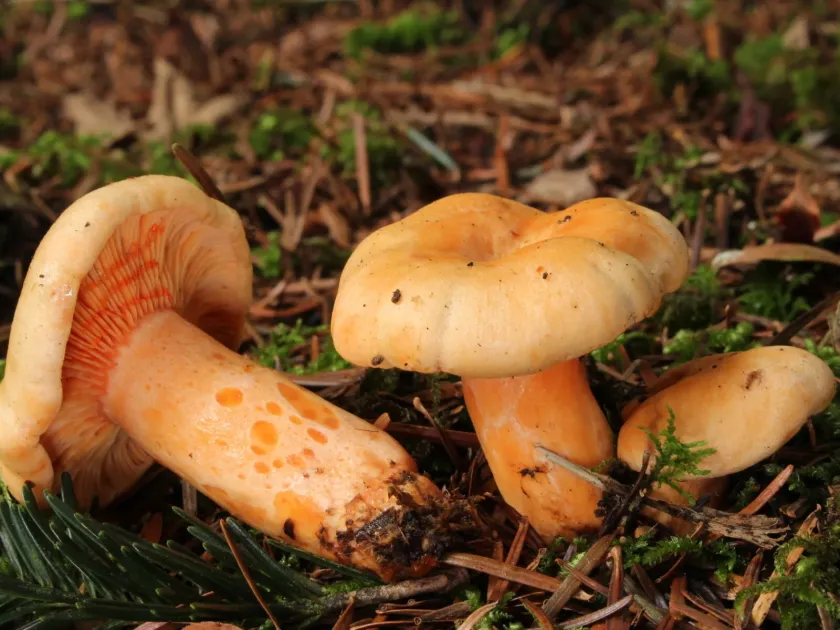
The fruit body typically displays shades of orange and salmon, often featuring distinct concentric zones on the cap surface during maturation.
The gills are adnate to decurrent, crowded, and share the same warm orange tones as the cap, which is a key diagnostic feature for field researchers.
The stipe is solid when young and becomes hollow with age, frequently showing small pits or scrobiculations that aid in identification.
The latex (milk) is orange or salmon-colored and does not undergo significant color changes upon exposure to the air, distinguishing it from related species.
- Cap diameter ranging from 5 to 15 cm
- Brittle and firm context
- Characteristic pleasant, fruity-like aroma
- Spore print in shades of creamy yellow
Pathogen
Lactarius salmonicolor is a species of fungus in the family Russulaceae. It is essential to clarify that this organism is not a plant disease but a mycorrhizal mushroom.
This fungus forms a symbiotic relationship with the root systems of specific tree species, primarily fir, which is vital for the health of forest ecosystems.
As a forest macromycete, it contributes to the decomposition of organic matter, nutrient cycling, and improving soil structure in forest habitats.
The fungus is widely studied in the field of mycology due to its specific host dependency, which makes it a bioindicator of forest health.
It is classified as an edible mushroom, although proper identification is strictly required to avoid confusion with similar-looking species in the genus.
Conditions for development
The Salmon lactarius is highly specific to silver fir forests, relying entirely on these trees to form the necessary mycorrhizal connection.
It favors damp, humus-rich soil conditions, often found in sheltered areas where the forest canopy maintains high humidity levels for the mycelium.
Fruiting occurs primarily from late summer through autumn, coinciding with periods of increased precipitation in mountainous and hilly regions.
The species requires stable microclimate conditions and is sensitive to drastic changes in soil acidity or moisture levels throughout the growing season.
Preservation of old-growth coniferous forests is crucial for the survival of this species, as it does not colonize disturbed or degraded soils easily.
Discussion
No discussions yet — be the first.