
Pale Milkcap
Lactarius pallidus
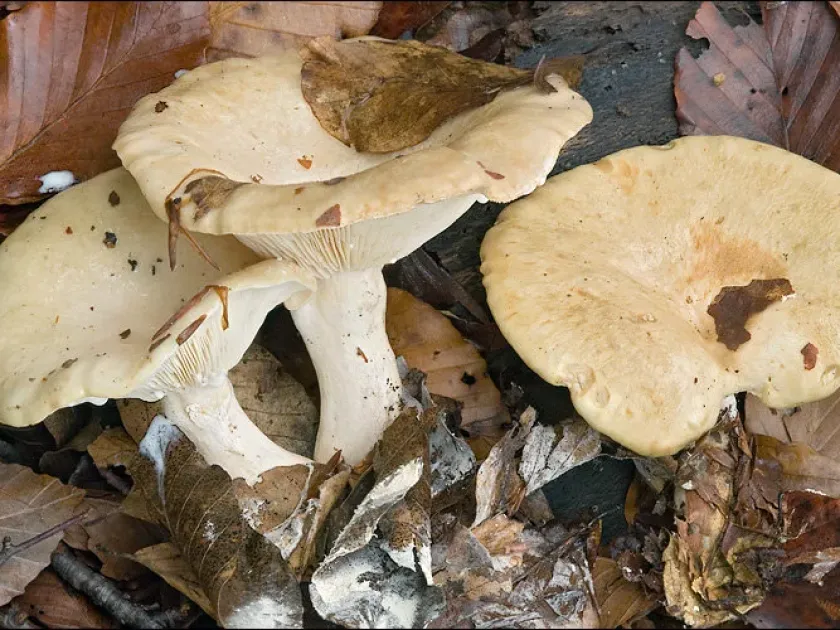
Description
Symptoms
The most visible sign of the fungus is the formation of its fruiting bodies. The cap is smooth, often viscid (slimy) when damp, and typically pale ochre, cream, or flesh-colored.
The gills are crowded and attached to the stem, exhibiting a pale cream or yellow tint. The stipe (stem) is cylindrical and typically smooth, matching the color of the cap.
A distinctive feature is the copious white latex (milk) that exudes from the flesh when injured. Importantly, this latex does not change color upon exposure to air.
The flesh of the Pale Milkcap is firm and white, often showing no significant color changes when cut. It has a mild to bitter taste, reflecting its chemical profile as a milkcap.
Fruiting bodies are usually found emerging from the leaf litter in deciduous forests, often clustered near the base of beech trees, which are their primary mycorrhizal partners.
Pathogen
The Pale Milkcap (Latin Lactarius pallidus) is not a plant disease or an agricultural pathogen. It is a fungal species belonging to the Russulaceae family, which exists as a mycorrhizal symbiont in forest ecosystems.
This fungus forms a symbiotic relationship with the root systems of deciduous trees, specifically beech. It acts as a beneficial organism rather than a parasite or cause of plant disease.
There is no record of this species damaging agricultural crops or causing necrosis, rot, or any form of plant infection. It is purely an ecologically significant forest mushroom.
The biology of Lactarius pallidus revolves around the underground mycelial network, which aids in nutrient exchange and soil health for its host trees.
In forest management, the presence of these fungi is often considered an indicator of a healthy, mature ecosystem where soil conditions are optimal for symbiosis.
Conditions for development
Optimal growth conditions for Lactarius pallidus include moist, well-drained soils rich in decaying organic matter and leaf mulch. It thrives in temperate forest zones.
Temperature plays a crucial role in fruiting, with the fungus preferring moderate conditions typically ranging from 15°C to 22°C, common during late summer and autumn.
High relative humidity is essential for the maturation of the fruiting bodies. The fungus remains dormant in the soil during periods of drought or excessive cold.
The presence of mature beech trees is the primary requirement for the establishment of the mycelium. Without a suitable host, the fungus cannot complete its lifecycle.
Shade provided by the forest canopy helps maintain the soil moisture levels required for the expansion of the mycelial network during the growing season.
Discussion
No discussions yet — be the first.