
Lachnum virgineum
Lachnum virgineum
Description
Symptoms
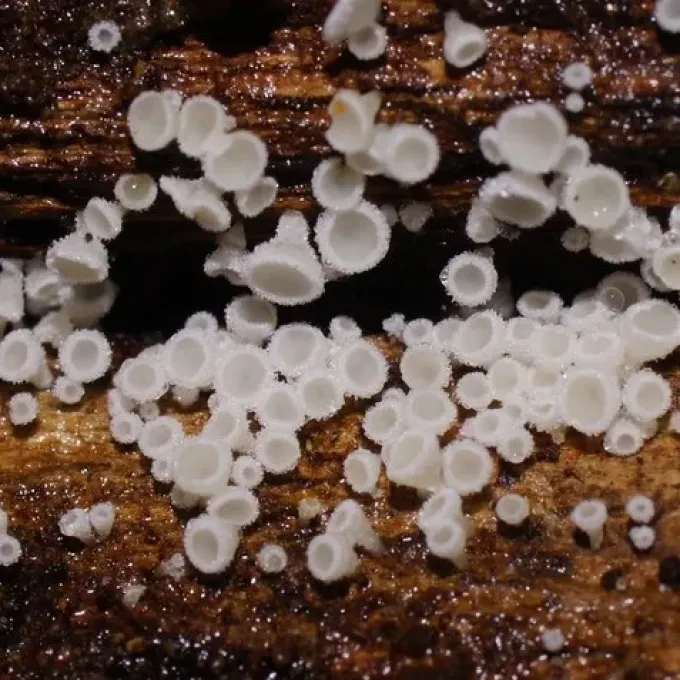
The presence of Lachnum virgineum is indicated by the appearance of minute, white, cup-shaped fruiting bodies known as apothecia. These structures are often covered in dense, white hairs.
The fruiting bodies measure approximately 1 to 3 millimeters in diameter. Their velvety appearance is a key diagnostic feature, making them distinct from other small white fungi found on wood.
These apothecia are typically found in clusters on the surface of bark or wood. During periods of high humidity, they expand and are easily observed by field researchers and mycologists.
In dry conditions, the fruiting bodies can retract and become almost invisible. This makes seasonal monitoring essential for identifying the presence and population density of the fungus.
There are no symptoms of infection on healthy tree tissue, such as cankers, wilting, or necrosis. The fungus does not compromise the structural integrity of living stems or branches.
Pathogen
Lachnum virgineum is a species of fungus in the family Hyaloscyphaceae. It is strictly a saprotrophic organism, meaning it feeds on decaying organic matter rather than living plant tissues.
In forest ecosystems, this fungus acts as a primary decomposer of wood. It produces specific enzymes capable of breaking down lignocellulose structures found in fallen branches and twigs.
It is not a plant disease pathogen. Its presence on trees is generally limited to dead or dying woody tissues, where it performs the natural function of recycling nutrients back into the ecosystem.
The fungus is highly specialized in its ability to colonize small-diameter woody substrates. This niche preference prevents it from being a competitor to more aggressive wood-decaying species.
Biologically, it plays a vital role in soil formation. By breaking down woody debris, it facilitates the nutrient cycle, which in turn supports the growth of other plants and organisms within the forest floor.
Conditions for development
High moisture levels are the most significant factor for the growth of Lachnum virgineum. The fungus thrives in habitats where the humidity is consistently high and the surface of woody debris remains damp.
Temperature range is critical for its development, with the fungus showing optimal activity during cool to moderate weather. Extremes of heat or drought effectively inhibit the growth of its mycelium.
The availability of damp woody substrate in sheltered, shaded locations promotes colonization. Typical environments include damp forests, brushwood, and thickets with significant leaf litter cover.
Spore dispersal is facilitated by wind and local air currents. The microscopic spores land on suitable dead organic material, where they remain until conditions allow for germination and mycelial spread.
Good forest management, involving the maintenance of natural drainage, prevents the creation of waterlogged areas that might otherwise encourage excessive fungal growth in unwanted locations.
Protection
Lachnum virgineum does not require any control measures as it is not a plant pathogen. It serves an important ecological role in decomposing dead plant material and contributing to soil health.
If the appearance of this fungus on wood in a garden or nursery is a concern, simple hygiene practices are sufficient. The removal of dead, decaying woody debris will eliminate the substrate needed for the fungus.
Reducing moisture content in the area can also discourage its presence. Improving ventilation or increasing sunlight exposure to woody substrates will naturally limit the fungal population.
Fungicides are not recommended or necessary for this species. Using chemical treatments against saprotrophs is environmentally counterproductive and ineffective for long-term management.
The best approach is to observe the presence of this fungus as an indicator of a healthy, active decomposition cycle within a forest or woodland environment.
Discussion
No discussions yet — be the first.