
Lachnum fasciculare
Lachnum fasciculare
Description
Symptoms
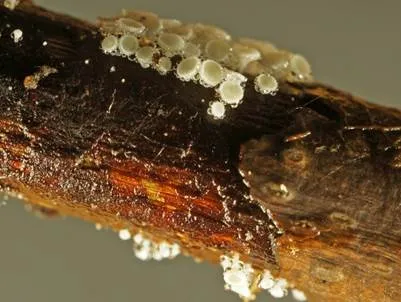
The most prominent sign of Lachnum fasciculare presence is the emergence of small, densely packed fruiting bodies forming clusters on bark or wood surfaces.
These apothecia range from cream to yellowish in color. Under close inspection, the characteristic hairy texture of the outer cup margin is clearly visible.
Affected plant tissues typically exhibit signs of decay, appearing softer or more brittle as the fungus progressively degrades the organic structure of the wood.
The fungal colonies are most commonly found on dead branches, twigs, or injured trunks where environmental conditions maintain sufficient moisture.
Since it is not an aggressive vascular parasite, the symptoms are localized and do not cause rapid wilting of the foliage, but rather indicate persistent wood deterioration.
Pathogen
Lachnum fasciculare is a species of ascomycete fungi belonging to the Hyaloscyphaceae family. It is primarily a saprotrophic organism that colonizes dead or dying plant tissues.
Biologically, it is a discomycete fungus characterized by the production of distinctive, cup-shaped fruiting bodies known as apothecia, which feature fine hair-like coverings along their margins.
The life cycle of the fungus is intrinsically linked to the degradation of cellulose and lignin within plant matter, which it breaks down using specialized enzymes.
In an agricultural context, it is generally considered a secondary pathogen or a decomposer that targets already weakened or damaged woody plant components.
The fungus spreads via ascospores, which are dispersed by wind and air currents, allowing the organism to colonize suitable moist substrates over wide areas.
Conditions for development
High humidity is the primary environmental driver for the development of Lachnum fasciculare, making shaded and poorly ventilated garden areas ideal habitats.
The fungus thrives in moderate temperatures, showing peak activity and spore production during periods of prolonged rainfall or high atmospheric humidity.
The presence of necrotic or mechanically damaged tissue is a critical prerequisite for successful colonization, as healthy, living bark usually provides an effective barrier.
Poor orchard management, such as overcrowding or the failure to remove dead wood, creates a stagnant microclimate that encourages the spread of fungal spores.
Mechanical injuries, such as frost cracks, sunscald, or improper pruning cuts, create entry points that facilitate the deeper penetration of the fungal mycelium.
Why it matters
The main threat posed by Lachnum fasciculare is the accelerated decay of woody parts, which can lead to structural weakness in branches and compromised limb integrity.
In intensive fruit production, extensive colonization by this fungus can contribute to the dieback of shoots, negatively impacting the overall vitality of the trees.
Although it rarely kills healthy trees outright, its presence serves as a diagnostic indicator of underlying health issues or poor maintenance practices in the orchard.
The fungus acts as a precursor for other, more aggressive pathogens that may utilize the degraded tissues to gain entry into the plant's vascular system.
Large quantities of fruiting bodies signify a high inoculum load in the environment, necessitating immediate sanitation efforts to mitigate further spread.
Protection
The most effective strategy is rigorous sanitation, which includes the prompt pruning and removal of all dead, diseased, or damaged plant material from the orchard.
Ensuring proper tree canopy management through regular pruning is essential to improve airflow, which keeps the bark dry and discourages fungal growth.
Maintaining strong tree vigor through optimal nutrition and watering helps the plants develop better natural resistance against colonization by secondary fungi.
When localized infections are found, affected areas should be carefully cut back to healthy tissue and treated with appropriate fungicidal pastes or sealants.
- Immediate disposal of pruned debris.
- Sterilization of pruning tools between trees to prevent cross-contamination.
- Application of white-wash or protectants to prevent trunk bark damage.
Discussion
No discussions yet — be the first.