
Lachnaceae
Lachnaceae
Description
Symptoms
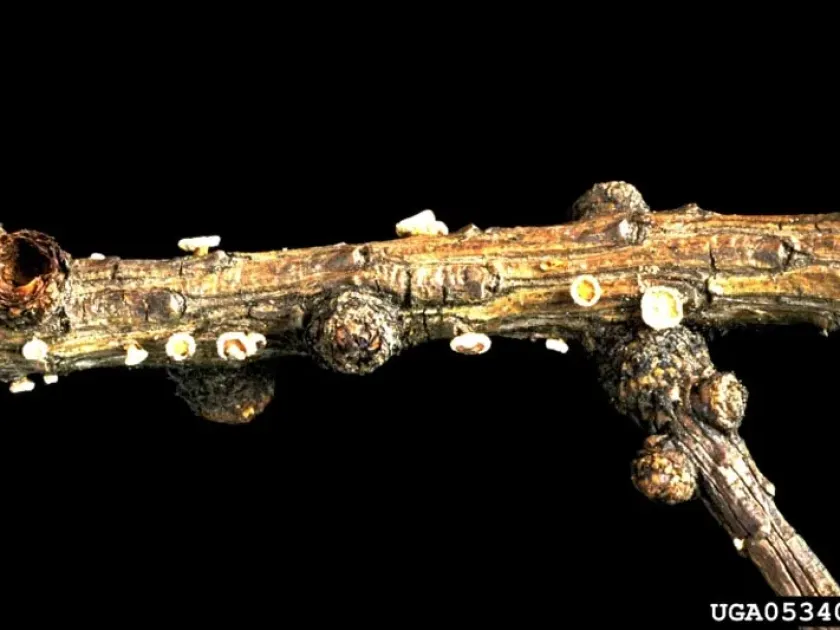
Infection symptoms often appear as localized lesions or cankers on the bark, stems, or twigs, frequently associated with the emergence of fungal fruiting bodies.
Discoloration of the cambium and underlying tissues is common, often leading to necrosis and the death of the distal parts of the plant branch.
Premature wilting and yellowing of foliage occur because the fungal infection disrupts the xylem and phloem, preventing the normal movement of nutrients and water.
In advanced cases, the bark may crack or peel away, exposing the necrotic tissue, which provides an entry point for secondary bacterial and fungal pathogens.
- Cup-shaped fungal fruiting bodies (apothecia).
- Development of localized necrotic cankers.
- Wilting of terminal shoots and branches.
- Surface cracking of the bark or stem.
Pathogen
Lachnaceae represent a diverse family of ascomycete fungi, many of which function as necrotrophic pathogens capable of infecting various woody and herbaceous plants.
The characteristic feature of this family is the production of small, often hairy or colorful apothecia, which serve as the primary sexual reproductive structures for spore dispersal.
While many species act as saprotrophs on dead plant organic matter, they can easily transition to parasitism, especially when host plants are stressed by environmental factors.
The mycelium of these fungi persists within the host tissue or soil debris, allowing them to remain viable across seasons and restart the infection cycle under favorable conditions.
Scientific interest in this family is growing due to their complex interactions with host plants and their role in decomposing cellulose and lignin, which can destabilize structural plant parts.
Conditions for development
High relative humidity and consistent rainfall are the primary environmental drivers for the development and spread of Lachnaceae-related diseases.
Plant stress, caused by drought, frost, nutrient deficiency, or physical damage, significantly lowers host resistance and makes the plant susceptible to fungal invasion.
Poor air circulation within dense plantings creates a humid microclimate that allows fungal spores to germinate and colonize host tissues more effectively.
The presence of contaminated plant debris from previous seasons provides a continuous reservoir of inoculum, facilitating recurring infections in the field.
Optimal temperature ranges for these fungi usually coincide with mild spring and autumn weather, which also happens to be the peak growth season for many crops.
Why it matters
The primary harm caused by these pathogens is the structural weakening of plants, which often results in the loss of branches or even the death of the entire plant.
Reduced vigor and stunted growth lead to significant yield losses, particularly in orchards, vineyards, and forest plantations where long-term productivity is essential.
Infection compromises the plant's aesthetic value and commercial viability, leading to economic losses due to the need for culling or intensive treatment.
The ability of the fungus to persist in dead tissue makes it difficult to eradicate, turning a single infection into a chronic problem for the entire crop area.
Secondary infections often exacerbate the damage, complicating the diagnostic process and necessitating more aggressive intervention methods.
Protection
Sanitation is the most critical control measure; all infected branches and debris must be pruned and safely destroyed to reduce the local spore population.
Maintaining balanced nutrition and adequate irrigation improves plant vitality, helping the host effectively defend itself against fungal pathogens.
Fungicidal applications should be timed carefully, targeting the windows of susceptibility or the periods of high environmental risk for infection spread.
Preventive care, such as minimizing mechanical injuries during pruning or harvesting, is essential to keep the plant surface intact and impenetrable.
Integrated Pest Management (IPM) practices, including regular monitoring and maintaining optimal planting densities, are necessary for long-term control of this disease.
Discussion
No discussions yet — be the first.