
Labyrinthula
Labyrinthula
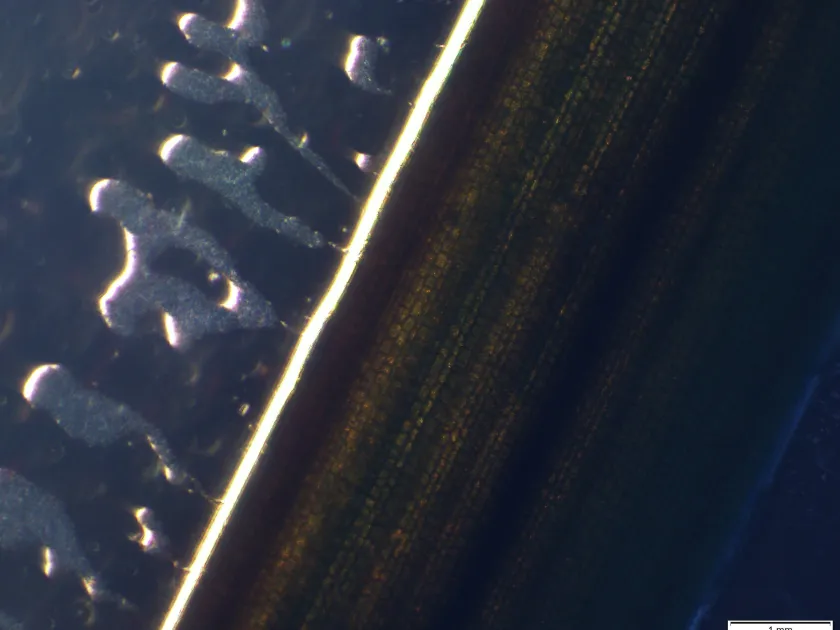
Description
Symptoms
The primary symptom of infection is the appearance of dark spots, streaks, and necrotic areas on the leaf blades of marine grasses. Gradually, necrosis spreads across the entire leaf, leading to its death.
In the affected areas, tissue discoloration occurs, accompanied by chlorophyll loss. Leaves become brittle, lose turgor, and disintegrate rapidly under the influence of currents.
In the early stages, signs of the disease appear as small brown or black dots. As the pathogen develops, these merge into large lesions, which leads to the death of entire shoots.
Often, the infection spreads from the base of the leaf to its tip, a process associated with the movement of Labyrinthula colonies through the intercellular spaces of the plant tissue.
- Darkening of leaf tips
- Formation of necrotic streaks
- Mass die-off of vegetative mass
- Leaf blade destruction
Pathogen
The pathogen is Labyrinthula, a genus of protists belonging to the labyrinthulids group. These are single-celled organisms that form characteristic colonies in the form of a branched network of ectoplasmic filaments, often called a "labyrinth".
These organisms are not classified as fungi or bacteria. They function as parasites or saprotrophs, capable of penetrating plant tissues and absorbing nutrients directly from host cells.
The life cycle of Labyrinthula includes a stage of motile zoospores that move through the aquatic environment. This mechanism allows the pathogen to spread rapidly between healthy plants within a given area.
Inside the plant tissue, the pathogen forms specific cellular aggregates that physically destroy host cell walls. The process is accompanied by the secretion of enzymes that decompose complex organic compounds of the plant.
Research shows that different species of Labyrinthula have narrow host specificity, mainly affecting marine flowering plants such as eelgrass (Zostera).
Conditions for development
The development of the disease is closely linked to changes in water temperature. Rising temperatures create optimal conditions for the intensive division and spread of the pathogen.
Decreases in water salinity or, conversely, sharp fluctuations in salinity can also trigger disease outbreaks. Stress on the host plant makes it more susceptible to infection.
Plant density plays a key role: in dense meadows, the transmission of the pathogen from one specimen to another occurs much faster due to direct contact.
The presence of organic pollutants in the water promotes the growth of Labyrinthula populations, as these organisms can utilize them as an additional nutrient source.
Light availability also affects plant immunity. A lack of light weakens photosynthesis, reducing the plant's ability to resist the penetration and development of the parasite.
Why it matters
Labyrinthula poses a serious threat to ecosystems, causing mass die-offs of seagrass meadows. This leads to the loss of critical habitats for many species of fish and marine invertebrates.
The loss of seagrass induces erosion of bottom sediments. The root systems of these plants stabilize the seabed, and their degradation leads to unstable substrates, fundamentally altering the coastal landscape.
The ecosystem's ability to filter water and sequester carbon is significantly reduced. This negatively impacts water quality and the overall ecological balance of coastal zones.
Large-scale outbreaks, often known as "wasting disease", can destroy up to 90% of certain seagrass populations across vast geographic areas.
The recovery of affected areas is extremely slow, as the pathogen can persist in sediments for long periods, remaining viable until favorable conditions return.
Protection
There are currently no effective direct methods for controlling Labyrinthula in wild marine environments. The use of fungicides in open waters is prohibited due to toxicity to marine fauna.
Efforts are primarily focused on monitoring seagrass population health and managing water quality. Preventing eutrophication in coastal waters helps reduce the likelihood of disease outbreaks.
Establishing marine protected areas allows plants to maintain high resilience against pathogens by minimizing anthropogenic stress.
Scientific research is currently directed toward identifying seagrass genotypes or populations that possess natural genetic resistance to this protist.
Restoration of damaged areas is possible through the transplantation of resistant genotypes, which facilitates gradual recovery of biodiversity and prevents reinfection.
Discussion
No discussions yet — be the first.