
Laboulbeniales
Laboulbeniomycetidae
Description
Symptoms
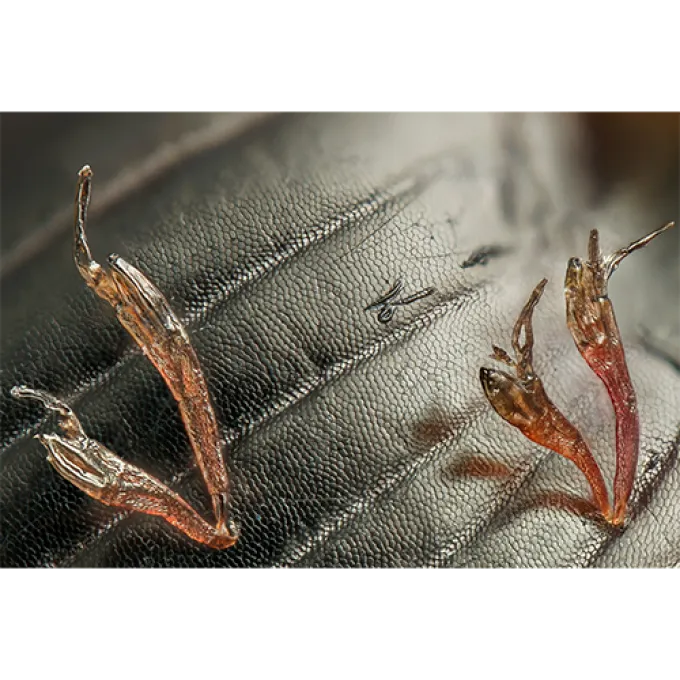
The presence of Laboulbeniales is indicated by the appearance of dark, hair-like, or branched growths on the host's body surface.
These growths are the mature fruiting bodies (perithecia) of the fungus, which are often small enough to require magnification for detailed observation.
They are frequently found clustered on specific parts of the insect's body, such as the legs, elytra, or pronotum, where physical contact with other individuals occurs most often.
Visible symptoms can look like a patchy or crusty discolouration on the insect's exterior, especially when infection intensity is high.
Diagnosis in the field is usually performed using a hand lens, while precise identification of the fungal species requires microscopic analysis of perithecial structures.
Pathogen
Laboulbeniales (class Laboulbeniomycetes) are a unique order of fungi that exist as obligate ectoparasites on the exoskeleton of insects and other arthropods.
They are not plant pathogens and do not cause diseases in agricultural crops, but they are significant in the study of insect population dynamics and community ecology.
The fungus develops by attaching to the host's cuticle, creating specialized reproductive structures known as perithecia, rather than developing a traditional expansive mycelium.
Their transmission is highly dependent on direct physical contact between insects, making their distribution correlated with host behavior and density.
Each species within this order typically shows high host specificity, often being restricted to a particular taxonomic group of insects.
Conditions for development
High humidity levels in the microhabitat are essential for the survival of spores and the successful development of the fungus on the insect cuticle.
High host population density serves as the primary driver for spread, as frequent social or mating interactions facilitate spore transfer between individuals.
Stable moderate temperature regimes allow for the prolonged viability of spores in the environment, aiding in their persistence within the ecosystem.
Dense vegetation or sheltered agricultural microclimates provide the optimal environment for both the host insects and the propagation of these fungi.
Seasonal patterns that promote insect aggregation often correlate with higher rates of fungal infection within the local population.
Why it matters
The impact of Laboulbeniales is primarily seen in the potential debilitation of the host insects, which can include both pests and beneficial entomophagous species.
Heavy infections may impede movement, feeding efficiency, or mating behavior, thereby reducing the fitness of the affected insect population.
For agriculture, the main concern is the potential reduction in the efficacy of beneficial insects (like ground beetles) that perform natural pest control.
Although they do not damage crops directly, their interference with insect ecology can lead to indirect consequences in the overall balance of an agroecosystem.
There is no evidence of these fungi producing toxins that affect plant health or yield quality directly.
Protection
There are no specific direct control measures required for Laboulbeniales as they are not pathogens of agricultural commodities.
Management strategies focus on general ecosystem health to maintain robust populations of beneficial insects that can withstand natural parasitic pressures.
Cultural practices that promote airflow and moisture control help limit overly humid microclimates that favor the transmission of such fungal parasites.
Integrated Pest Management (IPM) practices should prioritize the preservation of beneficial insect habitats to ensure they remain effective against crop pests.
Monitoring the health of local insect fauna helps ensure that natural biological controls remain balanced and functional within the farming environment.
Discussion
No discussions yet — be the first.