
Laboulbenia
Laboulbenia
Description
Symptoms
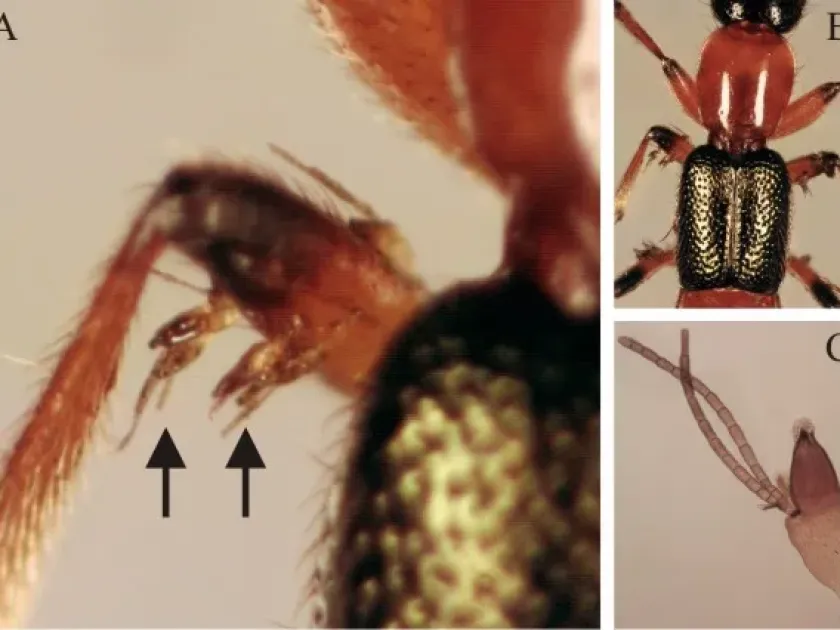
The primary symptom of infection is the presence of tiny, dark, or yellowish, hair-like appendages protruding from the insect's exoskeleton.
These fungal growths are most commonly found on the elytra (wing covers), legs, antennae, and the ventral surface of the abdomen, where physical contact is most frequent.
Under severe infection, the surface of the insect may appear covered in a thick, bristly mat, which can physically impede the movement of leg joints or antennal cleaning.
Visible structures represent the fungal thalli, which grow perpendicularly from the site of attachment on the insect's body.
Detection often requires magnification, as individual fungal thalli are microscopic, typically measuring less than one millimeter in length.
Pathogen
Laboulbenia is a genus of highly specialized, obligate ectoparasitic fungi belonging to the phylum Ascomycota. Unlike typical plant pathogens, these fungi grow exclusively on the external surfaces (exoskeleton) of living insects.
The fungus attaches itself to the insect's cuticle using a specialized structure called a haustorium or rhizoid, which penetrates the chitin to absorb nutrients from the insect's hemolymph.
The life cycle is intricately linked to the host's behavior, as spore transmission occurs almost exclusively through direct physical contact between insects, such as during mating or aggregation.
In an agricultural context, Laboulbenia is not considered a plant disease but is a significant factor in the population dynamics of beneficial insects, such as predatory beetles.
The genus includes hundreds of described species, each demonstrating a high degree of host specificity, often targeting only one or a few related beetle species.
Conditions for development
The spread of Laboulbenia is density-dependent; the risk of infection increases significantly when insect populations are high and contacts between individuals are frequent.
High relative humidity and moderate temperatures provide optimal conditions for spore germination once they adhere to the insect's chitinous surface.
Micro-habitats that foster insect aggregation, such as damp soil, leaf litter, or crevices in tree bark, facilitate the transmission of the fungus between hosts.
The health status of the insect population also influences susceptibility, as weakened insects may be more prone to establishing heavy fungal loads.
Seasonal weather patterns that encourage insect movement and mating activity directly correlate with the prevalence and spread of the parasite.
Why it matters
While Laboulbenia does not directly damage crop plants, it can indirectly harm agriculture by reducing the efficiency of beneficial predatory insects.
Heavy infections can lead to reduced vigor, impaired reproductive success, and increased mortality among beneficial beetles, such as ground beetles or ladybirds.
A decline in the effectiveness of natural insect predators can lead to increased pest pressure, indirectly impacting crop yields and quality.
However, the fungus rarely causes the total collapse of a host population, as it has evolved to maintain a balance with its host over a long period.
The primary ecological impact is the cumulative sub-lethal stress placed on populations of insects that perform essential ecosystem services.
Protection
There are no chemical control measures specifically targeting Laboulbenia, as it is a natural component of insect ecology and not a direct threat to crop health.
Preventative strategies focus on maintaining biodiversity and habitat health to ensure robust populations of beneficial insects capable of resisting environmental stress.
Avoiding the overuse of broad-spectrum insecticides is crucial, as these chemicals often disproportionately affect beneficial predators and disrupt natural biocontrol.
Agricultural practices that support diverse insect communities help keep parasitic loads in balance and prevent massive, ecosystem-disrupting outbreaks.
Ongoing monitoring of entomofauna provides insights into the health of the local ecosystem, allowing farmers to adjust integrated pest management plans accordingly.
Discussion
No discussions yet — be the first.