
Kuehneromyces
Kuehneromyces
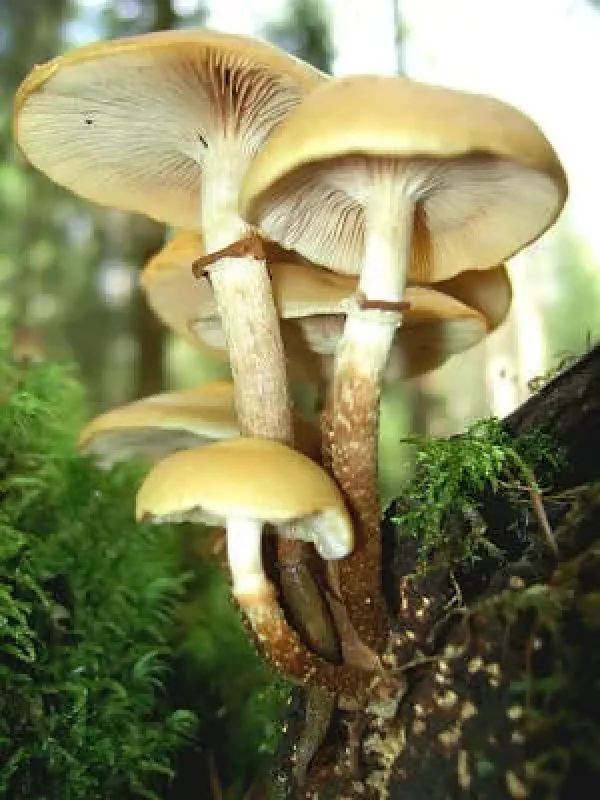
Description
Symptoms
The most evident sign of infestation is the emergence of dense clusters of fruiting bodies on the trunk or bark surfaces.
Internally, the wood becomes bleached and light-colored, often featuring distinct dark lines that demarcate the infected zones.
The bark in the affected areas may appear cracked, loose, or softened, indicating significant degradation of the underlying wood.
Canopy thinning and premature leaf discoloration are often observed as the vascular system of the tree is compromised.
Over time, the tree experiences structural failure, making it highly susceptible to snapping under wind pressure or heavy snow.
Pathogen
The genus Kuehneromyces belongs to the Strophariaceae family and comprises wood-decaying fungi that can act as opportunistic pathogens.
The most common representative, Kuehneromyces mutabilis, is known to cause white rot in both living and dead deciduous trees.
The fungus typically enters trees through wounds in the bark, broken branches, or root injuries, gradually colonizing the heartwood and sapwood.
Through the secretion of specific enzymes, the mycelium breaks down structural components like lignin and cellulose, leading to a loss of wood density.
The life cycle involves the production of basidiospores that are dispersed by wind and rain, allowing the pathogen to spread to neighboring trees.
Conditions for development
High humidity and mild temperatures are the primary environmental drivers that favor the rapid growth of Kuehneromyces mycelium.
Trees that are already under stress due to drought, poor soil quality, or mechanical damage are significantly more vulnerable to infection.
Poorly maintained orchards with abundant woody debris and decaying stumps serve as major reservoirs for fungal spores.
Sites with impeded drainage create a moist microclimate, which is ideal for the colonization of the lower stem and roots.
Improper pruning techniques, which leave large, unprotected wounds, provide direct pathways for fungal spores to enter the wood.
Why it matters
The primary concern is the rapid degradation of wood, which can turn healthy trees into hazardous structures in a matter of years.
In fruit production, the disease significantly reduces tree lifespan, leading to reduced yields and eventual death of the affected specimen.
The infection is often hidden, and by the time visible symptoms appear, the internal decay may already be advanced and irreversible.
Contagion is persistent, and the proximity of decaying trees in a garden can lead to a quick spread of the disease through the root system or air.
The overall impact includes the loss of long-term investments in the orchard and the necessity for costly removal of compromised trees.
Protection
Integrated management is essential, focusing primarily on prevention and the elimination of favorable conditions for fungal development.
Regular sanitation of the orchard, including the removal of old stumps and dead wood, is the most effective way to reduce the infection risk.
All pruning wounds should be properly treated with protective sealants to prevent fungal entry and encourage rapid healing.
Maintaining tree vitality through appropriate irrigation and nutrient management helps plants resist colonization by opportunistic pathogens.
- Prompt removal and destruction of visible fruiting bodies to stop spore dispersal.
- Monitoring trees for early bark abnormalities or localized discoloration.
- Strategic fungicide applications on fresh wounds in high-risk zones.
Discussion
No discussions yet — be the first.