
Kretzschmaria cetrarioides
Kretzschmaria cetrarioides
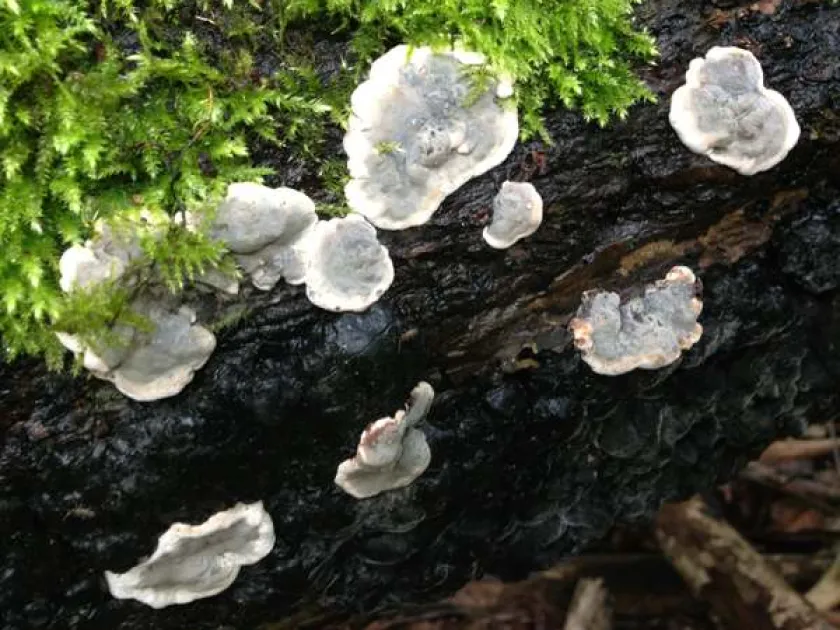
Description
Symptoms
External signs of the fungus are characterized by the emergence of specific fruiting bodies on the bark of infected trees. These appear as flat, black, slightly raised structures that adhere tightly to the bark surface.
Internal changes in the wood are accompanied by the development of white rot. The mycelium penetrates deep into the tissues, degrading lignin and cellulose, which leads to a significant loss of mechanical strength in the trunk and scaffold branches.
As the pathogen progresses, the bark in the affected areas may crack, peel, and fall off, exposing the ulcerated wood surface. Often, changes in bark color and the appearance of necrotic zones can be observed around the fruiting bodies.
Trees showing signs of infection gradually lose their vitality. Externally, this manifests as premature yellowing of leaves, wilting of individual branches in the crown, and a general thinning of the vegetative structure.
In advanced cases of infection, the tree crown becomes extremely sparse, and the trunk loses structural integrity, creating a high risk of windthrow or breakage even during minor wind gusts.
Pathogen
The causal agent is the fungus Kretzschmaria cetrarioides (synonym Hypoxylon cetrarioides), which belongs to the Ascomycota division. It is a wood-decaying xylotrophic fungus that causes progressive wood rot.
The pathogen’s life cycle includes the formation of a stroma, inside which ascospores develop. The spores of the fungus are spread by air currents, raindrops, or insects, landing on damaged parts of the tree bark.
The fungus acts as a facultative parasite, often colonizing weakened, damaged, or old trees. Its activity leads to the degradation of wood fibers, classifying it as a white rot pathogen.
The biology of the species is closely linked to the decomposition of organic substrates. During growth, the fungus secretes specific enzymes that break down the wood structure, providing itself with nutrition for further development and sporulation.
The fungus's resistance to environmental factors is ensured by its ability to persist in wood debris for long periods, waiting for favorable conditions for active reproduction.
Conditions for development
High humidity and moderate temperatures during the spring-autumn period promote the growth of the fungus. Optimal conditions allow spores to germinate quickly upon reaching a suitable substrate.
The presence of mechanical damage, frost cracks, or sunscald on trunks significantly increases the risk of infection, as the mycelium can easily penetrate deep into the tree through these wounds.
Plantations growing on waterlogged soils or experiencing a deficiency in mineral nutrition become most susceptible to Kretzschmaria cetrarioides due to a decrease in the tree's natural immunity.
Dense plantings with poor air circulation contribute to the accumulation of moisture on the bark, creating an ideal environment for spore germination and subsequent fungal infection development.
Lack of sanitary maintenance in gardens or parks leads to the accumulation of an infectious background, making the spread of the fungus widespread when favorable climatic factors occur.
Why it matters
The primary damage lies in the irreversible destruction of the trunk wood, leading to the tree's death. The gradual loss of structural integrity turns the plant into a potentially dangerous hazard.
The loss of wood mechanical strength sharply increases the likelihood of trees falling near buildings or pedestrian zones. This poses a serious threat to public safety and property integrity.
The fungus negatively impacts the productivity of tree species, reducing their growth rates and ornamental value. In forest ecosystems, this leads to the loss of individual trees within the stand composition.
Infected trees become sources of infection for neighboring healthy individuals. The high spore production of the pathogen facilitates rapid colonization of the entire tree population in a local area.
Economic damage includes the costs associated with the removal of hazardous trees, loss of timber, and the necessity of implementing expensive protective measures in ornamental plantations.
Protection
The key method of protection is strict adherence to sanitary hygiene rules. Regular clearing of the territory from deadwood, fallen branches, and logging residues reduces the spore population in the environment.
It is important to treat mechanical bark damage in a timely manner. Any wounds on trunks should be disinfected with fungicide solutions and sealed with garden wax or special wound-dressing sealants.
Maintaining a high level of agrotechnology is necessary: provide timely fertilization and irrigation. A strong, healthy tree possesses its own defensive mechanisms to resist invasion.
Upon detection of initial signs of fruiting bodies, infected parts of the tree must be removed, or the entire tree should be felled if the damage is severe. The removed wood must be disposed of immediately.
Chemical protection in forest conditions is limited; however, in ornamental gardens, the use of systemic fungicides is permissible as a preventative measure, especially in areas with a history of fungal pressure.
Discussion
No discussions yet — be the first.