
Kabatina blight
Kabatina
Description
Symptoms
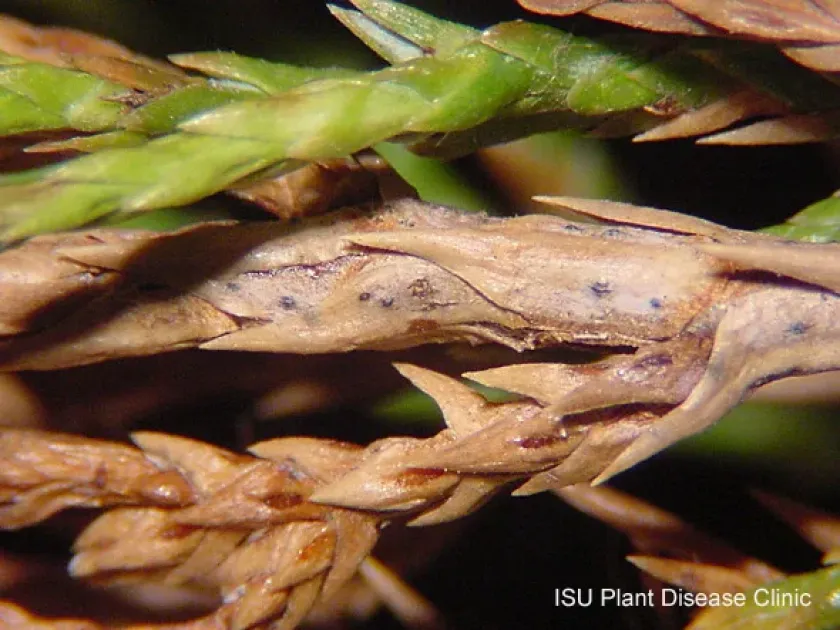
The first visual signs of Kabatina blight appear on the tips of young shoots, which begin to yellow and then turn brown or tan.
Affected foliage eventually sheds, leaving branches bare and giving the plant a ragged and unhealthy appearance.
On dead bark and needles, small, cream-colored sporulating pustules may be observed during the spring season.
The disease often causes dieback of individual branches, which disrupts the natural architecture of ornamental trees and shrubs.
Unlike some other blights, Kabatina primarily targets current-year growth, slowly progressing further into the plant's canopy.
Pathogen
The pathogen responsible for this disease is an ascomycete fungus from the Kabatina genus, most commonly Kabatina juniperi.
This fungus is classified as a mitosporic fungus and lives as a parasite on the living tissues of plants in the Cupressaceae family.
The infection persists within infected shoot tissues and needles as mycelium, which is capable of surviving through cold winter conditions.
Spore dispersal occurs primarily through rain splashes, wind, and transmission via contaminated pruning tools.
The biology of the pathogen is closely tied to the host plant's health, making it particularly dangerous for nursery-grown seedlings.
Conditions for development
High humidity and mild, warm weather, typical of the spring season, are optimal for the development of the infection.
Dense plantings with poor air circulation create an ideal microclimate for the fungus to germinate on the surface of the needles.
Plant stress resulting from nutrient deficiency, improper watering, or mechanical damage significantly increases the risk of infection.
Sudden temperature fluctuations and spring frosts causing micro-cracks in young shoots provide entry points for the pathogen.
Prolonged presence of free moisture (dew or rain) on the foliage is critical for conidial germination and successful host infection.
Why it matters
Kabatina blight causes significant damage to ornamental conifers, especially junipers, reducing both their market value and visual appeal.
If left untreated, the disease can lead to the total death of the plant, especially if a large portion of the crown is affected.
The chronic form of the disease depletes the tree's energy reserves, leaving it vulnerable to secondary pests such as bark beetles.
In nurseries, the spread of this fungus often leads to the culling of large batches of stock, resulting in substantial financial losses.
Persistent infestation impairs the plant's photosynthetic capacity, inhibiting normal growth and overall plant development.
Protection
The foundation of management is timely sanitary pruning and the destruction of infected shoots where the fungus overwinters.
Regular preventive applications of copper-based fungicides during the spring and autumn are essential for disease suppression.
- Disinfecting pruning tools after working with infected plant material.
- Maintaining optimal irrigation to avoid excessive soil moisture.
- Ensuring proper spacing between plants to enhance ventilation.
- Applying systemic fungicides during periods of active plant growth.
To improve plant resistance, balanced fertilization programs should be implemented to strengthen the conifer's immune system.
The use of plant growth regulators and biostimulants helps plants recover more quickly from stress and fungal pressure.
Discussion
No discussions yet — be the first.