
Icmadophilaceae
Icmadophilaceae
Description
Symptoms
The presence of Icmadophilaceae is indicated by the growth of thalli, which are the body structures of the lichen, on stable surfaces.
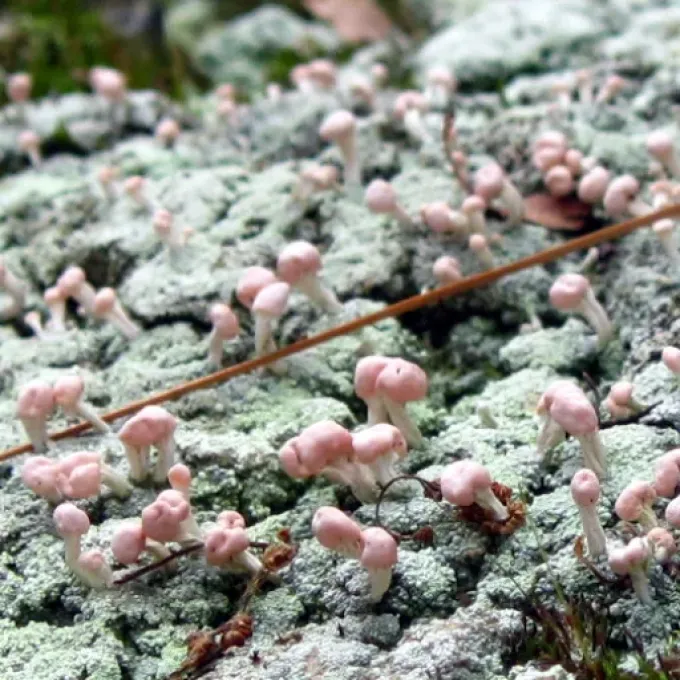
They often feature distinct, colorful apothecia (fruiting bodies), typically appearing in shades of pink, white, or beige.
The thallus can appear as a crust-like or squamulose structure, firmly attached to the bark or decaying wood surfaces.
There is a total absence of disease symptoms such as necrosis, chlorosis, wilting, or structural decay in the host plant.
These features serve as an indicator of an ecosystem's ecological stability rather than an indicator of crop infestation.
Pathogen
The Icmadophilaceae family is not a plant disease agent; it is a taxonomic group of fungi that form lichens, belonging to the order Pertusariales.
These organisms exist in a symbiotic relationship with algae or cyanobacteria, colonizing non-living substrates like dead wood or mossy soil.
Unlike pathogenic fungi that infect plants, Icmadophilaceae do not derive nutrients from living plant tissues or cause disease symptoms.
Their ecological role is primarily focused on organic matter degradation and soil mineral cycling in various natural ecosystems.
It is crucial for agronomists to distinguish between saprophytic/epiphytic lichen fungi and actual infectious phytopathogens.
Conditions for development
Growth of Icmadophilaceae is facilitated by high humidity, stable temperatures, and the availability of suitable substrates for colonization.
They thrive in environments where surfaces remain moist for extended periods, allowing for the metabolic activities of the lichen.
Air purity is often an essential prerequisite for their development, as they are sensitive to industrial pollutants and heavy chemicals.
Dispersal occurs mainly through spores carried by wind, allowing them to settle in areas with favorable microclimates.
Agricultural environments that maintain high humidity levels and lack intensive management may occasionally host these organisms on old wood.
Why it matters
Icmadophilaceae cause no economic damage to crops and do not impact the productivity or health of cultivated plants.
They function solely as epiphytes, residing on the surface of bark without penetrating living tissues or disrupting plant metabolism.
There is no risk of yield reduction or crop failure associated with these fungi, making them harmless to agriculture.
Attempting to remove them is unnecessary and does not yield any agronomic benefit for the vitality of trees or shrubs.
Protecting the biodiversity of the orchard means accepting these organisms as a natural component of the woody habitat.
Protection
Since Icmadophilaceae are not pathogenic, there is no need for chemical control, fungicides, or specific intervention strategies.
Good horticultural practices, such as proper pruning and clearing deadwood, naturally regulate the surface area available for colonization.
Chemical applications intended to kill lichens can often be harmful to the beneficial bark microbiome and should be avoided.
Focusing on plant vigor and tree health will naturally prevent the overgrowth of any epiphytic organisms on perennial crops.
- Maintain proper tree crown airflow
- Practice routine orchard sanitation
- Prioritize ecological balance over unnecessary chemical use
Discussion
No discussions yet — be the first.