
Hypoxylon canker
Hypoxylaceae
Description
Symptoms
Initial signs often include sunken or discolored areas on the bark. As the disease progresses, the bark begins to crack, peel, or slough off entirely, exposing the wood underneath.
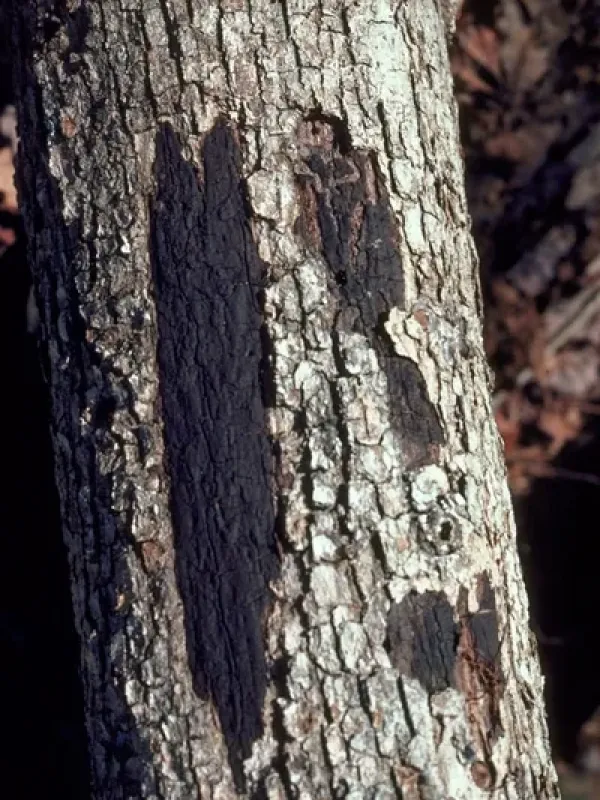
The most diagnostic feature is the appearance of dark, crusty, or charcoal-like stromata breaking through the bark. These are typically black or dark brown and vary in size and shape depending on the species.
Leaves on infected branches may yellow prematurely and eventually drop. Significant branch dieback is common, and the tree may show a thinning canopy as the vascular transport is choked off.
Beneath the damaged bark, a characteristic fan-shaped mycelial growth is often visible. The wood itself may become brittle and lose its structural integrity, exhibiting a bleached or decayed appearance.
During moist conditions, small pores on the stroma surface may exude reproductive material. This indicates an active cycle of sporulation, capable of spreading the infection to neighboring trees.
Pathogen
Hypoxylon canker is caused by several species of fungi in the family Hypoxylaceae. These pathogens are primarily opportunistic, meaning they infect trees that are already stressed or compromised by environmental factors.
The fungus develops stromata, which are dense mats of fungal tissue that rupture the outer bark layers of the host. These structures are the primary indicators of the presence of the pathogen and the source of reproductive spores.
Once established, the mycelium spreads within the inner bark and cambium, disrupting the tree’s vascular system. By secreting enzymes, the fungus breaks down the wood structure, leading to localized necrosis.
These fungi can survive in dead wood for long periods, acting as saprotrophs until they find a susceptible host. Their ability to persist in the environment makes them persistent threats in both forest and orchard settings.
Dissemination occurs primarily through airborne spores, although water runoff can also carry them to new infection sites. The infection process is slow and often goes unnoticed until significant damage has occurred.
Conditions for development
Stress is the primary driver of Hypoxylon susceptibility. Drought, flooding, soil compaction, and mechanical damage make trees highly vulnerable to fungal invasion.
High humidity and mild temperatures provide the optimal environment for spore germination and mycelial growth. These conditions facilitate rapid expansion of the fungus within the bark tissues.
Poor orchard management, such as lack of pruning or inadequate nutrient supply, significantly increases the risk of infection. Injuries resulting from improper pruning are common entry points for the pathogen.
Crowded environments with poor air circulation prevent bark from drying, which encourages fungal proliferation. Shaded, damp conditions allow the fungus to remain active for extended periods.
The presence of existing wounds, including frost cracks or sunscald, creates a perfect micro-environment for the fungus to initiate infection. The slower the tree heals, the higher the likelihood of a successful invasion.
Why it matters
Hypoxylon canker causes severe necrotic lesions that impede the flow of water and nutrients. This disruption leads to the death of affected branches and, eventually, the entire tree if the trunk is girdled.
The structural degradation of the wood increases the risk of limb failure and windthrow. This poses a significant safety hazard, particularly in residential areas or along roadsides.
Economic damage is profound in timber production and fruit orchards. Infected trees lose their commercial value and often must be removed to prevent the spread of the pathogen.
By weakening the tree, Hypoxylon predisposes it to secondary infestations by wood-boring insects, such as bark beetles. This combination of biotic factors rapidly accelerates the mortality of the host.
Once a grove or forest stand is infected, the disease can spread systematically, leading to long-term management challenges. Early intervention is essential to prevent large-scale loss.
Protection
Sanitation is the cornerstone of management. All infected branches or dead trees should be pruned and removed immediately to reduce the overall spore load in the area.
Effective wound management is crucial. Any large pruning cuts should be sealed with appropriate dressings to prevent spore entry. Tools should be disinfected between trees to prevent cross-contamination.
Maintaining tree vigor is the best natural defense. Regular irrigation during dry spells and proper fertilization support the tree's immune system, helping it wall off fungal infections.
Fungicidal applications may offer temporary protection, particularly on high-value specimens. However, these treatments should always be part of a broader integrated pest management program.
- Remove and destroy all infected wood by burning or deep burial.
- Avoid wounding tree trunks with lawnmowers or equipment.
- Thin out stands to improve sunlight exposure and air circulation.
- Monitor trees regularly for signs of bark discoloration or stroma.
Discussion
No discussions yet — be the first.