
Hypomyces
Hypomyces
Description
Symptoms
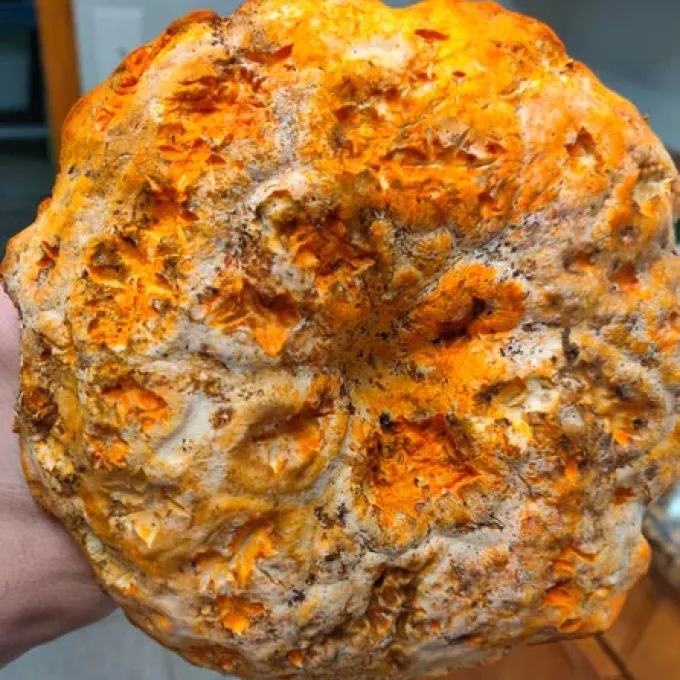
The primary symptom of a Hypomyces infection is the appearance of a dense, colored fungal mat covering the host's cap and stalk. This mat can range in color from white and yellow to vibrant orange or red.
The host mushroom often experiences significant physical transformation, becoming hard, dense, or deformed. The hymenium (spore-bearing surface) becomes obscured and non-functional, halting the host's natural reproduction.
Tiny, pimple-like structures, which are the perithecia of the parasite, eventually form on the surface of the infected host. These represent the mature, sexual stage of the pathogen.
The texture of the host changes to a firm, shell-like consistency, often described as similar to a crustacean's carapace. This modification is a diagnostic trait for many Hypomyces infections.
There may be a distinct, sometimes pungent odor associated with the infection, which differs significantly from the pleasant aroma of healthy mushrooms.
Pathogen
Hypomyces is a genus of fungi belonging to the Ascomycota division, known for its parasitic lifestyle. These organisms are specialized mycoparasites that feed on the fruiting bodies of other fungi, effectively hijacking their biological resources.
One of the most notable species, Hypomyces lactifluorum, is responsible for infecting species like Lactarius and Russula, creating the famous «lobster mushroom.» Other species, such as Hypomyces chrysospermus, frequently target boletes.
The life cycle involves an asexual conidial stage and a sexual stage that produces perithecia. These structures contain spores, which serve as the primary means of dispersal within the host environment.
Infection begins when spores land on the host's surface and germinate. The parasitic hyphae penetrate the mushroom tissue, spreading internally and eventually replacing the host's normal morphology with the parasite's own structures.
These fungi play a significant role in ecological balance by regulating mushroom populations and recycling organic matter in forest ecosystems through their host-specific activity.
Conditions for development
High humidity and moisture levels are the most critical factors for Hypomyces growth and development. These conditions allow spores to germinate rapidly and the mycelium to colonize the host efficiently.
The optimal temperature for most species typically ranges from 15°C to 22°C, which often corresponds to the peak fruiting season of the host mushrooms in forest environments.
Spores of the parasite remain viable in the soil and leaf litter for extended periods, serving as a constant inoculum source for future infections when conditions align.
Insects, such as fungus gnats and beetles, play an important role in transmitting the spores between host mushrooms, accelerating the spread of the disease through the forest.
Poor aeration in forest stands or cultivated environments creates stagnant moisture pockets, significantly increasing the probability of a Hypomyces outbreak.
Why it matters
The primary damage caused by Hypomyces is the rendering of mushrooms inedible or unappealing to consumers, resulting in total loss of crop value.
In forest ecology, aggressive parasitism can suppress the reproduction of specific mushroom species, leading to localized declines in their populations over several seasons.
In professional mushroom farming, Hypomyces and related mycoparasites represent a severe threat, capable of destroying an entire room's production within a few days.
Infected mushrooms lose their marketable characteristics, failing to meet aesthetic standards and posing a food safety risk if secondary bacterial pathogens also colonize the tissue.
The rapid destruction of host tissues leads to the release of toxins and enzymes, which can negatively impact the quality of the surrounding substrate in cultivated systems.
Protection
In natural settings, sanitation is key: removing old, decaying, or clearly infected mushrooms can help reduce the localized spore load and prevent further outbreaks.
In commercial cultivation, rigorous pasteurization or sterilization of the growing substrate is essential to eliminate any dormant spores that could trigger an infection.
Maintaining proper environmental control, specifically managing relative humidity and ensuring good air circulation, prevents the formation of the moisture layer required by the parasite.
Regular inspection and immediate isolation of contaminated growing blocks are standard protocols used to prevent the spread of the pathogen throughout a facility.
While chemical control options exist, they are highly restricted in mushroom farming due to safety concerns, making prophylactic environmental management the most reliable defense.
Discussion
No discussions yet — be the first.