
Hypohelion
Hypohelion
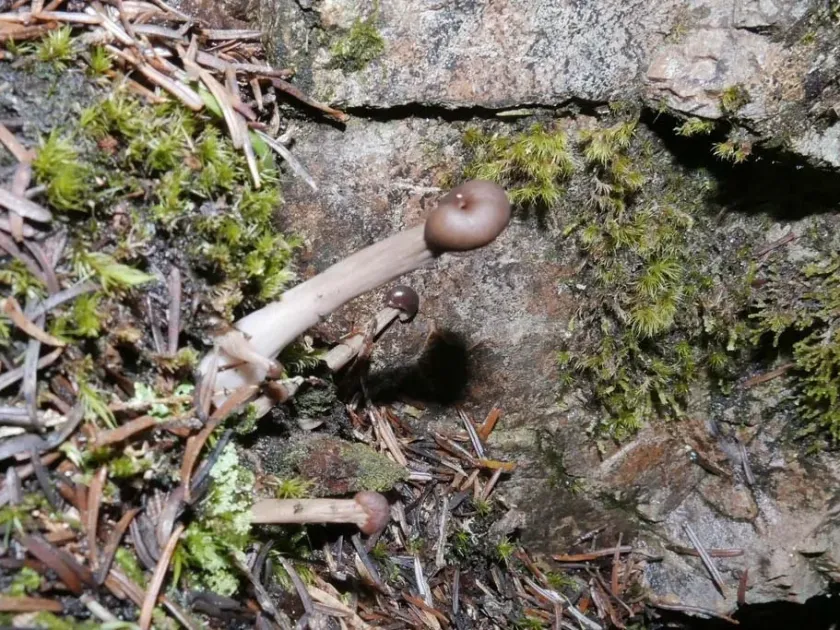
Description
Symptoms
The primary symptom of Hypohelion infection is a specific deformation of plant tissues caused by the disruption of phototropism. Stems begin to curve away from the light source, often resulting in a characteristic twisting or bending of the tips.
At early stages, chlorotic spots appear on leaves and young stems, which gradually develop into necrosis. Tissues at the infection sites become brittle, leading to easy breakage under mechanical stress or wind.
A typical symptom is a general slowdown in the plant's metabolism, causing stunted growth. Inside the stems, vascular conductivity is disrupted, leading to wilting even when soil moisture levels are adequate.
As the disease progresses, a specific coating consisting of conidia of the pathogen fungus forms on the underside of the leaves. This coating can appear grayish or yellowish, significantly reducing the leaf's photosynthetic area.
The final stage of the disease is characterized by a complete loss of turgor in the affected areas, followed by tissue blackening and the eventual death of the entire above-ground part of the plant.
Pathogen
The disease is caused by specific endophytic fungi belonging to the genus Hypohelion. These pathogens demonstrate a high affinity for the meristematic tissues of host plants.
The fungus typically invades the plant through micro-wounds in the epidermis or via natural openings such as stomata under high humidity conditions. Once inside, it spreads through intercellular spaces, releasing toxins.
The biology of the pathogen is closely linked to its ability to alter the plant's hormonal balance, particularly by disrupting auxin synthesis. This interference with plant hormones is what drives the abnormal curvature symptoms.
The condition is classified as a systemic mycosis. The pathogen can survive in the form of dormant spores in plant debris or soil for several years.
The fungal mycelium efficiently consumes nutrients from the host, gradually depleting the plant's energy reserves while preparing for the active sporulation phase.
Conditions for development
Hypohelion development is favored by high relative humidity exceeding 80%, which must persist for an extended period. These conditions are ideal for the germination of fungal spores.
The temperature range optimal for the rapid spread of the infection is between 18 and 24 degrees Celsius. At temperatures below 10 degrees, the development of the fungus slows significantly but does not cease entirely.
Poor lighting acts as a predisposing factor, as weakened plants are much more susceptible to fungal entry. Crops grown in dense plantings with inadequate air circulation are particularly at risk.
The presence of free moisture on the leaf surface, such as dew or condensation, drastically increases the probability of infection. Consequently, greenhouse environments often experience faster disease spread than open fields.
Excessive nitrogen fertilization during the growing season promotes the development of succulent tissues, which facilitates fungal penetration and accelerates the progression of the mycosis.
Why it matters
The damage caused by Hypohelion involves a sharp decline in crop yield due to growth inhibition and disrupted physiological processes. Infected plants often fail to produce marketable quality yields.
Infected specimens become highly vulnerable to secondary infections because their structural integrity is compromised. This often leads to the onset of bacterial rots and secondary mold growth.
Significant losses are observed in fruit quality, which may lose flavor, sugar content, and storage durability. Premature fruit drop is also a common occurrence.
On an industrial scale, the disease can destroy up to 40% of the harvest if adequate protection measures are not implemented. The disease spreads rapidly via air currents and water droplets.
The economic burden stems from the costs of fungicide applications and the reduction in marketable crop mass, making the control of this pathogen a priority for agricultural producers.
Protection
The first step in control is strict adherence to crop rotation, ensuring that susceptible species are not replanted in the same area for at least 3 to 4 years.
It is essential to thoroughly remove and destroy all crop residues after harvest, as these serve as the primary reservoir for the survival of fungal spores.
The use of resistant cultivars and hybrids is the most effective method for suppressing the disease. Breeding programs focus on enhancing plant immunity to the pathogen.
Upon detecting the first symptoms, it is recommended to apply systemic fungicides. The choice of chemical agents should be based on local phytosanitary service guidelines.
- Optimizing planting density to improve airflow.
- Ensuring proper ventilation in greenhouse structures.
- Applying irrigation at the base of the plant to avoid overhead watering.
- Managing nitrogen nutrition to prevent excessive tissue softness.
Discussion
No discussions yet — be the first.