
Ivy Hypoderma
Hypoderma hederae
Description
Symptoms
The primary symptom of Ivy Hypoderma is the appearance of distinct spots on the leaves. These spots are typically brown or dark grey, often appearing as necrotic patches that disrupt the uniform green color of the ivy.
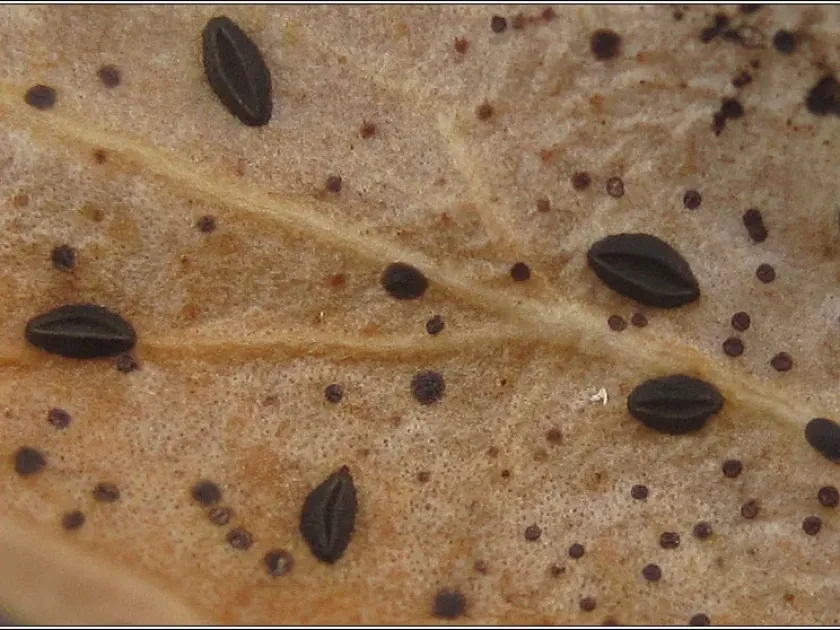
As the infection progresses, small, elongated, or oval-shaped fruiting bodies emerge on the surface of the lesions. These look like tiny black dots or bumps and are a diagnostic feature of the fungus.
In cases of severe infection, individual spots merge together to form large blighted areas. This leads to the eventual death of the entire leaf, causing premature yellowing and leaf drop.
Affected leaves often lose their natural luster and waxy texture, becoming brittle. If left untreated, the plant may experience significant defoliation, particularly in the lower parts of the stems.
Under humid conditions, a sparse fungal growth may be visible on the surface of the lesions. Close inspection with a hand lens can reveal the fungal structures embedded within the necrotic tissue.
Pathogen
The causative agent of this disease is the ascomycete fungus Hypoderma hederae. This pathogen is a specialized parasite that primarily targets the foliage of ivy plants, often remaining active throughout the year.
The life cycle of the fungus involves the production of apothecia, which are small fruiting bodies that develop within the leaf tissue. These structures release spores that facilitate the spread of the disease to adjacent leaves and plants.
The fungus colonizes the epidermal layers of the ivy leaf, extracting nutrients and disrupting normal cellular activity. This invasive growth is what causes the visible spots and necrotic zones on the plant's surface.
Hypoderma hederae is well-adapted to the growth cycle of evergreen ivy. It can survive in fallen, decaying leaves, which serve as a persistent reservoir of inoculum in the garden environment.
Unlike some aggressive pathogens, this fungus often develops slowly, which can make it difficult to detect in the very early stages of infection before visible spots appear.
Conditions for development
High humidity and moisture are the most critical factors driving the development of Ivy Hypoderma. Prolonged periods of wet foliage provide the ideal environment for fungal spores to germinate and penetrate the leaves.
Poor air circulation, often found in dense plantings or crowded garden beds, significantly increases the risk of infection. Stagnant air prevents leaves from drying quickly after rainfall or irrigation.
Mild to warm temperatures combined with high moisture levels accelerate the spread of the pathogen. These conditions allow the fungus to complete its reproductive cycle much faster.
Plants that are already stressed, such as those grown in poor soil or suffering from nutritional deficiencies, are more susceptible. A healthy plant with a strong immune system can better resist the initial fungal colonization.
Inadequate sanitation practices, such as leaving diseased plant debris beneath the ivy, provide a constant source of infection that can be spread by splashing water or wind-borne spores.
Why it matters
The main impact of this disease is the severe loss of ornamental value. Since ivy is primarily grown for its lush, consistent foliage, the presence of brown, necrotic spots makes the plant visually unappealing.
Premature leaf drop leads to thin, leggy growth, which weakens the overall structure of the plant. A reduced leaf area limits the plant's photosynthetic capacity, resulting in stunted growth.
Persistent fungal activity weakens the plant's resistance to other environmental stresses, such as winter cold or drought. This can lead to a decline in plant vigor over several seasons.
In nursery environments, an outbreak can be economically damaging. The pathogen spreads quickly between containers, potentially leading to the loss of large batches of stock.
Severely infested plants may become reservoirs for other opportunistic pathogens, creating a complex disease situation that is harder to treat and manage effectively.
Protection
Strict sanitation is the cornerstone of managing Ivy Hypoderma. All infected leaves should be manually removed and destroyed immediately to minimize the spread of spores.
Avoid overhead irrigation at all costs. Water should be applied at the base of the plant to keep the leaves dry, which is essential for inhibiting fungal growth.
Improve air circulation around the plants by pruning and thinning out thick patches of ivy. This helps the foliage dry out rapidly after rain, reducing the chances of spore germination.
Preventive fungicide applications can be used if the disease has been a recurring issue. Copper-based fungicides or appropriate systemic treatments are generally effective in protecting healthy tissue.
- Regularly rake and discard fallen leaves during the autumn.
- Ensure adequate spacing between plants to allow airflow.
- Maintain optimal soil fertility to boost the plant's natural defenses.
- Sanitize pruning tools between cuts to prevent cross-contamination.
Discussion
No discussions yet — be the first.