
Hyphodontia
Hyphodontia
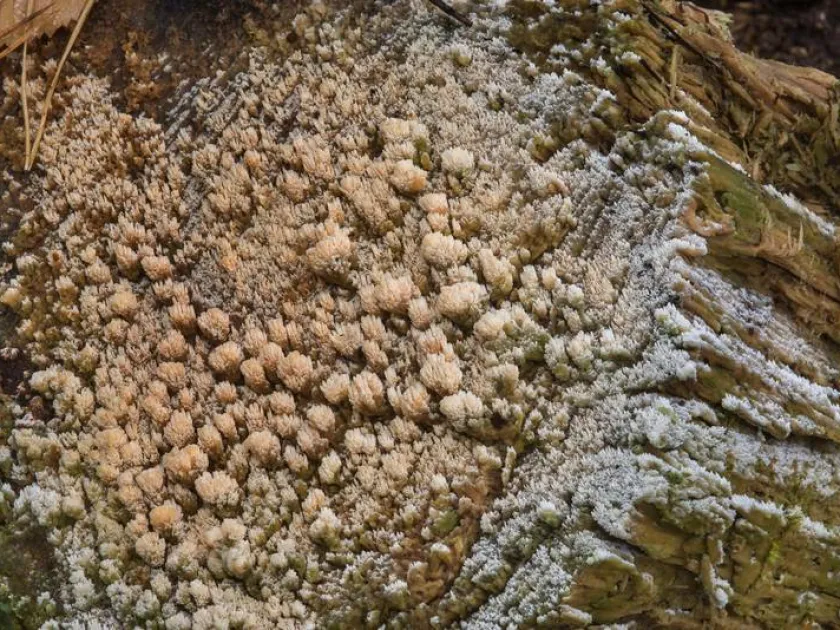
Description
Symptoms
The most visible sign of infection is the presence of crust-like or effused-reflexed fungal fruiting bodies on the bark. These are typically white, cream, or yellowish, often appearing as a thin, arachnoid membrane.
Internally, the wood becomes bleached, soft, and fragile. As the rot progresses, the wood loses its characteristic strength, often showing stringy or spongy textures in advanced stages of decay.
Tree canopy symptoms include stunted growth, chlorosis, and the dieback of branches. This is the result of the fungus disrupting the water and nutrient transport systems within the trunk or limbs.
Bark cracking and peeling are common indicators that the underlying tissue is compromised. In some cases, localized gumming may occur as the tree attempts to seal off the colonized area.
- Cream-colored crusts on bark
- Soft, bleached wood texture
- Dieback of canopy branches
- Cracking and sloughing bark
- Spongy wood decay
Pathogen
The genus Hyphodontia consists of wood-inhabiting fungi known for their role in decomposition within forest ecosystems. While primarily saprotrophic, these fungi can act as opportunistic pathogens, targeting trees weakened by environmental stressors or injuries.
The disease is caused by basidiomycete fungi that reproduce through airborne spores. These spores find entry points in trees through pruning wounds, frost cracks, or damage caused by pests and machinery.
Classified as a cause of white rot, the fungus secretes enzymes that break down lignin and cellulose in wood. This enzymatic degradation leads to the loss of physical structural integrity in the tree's xylem.
The biology of Hyphodontia is deeply linked to the recycling of organic matter. It thrives by colonizing dead or dying woody tissues, slowly expanding its mycelial network throughout the host's structure.
The pathogen remains viable inside the host tissue for many years. It is persistent, often waiting for the host's natural defenses to drop before advancing further into healthy sapwood.
Conditions for development
Hyphodontia flourishes in environments with high humidity and moderate temperatures. It is most active during extended rainy periods when the bark and wood surface stay consistently moist.
Improper pruning techniques that leave large, untreated wounds provide an ideal gateway for the fungus. Similarly, physical injuries from machinery or wildlife create entry points that favor fungal establishment.
Poorly ventilated planting areas with high tree density limit airflow, increasing humidity around the trunks. This creates a microclimate that allows fungal spores to germinate and colonize bark fissures more easily.
Trees undergoing drought stress or nutrient deficiencies have reduced immunological resistance. Such conditions make them highly susceptible to infection compared to well-maintained, vigorous specimens.
Seasonal weather patterns, specifically rapid freezes causing frost cracks, expose inner wood layers. These cracks serve as protected reservoirs for the fungus to initiate its colonization process.
Why it matters
The primary concern regarding Hyphodontia is the compromise of the tree's structural integrity. Severe decay in the trunk or main branches significantly increases the risk of windfall or branch failure during storms.
The disease leads to a gradual decline in the tree’s overall health and physiological function. Over time, the inability to transport water effectively results in reduced yields and eventual tree mortality.
Economic damage is substantial, especially in orchards where infected trees must be removed and destroyed to protect surrounding healthy specimens. This loss of production capacity impacts long-term profitability.
The fungus is relatively adaptable, meaning it can jump between different tree species in the landscape. This versatility makes it a constant threat to both ornamental and commercial timber plantations.
Furthermore, wood decayed by this fungus becomes unsuitable for timber use. The ongoing degradation means that even after the tree is felled, the wood quality continues to deteriorate rapidly.
Protection
Proactive tree management is the best defense against Hyphodontia. Ensuring trees receive adequate irrigation and balanced fertilization boosts their natural defenses against wood-decay organisms.
All pruning should be conducted with sterilized equipment to prevent the spread of spores. Any accidental wounds or pruning cuts should be sealed with appropriate wound dressings to prevent pathogen entry.
Sanitation is critical; all dead wood and fallen limbs must be removed from the site and burned or disposed of properly. Eliminating debris reduces the density of fungal spores in the environment.
Early intervention is key if the disease is detected. Affected areas can be carefully cleaned by removing decayed wood until fresh, healthy tissue is reached, followed by the application of fungicidal treatments.
Regular monitoring of the orchard or garden allows for the early removal of severely infected specimens. This acts as a containment measure, preventing the spread of the pathogen to younger, healthy trees.
Discussion
No discussions yet — be the first.