
Hymenoscyphus albidus
Hymenoscyphus albidus
Description
Symptoms
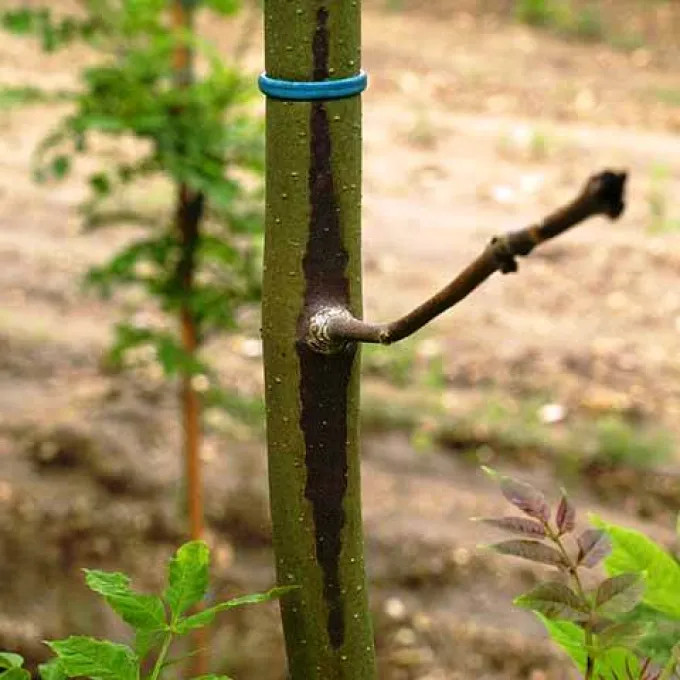
The primary symptom of infection is the necrosis of young twigs and branches, often characterized by the formation of dark, sunken lesions on the bark.
During the growing season, leaves on affected branches may wilt, turn brown, and fall prematurely, leading to sparse foliage and crown thinning.
Beneath the bark, the wood often displays distinct discolored streaks or zones, which gradually expand and interfere with the tree's nutrient transport.
Small, white, cup-shaped fruiting bodies, known as apothecia, emerge from the leaf petioles on the forest floor during the summer months.
As the disease progresses, the tree exhibits significant dieback of the crown, eventually resulting in total tree mortality if the infection remains unchecked.
Pathogen
Hymenoscyphus albidus is an ascomycete fungus that is naturally associated with common ash trees (Fraxinus excelsior).
It typically functions as a saprotroph, decomposing leaf litter, but it can act as a pathogen under conditions that favor its development on living tissues.
It is often confused with Hymenoscyphus fraxineus, a more virulent invasive species that has caused catastrophic declines in ash populations across Europe.
The fungal life cycle involves both sexual reproduction on the leaf stalks and the production of ascospores, which are dispersed by wind currents.
Biological studies indicate that the fungus is highly adapted to the host's phenology, timing its release of spores to coincide with the leaf development of ash.
Conditions for development
High relative humidity and moderate temperatures are the primary environmental drivers that trigger the maturation and release of fungal spores.
Densely planted forests with poor airflow provide a sheltered microclimate that promotes the survival and rapid spread of the pathogen.
Periods of frequent rainfall during the summer months are critical for the mass germination of spores on the stems and leaves of susceptible trees.
A thick layer of decaying ash leaf litter on the ground serves as a permanent reservoir, allowing the fungus to overwinter successfully.
Environmental stress, such as drought or soil compaction, can further weaken trees and increase their susceptibility to fungal invasion.
Why it matters
The disease causes systemic weakening of ash populations, which can lead to the widespread loss of an ecologically vital forest component.
Significant economic losses occur in the timber industry due to reduced wood quality and the increased cost of managing infected plantation areas.
The ecological shift caused by tree mortality can disrupt local biodiversity, as many species rely on the ash canopy for food and habitat.
In urban environments, the death of mature ash trees poses safety risks to infrastructure and requires expensive removal and replacement operations.
The irreversible nature of severe infection creates a landscape-level transformation, replacing traditional woodlands with more resilient, yet ecologically different, flora.
Protection
Strict phytosanitary regulations regarding the movement of ash nursery stock are essential to prevent the spread of the fungus into uninfected regions.
Sanitation practices, such as the removal and destruction of infected branch material, help to decrease the inoculum load in the local environment.
In managed landscapes, soil cultivation or covering leaf litter can suppress the development of fruiting bodies, limiting spore production.
Promoting forest stand diversity is a recommended strategy to reduce the overall density of hosts and break the cycle of infection.
Ongoing research into tree resistance is focused on identifying and breeding ash genotypes that show natural immunity or tolerance to the fungal pathogen.
Discussion
No discussions yet — be the first.