
Hymenochaete tabacina
Hymenochaete tabacina
Description
Symptoms
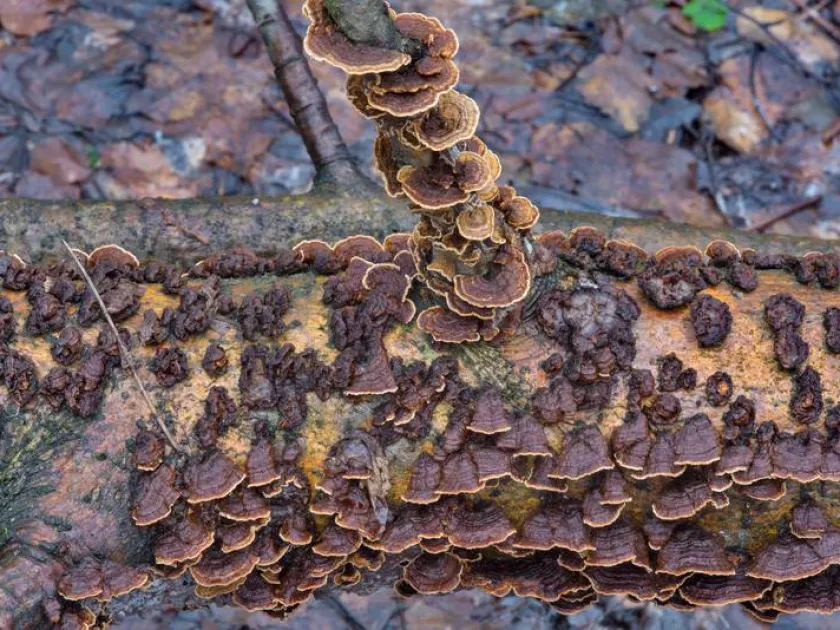
The most visible symptom is the presence of brown, crust-like fruiting bodies on the bark of trunks and branches. These growths may occur in groups, sometimes overlapping each other.
The wood affected by the fungus often shows signs of decay, turning brittle and exhibiting significant discoloration. This damage to the internal structure compromises the tree's overall stability.
Visible decline in tree vigor is a common sign. Foliage may become sparse, and branches often die back from the tips, indicating that the vascular system is being hampered by the fungal growth.
Peeling back the bark may reveal mycelial mats, which are thin, white or yellowish fungal threads. These mats actively absorb nutrients and expand the fungal colony throughout the woody tissue.
In advanced stages, trees become structurally unstable and prone to snapping or falling during storms. The presence of large clusters of fruiting bodies is usually an indicator of advanced internal rot.
Pathogen
Hymenochaete tabacina is a basidiomycete fungus belonging to the Hymenochaetaceae family. It is widely recognized as a wood-rotting pathogen that thrives on both living weakened trees and dead woody debris.
The fungus produces distinctive fruiting bodies that appear as leathery, resupinate, or effused-reflexed patches. They typically display a tobacco-brown color, which is the defining characteristic for this species.
As a lignicolous fungus, it secretes enzymes capable of degrading lignin and cellulose, the primary components of wood. This metabolic activity breaks down the structural integrity of the wood tissues.
The fungus colonizes trees through spores released from the hymenial surface. These spores are wind-dispersed, allowing the pathogen to colonize new hosts across significant distances within a forested area.
Biologically, it is a persistent organism that can survive in various environmental conditions. Its ability to act as a saprophyte on dead wood makes it a permanent presence in forest ecosystems.
Conditions for development
High humidity and moisture are the primary drivers for the development of Hymenochaete tabacina. Environments such as dense forests or shady garden corners with limited airflow provide optimal conditions.
Periods of prolonged rain facilitate the germination of fungal spores. Once moisture creates a film on the tree bark, the pathogen can easily establish a foothold in any cracks or wounds.
Mechanical damage serves as an entry point for the infection. Frost cracks, animal damage, or branch breakage from winds are common sites where the fungus first gains access to the tree's interior.
The temperature range favored by the fungus is moderate, typically between 15°C and 25°C. In such climates, the fungus can maintain steady growth throughout the active growing season.
Proximity to decaying organic matter, such as fallen timber or stumps, acts as a primary source of inoculum. If these sources are not managed, the fungus will continuously challenge the health of nearby standing trees.
Why it matters
The fungus causes white rot, which effectively destroys the strength and load-bearing capacity of the wood. This makes the tree a physical hazard to its surroundings, increasing the risk of property damage.
In forestry, the impact is economic as the timber quality is significantly degraded. Infected logs lose their commercial value, and heavily infested stands may require complete harvesting to prevent the spread.
Landscape and park management face high costs associated with removing infected, hazardous trees. The loss of mature trees often impacts the visual and ecological value of the area.
By weakening the host, the fungus invites secondary attacks from opportunistic pests like wood-boring beetles. This synergy accelerates the mortality rate of the affected trees.
If left unchecked, the fungus can create a cycle of infection that slowly depletes the population of susceptible tree species in the vicinity, changing the local ecosystem structure.
Protection
The primary control method is strict sanitation. All deadwood, stumps, and fallen branches should be removed from the area to eliminate the food source for the pathogen.
Wounds on trees must be treated promptly with wound dressings to prevent spore entry. Minimizing the number of open wounds is essential for preventing initial colonization.
Managing tree density by thinning the crown improves air circulation and sunlight penetration. This decreases ambient humidity, making the environment less favorable for fungal reproduction.
Chemical control can be utilized in high-value landscapes. Fungicidal sprays or pastes applied to infected areas can help manage the fungus if detected during the early stages of development.
Ensuring trees receive adequate nutrients and water promotes natural resilience. A healthy, stress-free tree is significantly more capable of resisting the spread of fungal decay compared to a weakened one.
Discussion
No discussions yet — be the first.