
Hymenochaetales
Hymenochaetales
Description
Symptoms
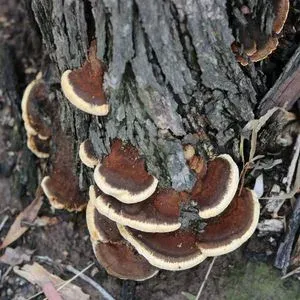
The most visible sign of an infection is the emergence of perennial fruiting bodies on the trunk or limbs. These structures vary in shape, often appearing as brackets, conks, or crusts, typically ranging from light brown to black in color.
Internally, the wood undergoes visible changes. In the case of white rot, the wood becomes bleached, stringy, and light in weight. Brown rot causes the wood to darken, shrink, and break into distinct cubes or blocks.
External symptoms in the crown often include sparse foliage, stunted leaf growth, and premature yellowing. In severe cases, individual branches may die back progressively as the vascular system becomes compromised.
Cracks and necrotic patches on the bark often serve as indicators of where the fungus entered the tree. In some cases, the bark may bulge or show signs of abnormal callous growth around the infection site.
A hollow sound when tapping the trunk indicates internal structural degradation. This is a sign of advanced decay, where the heartwood has been largely replaced by fungal mycelium and voids.
Pathogen
Hymenochaetales is an order of basidiomycete fungi that encompasses numerous species known for causing significant wood decay in trees and shrubs. These fungi are primary agents in the degradation of lignin and cellulose within plant tissues.
The biology of these pathogens involves the formation of woody or leathery fruiting bodies, which appear on the trunks or branches of host plants. These structures are the sites of spore production, allowing the fungus to spread across the forest or orchard.
The mycelium of the fungus penetrates deep into the xylem. By secreting specialized enzymes, the fungi break down the structural integrity of the wood, causing either white rot or brown rot depending on the species of the pathogen and the host tree.
Infection typically occurs through open wounds, such as pruning cuts, cracks, frost damage, or insect activity. Once inside, the fungus grows slowly and steadily, often remaining undetected for years while internal structural damage accumulates.
These fungi act as both parasites and saprotrophs. They often begin their life cycle as parasites on living trees and continue their existence as saprotrophs, consuming the wood long after the tree has died.
Conditions for development
High humidity and consistent moisture levels are primary drivers for the development of Hymenochaetales. Moist bark provides the essential environment for spores to germinate and establish an infection.
Dense planting schemes that prevent airflow contribute to a stagnant microclimate. This lack of ventilation keeps trees wet for longer periods, significantly increasing the probability of fungal colonization.
Physical injuries serve as the primary entry points. Frost cracks, sunscald, wind damage, and improper pruning techniques expose the inner wood, providing an easy pathway for fungal spores to colonize.
Trees that are stressed due to nutrient deficiencies, drought, or soil compaction are more susceptible. A weakened tree's defense mechanism is often insufficient to wall off the invading fungal hyphae effectively.
Poor sanitation practices, such as leaving diseased branches or stumps in an orchard, provide a continuous source of inoculum, ensuring the fungus remains present in the environment.
Why it matters
The primary harm caused by these fungi is the loss of structural stability. Decayed trees are highly susceptible to breakage during storms, which can lead to property damage or the loss of entire stands of timber.
A significant reduction in orchard productivity. As the wood decays, the tree's ability to transport water and nutrients to the leaves and fruits is hampered, leading to lower yields and poor fruit quality.
The death of valuable trees causes long-term economic damage. Replacing mature trees is costly, and the site may remain unsuitable for replanting if the pathogen is not properly eradicated from the soil and surroundings.
The chronic nature of the infection makes it difficult to manage. Spores can travel via wind or insects, potentially infecting neighboring healthy trees and leading to an epidemic within a localized area.
Increased maintenance costs. Managing the disease often requires intensive labor for pruning, monitoring, and, if necessary, the safe removal of hazardous trees to prevent further spread.
Protection
- Conduct regular sanitary pruning to remove any infected or dead wood.
- Disinfect all pruning tools with a bleach or alcohol solution between trees.
- Seal pruning cuts and wounds with appropriate antifungal pastes or wound dressings.
- Remove and destroy fruiting bodies to minimize the release of spores.
- Ensure proper tree spacing to promote air circulation and quick drying of bark.
Maintaining tree vigor through appropriate fertilization and irrigation is a crucial preventive measure. A healthy, vigorous tree is better equipped to compartmentalize and restrict the spread of fungal infections.
When decay is spotted early, localized surgical removal of the infected wood followed by disinfection can sometimes prolong the life of the tree and halt the progression of the disease.
Removing old stumps and fallen logs is essential. These act as reservoirs for the fungus, allowing it to maintain a presence in the area and serve as a starting point for new infections.
Annual or bi-annual monitoring of the orchard or landscape allows for early detection of fruiting bodies. Early intervention is the most effective way to protect the overall health of the tree population.
Discussion
No discussions yet — be the first.