
Hymeneliaceae
Hymeneliaceae
Description
Symptoms
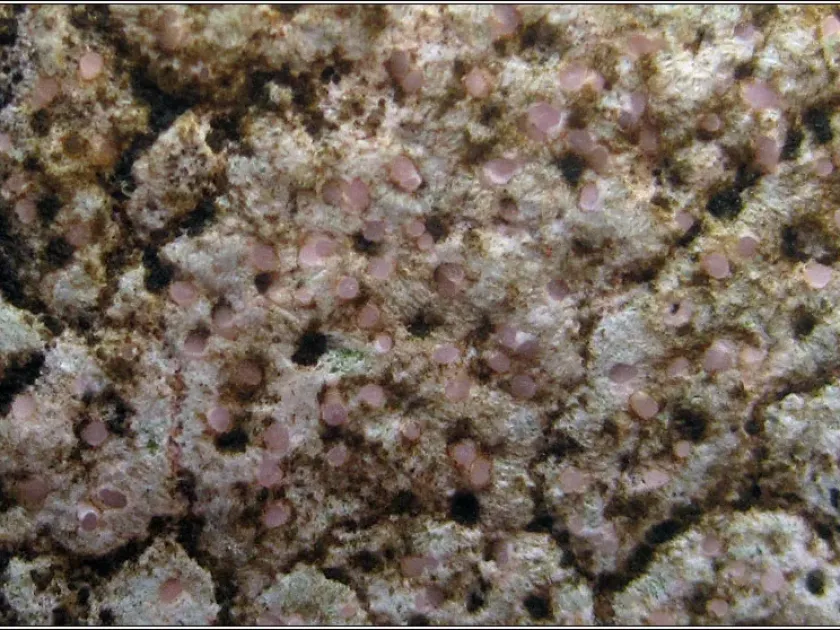
The primary symptom is the appearance of crust-like patches that are fused directly to the bark, making them appear as a permanent part of the tree surface.
Colonies typically present as greyish, yellowish, or brownish patches often adorned with small fruiting bodies known as apothecia, which appear as tiny dots.
Over time, these patches expand and coalesce, covering large sections of branches and trunks, which alters the natural texture and color of the bark.
Affected bark often appears thickened, rugged, and aged, which may mask underlying issues such as superficial bark cracking or fungal infections.
Unlike mosses, which form loose, easily removable carpets, Hymeneliaceae create a hard, dry layer that adheres tightly to the tree, resisting simple washing.
Pathogen
The Hymeneliaceae family comprises crustose lichens, which are symbiotic organisms consisting of a fungal mycobiont and an algal phycobiont.
While not primary pathogens of living plant tissues, they are considered indicator organisms that signify poor tree vigor or environmental stagnation in orchards.
The fungal component attaches to the bark surface using specialized hyphae but does not derive nutrients directly from the living plant tissue.
These organisms survive on atmospheric moisture, dust, and minerals, forming tight bonds with the bark substrate that are difficult to remove.
Their reproductive strategy involves the release of spores that can travel long distances on air currents, allowing for rapid colonization of suitable bark surfaces.
Conditions for development
High relative humidity and poor air circulation within the tree canopy are the primary drivers of Hymeneliaceae development and colonization.
Orchards with dense tree spacing, inadequate pruning, and significant shading provide the stagnant microclimate necessary for these lichens to flourish.
Older trees, characterized by slower growth and thicker bark, are particularly susceptible to colonization due to their stable surface architecture.
Periods of prolonged damp weather facilitate the germination and establishment of new spore colonies on the bark of susceptible hosts.
Lack of maintenance, including failure to clear away dead wood, contributes to the buildup of moisture that sustains these epiphytic populations.
Why it matters
The main danger is that these lichens provide a protected environment for overwintering pests, such as scale insects, mites, and various fungal pathogens.
By creating a dense barrier, they inhibit gas exchange through the bark lenticels, which potentially compromises the physiological health of the outer tree tissues.
The accumulation of moisture under the lichen crust can lead to localized bark necrosis, cracking, and decay, especially when secondary pathogens infect these spots.
Tree vigor can be gradually reduced due to the stress of sustaining a diverse epiphytic community that competes for space and surface moisture.
Significant coverage by Hymeneliaceae in commercial orchards is often linked to reduced growth rates and lower yield potential over the long term.
Protection
Proper canopy management through regular pruning is the most effective preventative measure to increase sunlight exposure and airflow, reducing humidity.
Mechanical removal of lichens using stiff-bristled brushes is an effective control method for localized outbreaks, provided it is done carefully to avoid bark injury.
White-washing tree trunks with lime-based solutions containing copper sulfate helps sanitize the bark and prevent the re-establishment of lichen colonies.
Dormant season sprays, particularly those using ferrous sulfate (iron vitriol), can effectively kill existing crustose lichens without damaging the tree.
Maintaining high horticultural standards, including adequate plant nutrition and health monitoring, creates a robust defense against lichen colonization in any orchard.
Discussion
No discussions yet — be the first.