
Hymenelia lacustris
Hymenelia lacustris
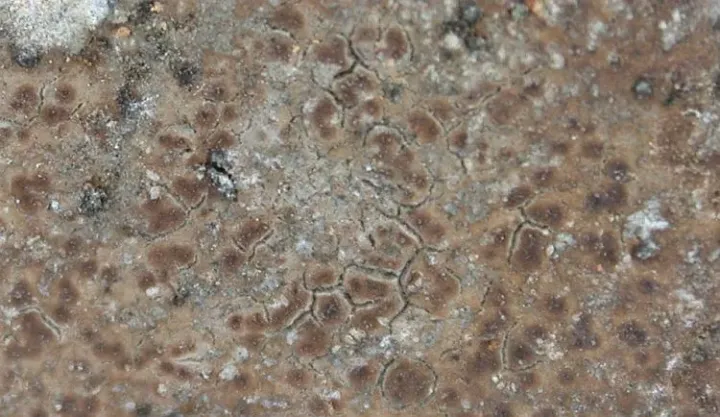
Description
Pathogen
Hymenelia lacustris is a species of crustose lichen belonging to the Hymeneliaceae family, primarily found on rock surfaces near bodies of water.
It is scientifically inaccurate to categorize this organism as a plant disease or a pathogen, as it lacks the physiological traits required to infect plant tissues.
The organism thrives through a mutualistic relationship between a fungus and an alga, obtaining nutrients from minerals and moisture on stones rather than from organic plant hosts.
Because it is an epilithic organism (rock-dwelling), it poses no threat to crops, vegetables, or agricultural productivity in any environment.
There are no recorded instances of Hymenelia lacustris affecting agricultural health, and it holds no significance in the field of plant pathology.
Conditions for development
Hymenelia lacustris prefers habitats such as moist, rocky shores or outcrops where surfaces are frequently dampened by water spray or rain.
The lichen requires high levels of ambient humidity and consistent light exposure to facilitate the photosynthetic processes of its algal partner.
It is known to be an indicator of clean air quality, as species of this genus are typically absent in areas with high levels of atmospheric pollution or industrial discharge.
Growth is exceptionally slow, often taking years to cover even small areas of a stone surface, reflecting its adaptation to nutrient-poor environments.
Due to its specific requirement for mineral-based stone substrates, it does not colonize soil, agricultural fields, or biological plant tissues, keeping it entirely isolated from farming operations.
Discussion
No discussions yet — be the first.