
Hymenelia
Hymenelia
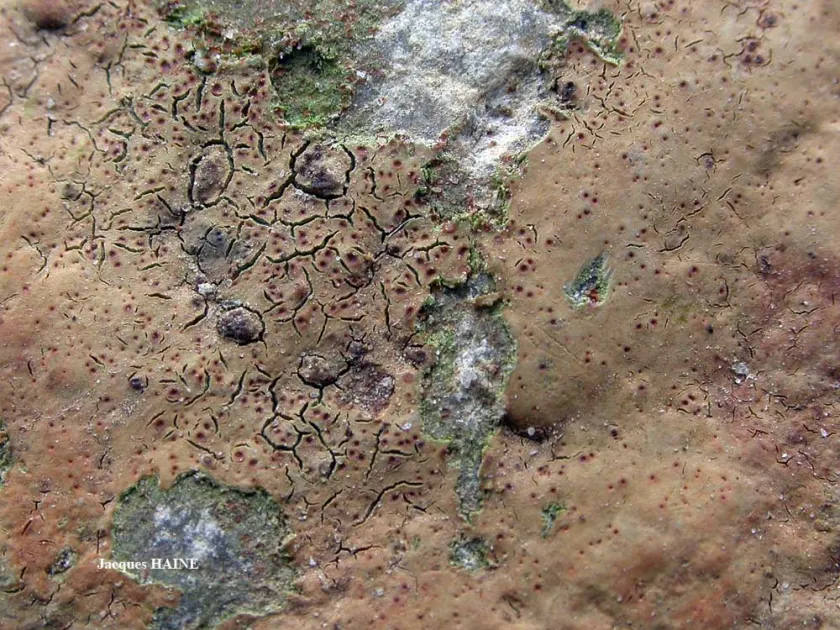
Description
Pathogen
Hymenelia is a genus of crustose lichens in the family Hymeneliaceae. It is important to note that it is not a plant disease and poses no threat to agricultural crops.
The organism is a symbiotic association between a fungus and algae, which enables it to survive in challenging environments like bare rock surfaces.
The thallus of Hymenelia is typically crust-like and tightly attached to the substrate, often showing a granular or warty texture.
Reproduction occurs through spores released from apothecia, which are frequently immersed within the thallus, making them appear like small pits.
As a non-pathogenic organism, Hymenelia is studied within the field of lichenology rather than plant pathology or agricultural science.
Conditions for development
This genus primarily inhabits mineral substrates, particularly limestone and other calcareous rocks in open or shaded areas.
Hymenelia thrives in environments with clean air, as these lichens are highly susceptible to atmospheric pollution, specifically sulfur dioxide.
The growth rate of Hymenelia is exceptionally slow, allowing the colony to persist for decades on the same rock surface without significant expansion.
These lichens have developed high tolerance to extreme moisture fluctuations, remaining dormant during dry periods and resuming activity upon hydration.
Environmental stability is the key factor for their long-term survival, as they cannot compete with aggressive pioneer vegetation.
Why it matters
Hymenelia is completely harmless to agricultural and horticultural crops, as it does not interact with higher plants as a parasite or pathogen.
There are no recorded instances of Hymenelia causing economic losses or damaging the yield of cereals, fruits, or vegetables.
From an agronomical perspective, these lichens do not require any protective measures, fungicides, or specific management practices.
They do not produce metabolites that could potentially inhibit the growth of cultivated crops or interfere with soil chemistry.
Instead, they play a positive role in nature by contributing to the weathering of stones and the initial stages of natural pedogenesis.
Discussion
No discussions yet — be the first.