
Ivory waxy cap
Hygrophorus eburneus
Description
Symptoms
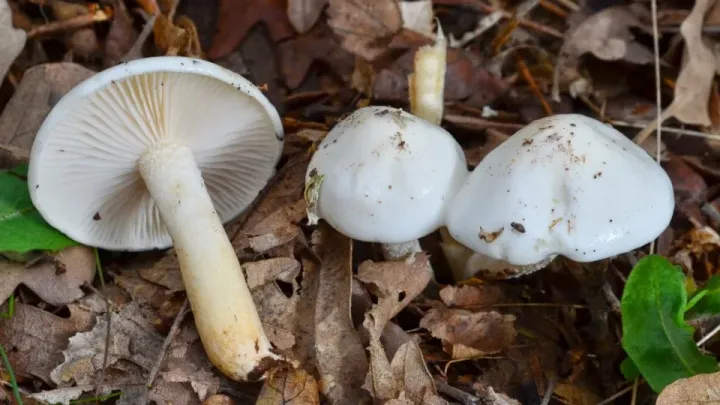
The fruiting bodies of this mushroom are characterized by a bright white, smooth, yet extremely sticky cap, the diameter of which varies from 3 to 8 centimeters.
The gills are distant, decurrent on the stem, and white in color, which may turn slightly cream-colored with age.
The stem is also covered with a characteristic slimy coating; it is cylindrical, often curved, and hollow inside, which is an important diagnostic feature of the species.
The spore print of this species is white, which is typical for many representatives of the genus Hygrophorus.
- Pronounced sliminess of the entire fruiting body surface.
- Absence of a strong odor or presence of a faint, mealy aroma.
Pathogen
Hygrophorus eburneus, known as the ivory waxy cap, is not a plant disease. It is a mycorrhizal basidiomycete fungus from the Hygrophoraceae family that forms symbiotic relationships with the roots of woody plants.
It is not a pathogen; rather, it is a beneficial component of the forest ecosystem, assisting trees in absorbing moisture and nutrients from the soil through the mycorrhizal system.
Biologically, this species is characterized by fruiting bodies with a very sticky, slimy cap of white color, resembling ivory, which gave the species its common name.
The fungal mycelium develops in the forest litter, forming a close connection with the root systems of mostly deciduous trees such as beech, oak, or birch.
It is essential to distinguish between phytopathogenic fungi that affect agricultural crops and forest mycorrhizal fungi that pose no pathogenic load on agroecosystems.
Conditions for development
The ivory waxy cap prefers moist forest areas where there is a high density of deciduous tree stands.
Optimal conditions for the appearance of fruiting bodies occur between August and November, when air temperatures drop and humidity levels remain high.
The fungus is sensitive to soil composition and prefers areas rich in organic debris, where decomposition processes provide nutrition for the mycelium.
It is often found in groups, forming so-called fairy rings or simply dense clusters under the forest canopy in temperate zones.
Active fruiting requires a sufficient amount of precipitation, as the slimy membrane of the mushroom requires constant moisture.
Why it matters
This mushroom poses no threat to agricultural crops as it lacks phytopathogenic properties and does not affect agricultural land.
In economic terms, this object is not a pest; it performs an important ecological function in forest biocenoses, contributing to the cycle of substances.
The lack of harm to cultivated plants makes this species safe from an agronomic point of view.
Unlike true pathogens, the ivory waxy cap does not require control or eradication measures in fields or garden plots.
Risks only arise if mushroom foragers misidentify the fungus with dangerous species, but this has no relation to agriculture.
Protection
Since Hygrophorus eburneus is not a plant disease pathogen, no special chemical or biological protection measures are required against it.
The use of fungicides in forest areas to control such mushroom species is considered inappropriate and environmentally harmful.
Prevention in agronomy involves monitoring pathogenic fungi; however, since hygrophorus species do not fall into this category, their presence indicates healthy forest soil.
Agronomists recommend focusing on protecting crops from actual pathogens, such as rust or powdery mildew fungi, rather than combating beneficial mycorrhizal flora.
In forestry management, it is recommended to preserve natural mycorrhiza, which contributes to the resistance of tree species to environmental stress factors.
Discussion
No discussions yet — be the first.