
Meadow waxcap
Hygrocybe pratensis
Description
Symptoms
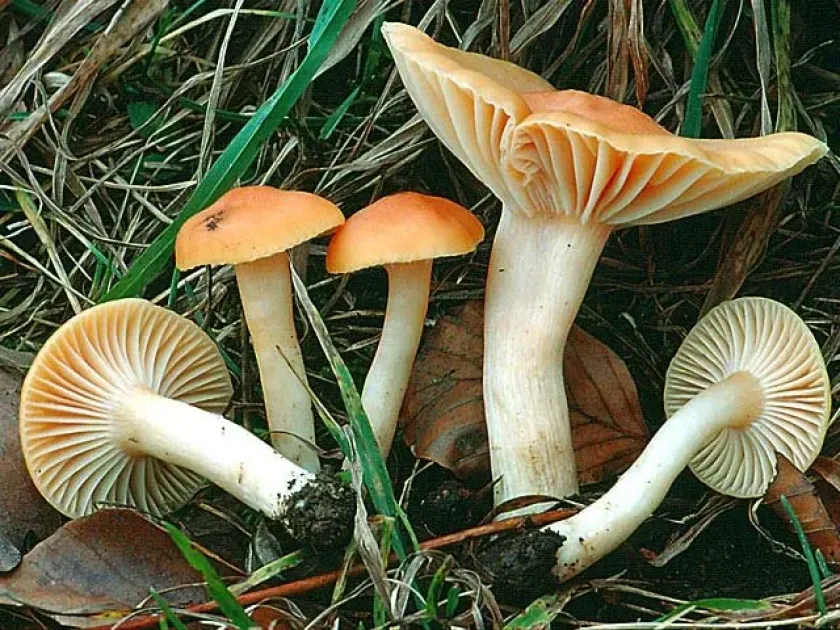
The fruiting bodies emerge from the soil as fleshy structures. The cap is often bell-shaped or convex, displaying a characteristic ocher, orange, or yellowish hue.
The stipe (stalk) is firm, smooth, and dry to the touch, usually matching the cap in color or appearing slightly paler. The gills are distinctively thick, distant, and decurrent, serving as a key diagnostic feature.
The flesh of the mushroom is dense and white to yellowish in color. Unlike many parasitic fungi, it does not change color upon bruising or aging, which is an important trait for identification.
Unlike pathogenic fungi, Hygrocybe pratensis does not induce necrosis, spotting, or malformations on the leaves, stems, or roots of plants. Nearby plants remain healthy and unaffected.
The mushroom possesses a pleasant, mild, or floury scent without any signs of decay. This reinforces its role as a beneficial decomposer rather than an invasive pathogen.
Pathogen
The Meadow waxcap (Hygrocybe pratensis) is not a plant pathogen or a disease-causing agent. It belongs to the Hygrophoraceae family and functions as a soil saprotroph in its natural environment.
Biologically, this fungus acts as a saprotroph, involved in the decomposition of organic matter. It does not establish parasitic relationships with the roots or tissues of agricultural crops or wild plants.
In mycological classification, the species is identified as a humus saprotroph that thrives in the upper soil layers rich in plant debris. It does not secrete toxins that could suppress the growth of nearby vegetation.
The fungal mycelium develops within the turf and organic layers, playing a vital role in nutrient cycling. Its presence in fields or pastures does not indicate a disease outbreak in the surrounding crops.
The misidentification of this mushroom as a plant disease is purely incidental. It acts more as a bioindicator of healthy, organic-rich soil rather than a threat to agricultural productivity.
Conditions for development
Fruiting bodies primarily develop during the autumn months when soil moisture increases and temperatures become moderate. The species prefers open, unshaded areas.
The ideal environment for this species includes natural meadows, pastures, and lawns with well-established turf. It shows sensitivity to soil pH and favors moderately fertile substrates.
Consistent moisture in the upper soil profile is essential for the mycelium to survive and produce fruiting bodies. Severe summer droughts significantly inhibit its development.
The species spreads through spore dispersal, which occurs naturally via wind or insects, allowing it to colonize suitable habitats over time.
The presence of the Meadow waxcap indicates that the soil is relatively free from intense fungicide applications. Frequent use of chemical pesticides tends to eliminate this fungus from the ecosystem.
Discussion
No discussions yet — be the first.