
Hygrocybe cantharellus
Hygrocybe cantharellus
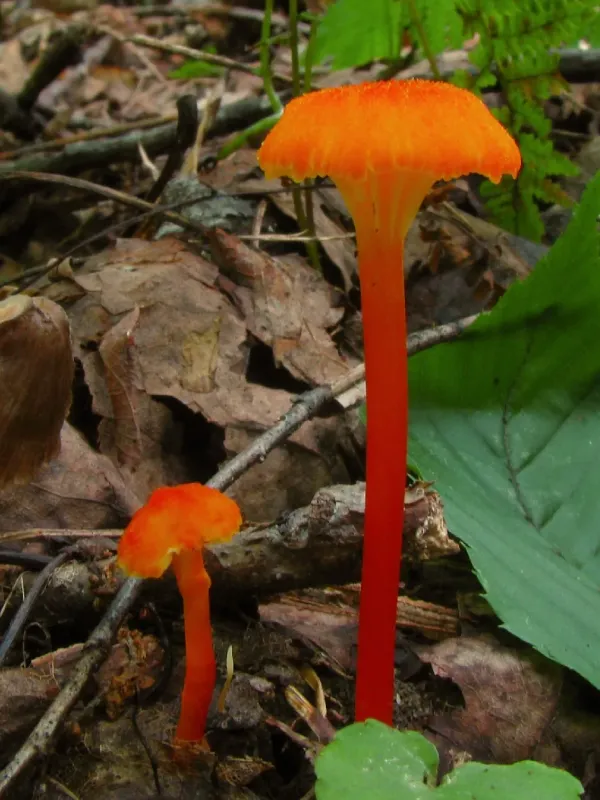
Description
Pathogen
Hygrocybe cantharellus is a mushroom belonging to the Hygrophoraceae family. It is essential to clarify that this fungus is not a plant disease, and it does not act as a pathogen for any agricultural crops.
Biologically, it is a saprotrophic organism that thrives on decaying organic matter, such as moss and leaf litter. It lacks the biological mechanisms to infect living tissues of plants or disrupt their metabolic processes.
The fungus plays a role in the natural decomposition cycle, breaking down organic materials in the soil. This makes it a beneficial organism that contributes to nutrient recycling rather than an agricultural threat.
It exists within the upper soil profile, primarily interacting with soil organic debris rather than the roots or vascular systems of agricultural crops. It does not possess any parasitic traits.
From an agronomical perspective, this species is completely harmless to farm production, field crops, and garden plants. It is simply a natural inhabitant of healthy, moist soil environments.
Conditions for development
The development of the fruit bodies of Hygrocybe cantharellus requires high humidity and moderate temperatures. The peak growth period typically occurs during the late summer and autumn seasons.
The species prefers acidic soil conditions often associated with mossy areas or damp meadows. It is sensitive to excessive pesticide application and significant changes in soil chemical composition.
A stable environment with temperatures between 12 and 18 degrees Celsius facilitates the emergence of the mushroom's fruit bodies above the soil surface. Dry conditions induce dormancy in the mycelium.
The presence of abundant decaying organic matter is the primary requirement for the mycelium's survival. The species is rarely found in intensely managed, high-tillage agricultural plots.
Shaded or semi-shaded areas with consistent moisture levels provide the optimal microclimate for this fungus to thrive in wild or semi-natural grassland settings.
Why it matters
There is no harmful impact associated with this species regarding agriculture. It does not cause plant diseases, nor does it reduce yield or impact the quality of agricultural produce.
Control measures are unnecessary and should not be implemented, as targeting this fungus with fungicides would be counterproductive and harmful to the broader soil health and biodiversity.
The fungus is ecologically beneficial, as it participates in the mineralization of dead organic matter, thereby aiding in the formation of healthy soil structures. It does not damage crop tissues.
Unlike pathogenic fungi that cause blights, wilts, or rots, Hygrocybe cantharellus lacks any invasive capability toward crop plants. Farmers should not mistake its presence for a plant pathology.
In summary, the species is an indicator of environmental quality and soil moisture. No protection or prophylaxis is required for this fungus, as it poses zero risk to farming activities.
Discussion
No discussions yet — be the first.