
Hygrocybe aurantiolutescens
Hygrocybe aurantiolutescens
Description
Symptoms
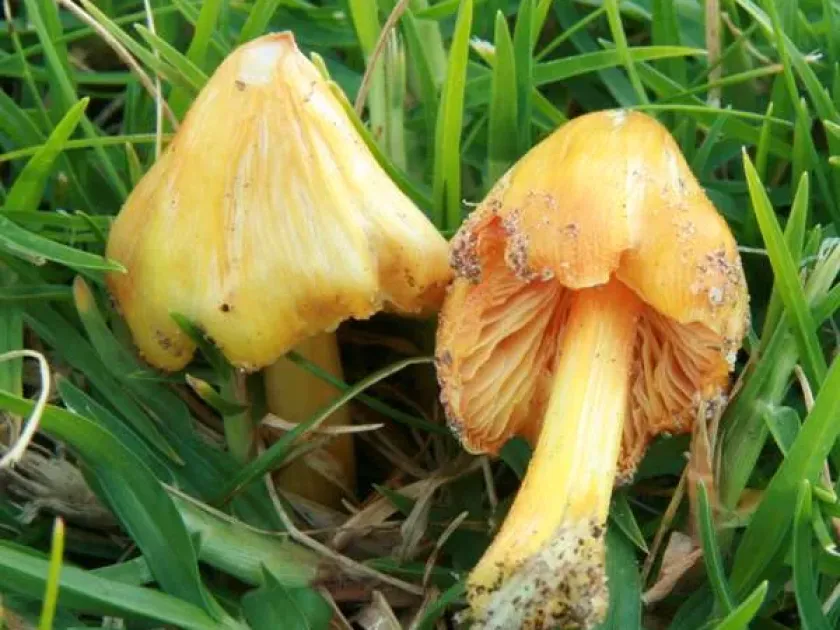
Hygrocybe aurantiolutescens is a small agaric mushroom characterized by its vibrant golden-yellow to orange-colored fruiting bodies.
The cap typically measures 2–5 cm in diameter, initially conical, later becoming flattened, often featuring a distinct, sharp central umbo.
The surface of the cap is hygrophanous and often appears viscid or slimy during damp conditions, which serves as a key diagnostic field mark.
The gills are usually widely spaced, thick, and can be adnate or slightly decurrent, maintaining the brilliant color of the cap.
The stem is smooth, hollow, and brittle, usually matching the cap in color but often paler toward the base, providing a striking visual contrast.
Pathogen
It is crucial to clarify that Hygrocybe aurantiolutescens is not a plant pathogen and does not cause diseases in crops or agricultural plants.
This species belongs to the saprotrophic group of fungi, which thrive in soil and leaf litter within natural grasslands, pastures, and meadows.
The fungus develops its mycelium within the top organic-rich layers of the soil and does not form parasitic relationships with the roots of agricultural crops.
In mycological terms, this species is a member of the Hygrophoraceae family, performing the role of a decomposer in natural ecosystems.
Its presence in an agricultural landscape often indicates high soil health and minimal chemical disturbance, rather than a threat to production.
Conditions for development
The species prefers undisturbed, semi-natural environments like meadows and lawns where deep plowing or intensive chemical fertilization is absent.
Optimal conditions for the emergence of fruiting bodies occur during periods of high humidity, usually in late summer or autumn under mild temperatures.
This mushroom is highly sensitive to soil contamination and hydraulic changes, making it rare in intensively farmed or highly disturbed agricultural zones.
Spore dispersal occurs primarily via wind, although colonization depends heavily on the availability of specific micro-habitats in the soil.
The conservation of these habitats is essential for maintaining biodiversity within agricultural ecosystems and surrounding meadow zones.
Why it matters
The object poses no risk to crop yields and does not affect grains, vegetables, or fruit-bearing crops, nor is it subject to quarantine regulations.
As it does not produce phytotoxins, there is no threat of plant growth suppression or degradation of the quality of agricultural produce.
There is no economic damage associated with this species, as it does not engage in any form of pathogenesis or resource competition with crops.
In fact, the saprotrophic activity of this fungus aids in the breakdown of organic matter, contributing positively to soil structure and nutrient cycling.
The only potential issue is the accidental confusion with edible wild species during foraging, which requires proper mycological identification training.
Protection
No plant protection measures are required for this species, as it is a natural component of the environment rather than a target for control.
In cases where fungi presence is undesirable on decorative lawns, improving soil aeration and moisture drainage is the most effective management strategy.
The use of fungicides to manage saprotrophic fungi is strongly discouraged due to their positive ecological role and the lack of impact on plant health.
Adopting sustainable agricultural practices helps maintain a balanced soil microbiome, naturally limiting the proliferation of undesired fungal growth.
Protecting the natural diversity of fungi contributes to a healthy and resilient agroecosystem, promoting long-term sustainability of the land.
Discussion
No discussions yet — be the first.