
Hydnellum
Hydnellum
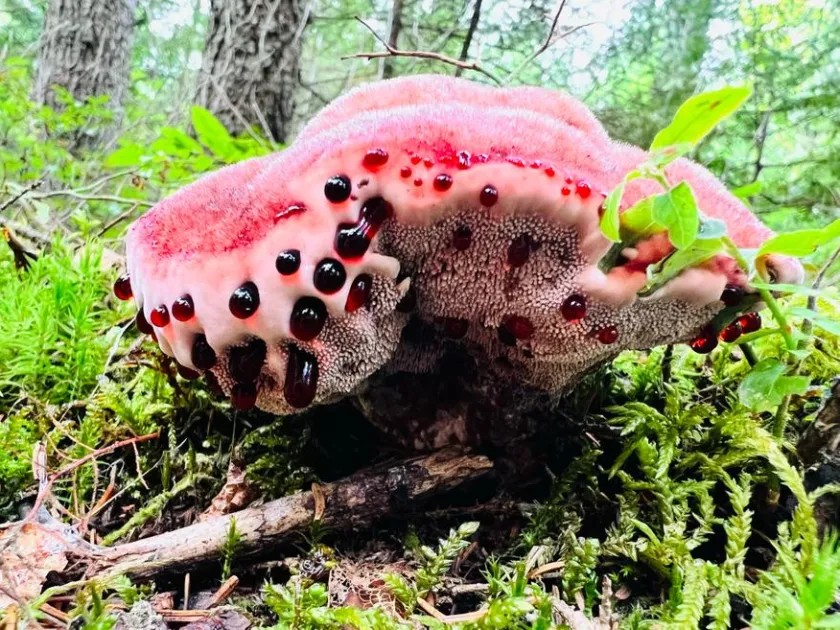
Description
Symptoms
The most visible sign of Hydnellum is the presence of hard, corky, or leathery fruiting bodies on the ground, featuring distinct spines or teeth.
Young specimens often exude droplets of red or amber fluid, leading to the nickname «bleeding tooth fungi», which looks alarming to non-specialists.
As the fruiting bodies mature, they turn brown or grey, hardening over time to a woody texture that persists in the environment.
Growth is typically clustered near the root zones of host trees, incorporating leaf litter and organic debris into their structure as they expand.
No symptoms of necrosis, chlorosis, or vascular wilt are associated with these fungi, distinguishing them from true parasitic plant pathogens.
Pathogen
Hydnellum is a genus of stipitate hydnoid fungi that belongs to the family Bankeraceae, often misidentified as a plant pathogen.
These fungi are not plant diseases; instead, they function as ectomycorrhizal partners that form symbiotic relationships with the roots of trees.
By extending the root surface area, they assist forest trees in absorbing water and essential nutrients from the soil, especially in acidic conditions.
The confusion regarding their status arises because their fruiting bodies can grow around the base of trees, resembling pathogenic fungal growth.
In scientific terms, Hydnellum plays a vital role in maintaining the health and resilience of natural forest stands rather than causing decay.
Conditions for development
Hydnellum species thrive in undisturbed, mature forest environments characterized by low nutrient levels and specific soil acidity.
They are highly sensitive to soil nitrogen levels, meaning they are rarely found in heavily fertilized or agriculturally managed soils.
A stable presence of their specific coniferous hosts is required for the survival of the fungal mycelium beneath the soil surface.
The dispersal of spores is aided by wind currents, but colonization only succeeds where the mycorrhizal network is already established.
Environmental pollution, especially nitrogen deposition, is a primary factor leading to the decline of these delicate forest fungi.
Why it matters
There is no economic or agronomic harm associated with Hydnellum, as it does not infect or feed on live agricultural crops.
The fungus does not produce toxins that affect plant metabolism, nor does it obstruct nutrient flow in tree vascular systems.
Reports of Hydnellum causing tree death are erroneous and likely stem from misidentifying root-rot fungi as these harmless symbionts.
In forest management, their presence is viewed as an indicator of a healthy, biodiverse soil ecosystem that requires conservation.
They pose zero threat to greenhouse or field operations and are entirely harmless to the diversity of food or industrial crops.
Protection
Control measures are unnecessary and counterproductive, as these fungi provide ecological services beneficial to the surrounding vegetation.
Efforts should focus on identifying and managing actual plant pathogens like root-rot fungi or viral infections instead of targeting Hydnellum.
In land management, maintaining the integrity of the natural soil structure and avoiding unnecessary chemical inputs is recommended.
Since these fungi disappear under intensive cultivation, standard agricultural practices naturally prevent them from appearing on arable land.
- Avoidance of excess synthetic fertilizers.
- Preservation of natural forest borders.
- Focus on integrated pest management for true pathogens.
Discussion
No discussions yet — be the first.