
Adiantum rust
Hyalopsora adianti-capilli-veneris
Description
Symptoms
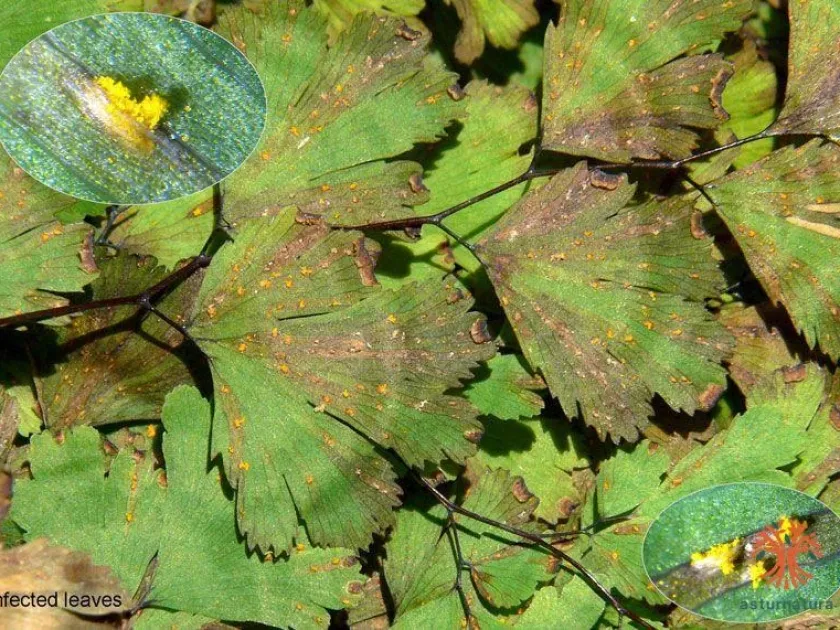
The first symptoms are the appearance of small, yellowish or reddish-brown pustules on the undersides of the fern fronds.
On the upper surface of the leaves, chlorotic spots develop, marking the areas where the fungal hyphae are actively feeding within the leaf tissue.
As the infection progresses, the affected fronds begin to curl, turn yellow, and eventually dry out prematurely, causing significant cosmetic damage.
In advanced stages, the rust-colored spore powder is clearly visible on the underside of the leaves, which can easily detach and spread to other areas.
The plant loses its vigor, and the growth of new fronds is significantly inhibited as the energy reserves are diverted by the pathogen.
Pathogen
The causative agent of this disease is the fungus Hyalopsora adianti-capilli-veneris, which is a member of the basidiomycetes group. It is a specialized parasite that primarily attacks ferns of the genus Adiantum.
The fungus develops by producing spores that serve as the main source of infection for healthy plants. It penetrates the host tissue, where it extracts nutrients, leading to cellular damage.
Transmission occurs through airborne spores or water splashes, making it highly contagious in crowded greenhouse environments.
The life cycle of this rust fungus is closely tied to the host's vegetation period, often surviving on debris in the soil if not properly managed.
Because it is a biotrophic parasite, it relies on the living tissues of the Adiantum to survive and complete its reproductive cycle.
Conditions for development
High relative humidity is the primary catalyst for the development and spread of Adiantum rust, as spores require moisture to germinate.
The fungus thrives in moderate temperature ranges, typically between 18 and 24 degrees Celsius, which are also ideal for indoor fern cultivation.
Poor ventilation prevents foliage from drying quickly after irrigation, creating a moist microclimate that favors fungal colonization.
Overcrowding of plants reduces airflow, leading to stagnant conditions where spores easily jump from an infected plant to a healthy one.
Plants that are stressed due to improper lighting, poor nutrition, or overwatering are significantly more susceptible to successful infection by the fungus.
Why it matters
The primary concern is the total loss of aesthetic value, as the foliage is the main ornamental feature of the Adiantum fern.
Chronic infection drains the plant of carbohydrates and vital nutrients, leading to a stunted growth habit and eventual death if untreated.
Rust diseases can spread rapidly through a collection, posing a severe threat to commercial nurseries and professional fern collections.
Infected plants become weakened, making them easier targets for secondary opportunistic pests and other common pathogens.
The difficulty of complete eradication means that once established, the disease can recur in every growing season if conditions are not strictly managed.
Protection
Immediate quarantine of symptomatic plants is the first step to prevent the further spread of spores within the growing area.
Pruning and safe disposal of heavily infected fronds are necessary to reduce the total inoculum load on the plant.
Application of copper-based or systemic triazole fungicides can help suppress the infection, though careful use is required to avoid leaf burn.
Improving the environmental conditions by increasing spacing and ensuring proper air circulation is essential for long-term disease management.
Preventive hygiene, such as using sterile potting soil and avoiding overhead watering, significantly reduces the chances of initial fungal colonization.
Discussion
No discussions yet — be the first.