
Hyaloperonospora teesdaliae
Hyaloperonospora teesdaliae
Description
Symptoms
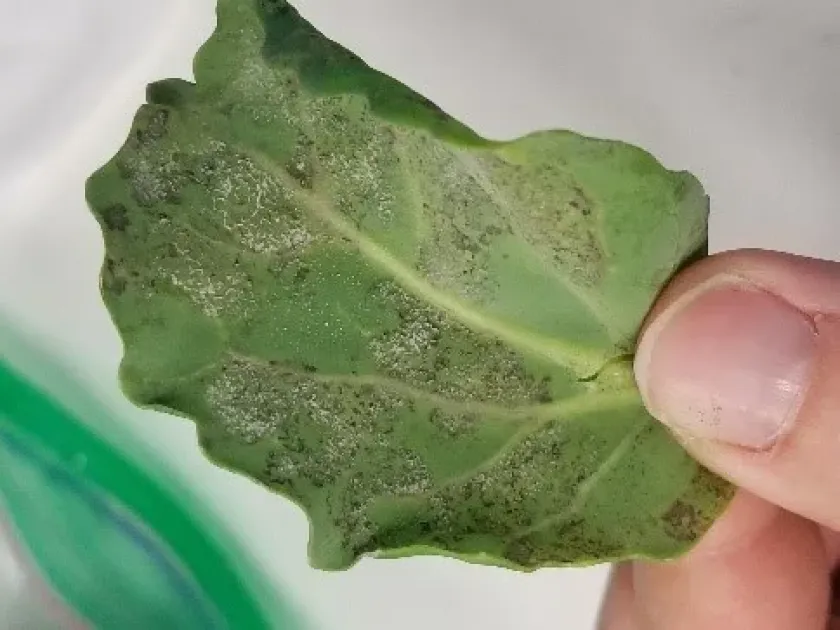
A primary symptom of infection by Hyaloperonospora teesdaliae is the appearance of chlorotic spots on the leaves, which often turn yellowish over time. As the disease progresses, a distinct fungal-like growth, representing the pathogen's sporulation, forms on the underside of the leaf surface.
Infected plant tissues gradually undergo necrosis, resulting in the development of lesions with various configurations. Under conditions of high humidity and intense infection, the disease can rapidly affect large areas of the foliage, leading to premature wilting and severe leaf deformation.
During the early seedling stage, downy mildew can significantly stunt growth and impair photosynthetic activity. Affected plants appear chlorotic and lag behind healthy specimens, creating noticeable patches within the crop stand that differentiate them from healthy vegetation.
External symptoms often depend on the plant's growth stage and the level of cultivar resistance. Experienced agronomists note that early signs may be subtle, requiring close inspection of the abaxial (lower) leaf surface, particularly during early morning hours when conditions are most favorable.
Chronic cases often lead to partial or complete senescence and abscission of affected leaves. This process weakens the plant significantly, leaving it highly susceptible to secondary pathogens and opportunistic pests, which fundamentally alters the balance of the local agroecosystem.
Pathogen
The causative agent of this disease is Hyaloperonospora teesdaliae, an obligate oomycete pathogen belonging to the downy mildew group. As a highly specialized organism, it depends entirely on living host plant tissues for its nutritional requirements and life cycle completion.
The pathogen's biology is intricately linked to the life cycle of Teesdalia and other members of the Brassicaceae family. The oomycete produces sporangia that are easily dispersed by wind and air currents, while leaf surface moisture facilitates the germination and subsequent infection process.
Within the plant tissues, the pathogen develops intercellular mycelium, utilizing specialized feeding structures known as haustoria to extract nutrients from host cells. This interaction causes rapid depletion of the plant's metabolic resources and disrupts essential physiological functions.
The life cycle includes both asexual reproduction, which drives rapid seasonal epidemic spread, and sexual reproduction leading to the formation of oospores. These oospores act as dormant structures, ensuring the pathogen's long-term survival in the soil during unfavorable environmental periods.
The species demonstrates significant genetic plasticity, allowing it to adapt to various microclimates, which makes breeding for durable host resistance a complex challenge for plant pathologists and breeders alike.
Conditions for development
The development of Hyaloperonospora teesdaliae is strongly correlated with moisture availability in the air and soil. Optimal conditions for infection occur when free moisture remains on the leaf surface for extended periods, frequently caused by persistent rainfall or heavy dew.
Temperatures ranging from 12°C to 18°C are most favorable for the active germination of zoospores. Fluctuating temperatures during the night, combined with high relative humidity, accelerate the infection cycle and promote the development of an epidemic.
Dense crop stands, which suffer from poor air circulation, create a microclimate with stagnant, high humidity. Such environments significantly promote the accumulation of inoculum and facilitate the rapid spread of the oomycete to adjacent, healthy plants within the field.
Inadequate soil aeration and waterlogging, whether due to poor irrigation management or suboptimal soil structure, exacerbate the risk of disease outbreaks. Furthermore, excessive nitrogen fertilization can reduce natural tissue resistance, providing an ideal substrate for the pathogen.
The presence of an existing infectious background in the soil, originating from previous crop cycles, serves as a primary risk factor. Oospores can remain viable in crop debris for several years, becoming active whenever favorable weather conditions occur.
Why it matters
The harmful impact of Hyaloperonospora teesdaliae manifests as a decline in overall plant productivity and a degradation of seed quality. Severe infestations can cause seedling mortality, leading to thin crop stands and decreased plant density.
The loss of functional leaf surface area results in reduced biomass accumulation and impaired nutrient uptake, which are essential for producing a viable harvest. This is particularly damaging during peak growth and flowering stages, when the plant's metabolic demand is highest.
The disease impairs physiological processes, including transpiration and respiration, rendering the plants highly vulnerable to secondary stressors such as drought or temperature extremes. Weakened plants are frequently colonized by secondary fungi and opportunistic bacteria.
Economic losses arise from the combined costs of implementing emergency control measures and the reduced market value of the crop. In humid regions, this disease can trigger widespread epidemics that significantly affect the profitability of agricultural enterprises.
- Reduced seed germination rates.
- Decreased 1000-seed weight.
- Suppression of root system development.
- Increased risk of total loss of marketable crop quality.
Protection
Integrated disease management begins with agronomic practices aimed at reducing the total infectious load. Implementing a rigorous crop rotation cycle, which avoids Brassicaceae species for several seasons, is crucial for breaking the pathogen's life cycle.
Thorough incorporation of crop debris into the soil is essential to accelerate decomposition and destroy potential reservoirs of oospores. Furthermore, utilizing high-quality, pathogen-free seed is a foundational prophylactic measure that prevents early-season outbreaks.
Regular maintenance of planting density and adequate air circulation helps prevent the formation of stagnant microclimates that favor downy mildew. A balanced fertilization program, focusing on adequate potassium and phosphorus levels rather than excessive nitrogen, helps maintain plant health.
Chemical control strategies involve the application of systemic fungicides. During periods of high disease pressure, treatments containing copper, mancozeb, or specialized systemic active ingredients targeting oomycetes are highly effective at slowing down disease development.
Consistent field monitoring from the seedling stage allows for the early detection of symptoms, enabling timely preventative treatments. Integrated pest management, combining sound agronomy with biological and chemical control, provides the most sustainable path to protecting the crop.
Discussion
No discussions yet — be the first.