
Downy mildew of crucifers
Hyaloperonospora erucastri
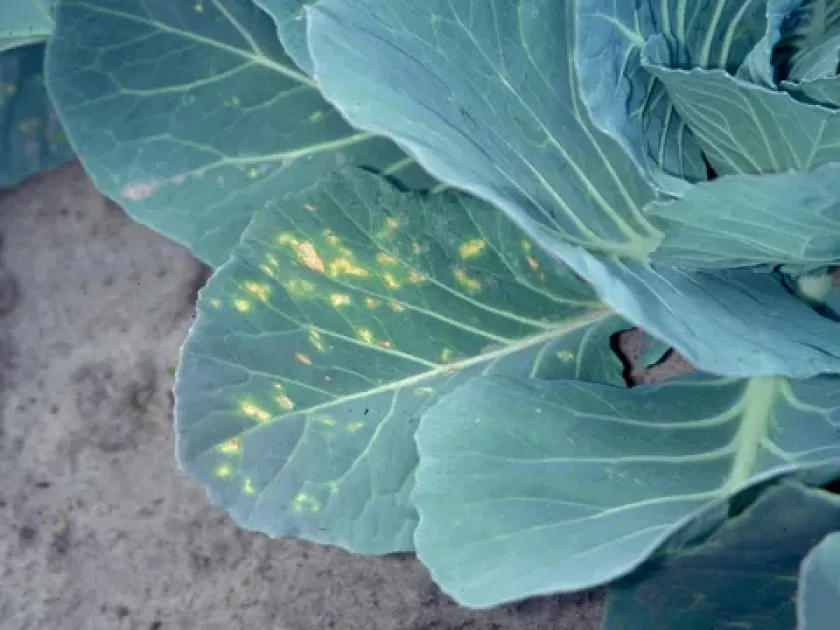
Description
Symptoms
Initial symptoms manifest as small, chlorotic, angular spots on the upper surface of the leaves, often delimited by the leaf veins. As the infection progresses, these areas may turn yellow or necrotic.
A diagnostic feature of the disease is the development of a fine, white to grayish or purplish fungal-like growth on the underside of the leaves, directly beneath the chlorotic spots.
Young plants are particularly vulnerable, often showing stunted growth, leaf curling, and severe distortion. In heavy infestations, the foliage may prematurely wither and fall off.
On seed crops, the pathogen can cause distortion of the flowering stalks and pods, significantly reducing seed yield and overall quality of the reproductive parts.
- Angular yellow leaf lesions.
- Fuzzy white growth on leaf undersides.
- Leaf distortion and curling.
- Reduced seedling vigor.
- Premature leaf senescence.
Pathogen
The disease is caused by the obligate parasite Hyaloperonospora erucastri, an oomycete that colonizes the plant's internal tissues. It absorbs nutrients directly from the host cells via specialized structures known as haustoria.
The life cycle involves the asexual production of sporangiophores, which emerge through the leaf stomata. These sporangia are easily dispersed by wind and splashing water to facilitate rapid infection of surrounding plants.
During unfavorable conditions, the pathogen produces resting structures called oospores. These thick-walled spores persist in crop debris or the soil for several years, serving as the primary source of inoculum.
The pathogen specifically infects members of the Brassicaceae family, including cabbage, broccoli, canola (rapeseed), mustard, and radish, showing high host specificity.
Environmental conditions and the presence of susceptible hosts are the main drivers of the disease, allowing it to complete multiple life cycles within a single growing season.
Conditions for development
The development of downy mildew is highly dependent on humidity. Periods of high moisture, such as heavy dew or fog, are critical for the germination of spores on the leaf surface.
Optimal temperatures for the growth of Hyaloperonospora erucastri typically range between 15°C and 20°C. Cool and moist weather conditions create the perfect environment for outbreaks.
Poor air circulation, often found in dense crop stands or enclosed greenhouse structures, significantly increases the risk of infection by keeping the leaf surfaces wet for longer durations.
In greenhouses, overwatering and excessive condensation exacerbate the disease severity. The pathogen thrives when plants are constantly stressed by lack of proper ventilation.
Warm, dry weather tends to slow down the progression of the disease, although resting oospores remain dormant in the soil until the next cool, wet period arrives.
Why it matters
The primary impact of downy mildew is the reduction of the leaf surface area available for photosynthesis. This leads to reduced biomass accumulation and lower overall crop yields.
In vegetable production, the disease renders crops unmarketable due to unsightly lesions and tissue necrosis. Infected products are also more prone to secondary bacterial infections during storage.
For oilseed crops like canola, the infection results in lower oil content and reduced seed weight, directly impacting the profitability of the agricultural operation.
The disease weakens the host plant, making it more susceptible to secondary pathogens such as Alternaria or Phoma, leading to complex disease profiles that are harder to treat.
In extreme cases, under favorable weather conditions, economic losses can reach 50% or more, necessitating significant investments in corrective chemical treatments.
Protection
Effective management begins with strict crop rotation, ensuring that susceptible Brassicaceae crops are not grown on the same plot for at least 3 to 4 years to reduce soil inoculum.
Sanitation is crucial; removing and destroying crop debris after harvest helps to eliminate the primary sources of overwintering oospores and prevents new infections.
Control of cruciferous weeds is essential, as these often act as green bridges for the pathogen, allowing it to survive and propagate throughout the year.
In greenhouses, maintaining low humidity, ensuring proper plant spacing for ventilation, and avoiding overhead irrigation can significantly suppress the disease cycle.
When necessary, protective fungicide applications (such as metalaxyl or copper-based compounds) should be applied preventively or upon the earliest detection of disease symptoms to limit the spread.
Discussion
No discussions yet — be the first.