
Description
Symptoms
The presence of Japanese hop in a common hop yard is indicated by the appearance of thin, rough-textured vines that rapidly climb and wrap around existing hop bines.
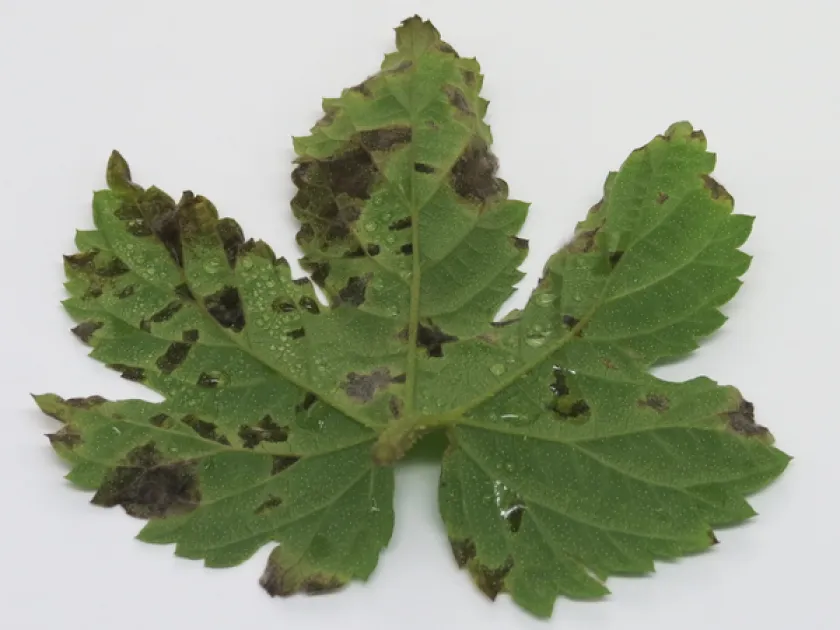
Leaves of the Japanese hop typically feature 5 to 7 deep lobes, which gives them a more jagged appearance compared to the broader leaves of the common hop (Humulus lupulus).
Stems are covered in small, downward-pointing prickles. These hairs are a key identification feature, causing irritation upon contact and damaging the surface of crop plants.
Unlike common hops that produce aromatic cones used in brewing, Japanese hop develops inconspicuous, catkin-like inflorescences and fails to produce the desirable lupulin glands.
- Jagged, multi-lobed leaves.
- Rough stems with small prickles.
- Rapid vertical growth covering cultural plants.
Pathogen
Japanese hop (Humulus japonicus) is recognized in agronomy not as a pathogen, but as a highly aggressive, invasive climbing weed species that belongs to the Cannabaceae family.
Unlike the common hop (Humulus lupulus), this species is an annual plant, which means it grows rapidly from seed each spring, spreading aggressively across agricultural fields.
The plant possesses a unique biological vigor, utilizing twining stems to climb rapidly. It effectively outcompetes native vegetation and agricultural crops for sunlight and space.
Due to its high adaptability, it can colonize various soil types, though it prefers fertile, moist environments often found near riverbanks or agricultural irrigation systems.
Invasive nature of the species makes it a significant management challenge for farmers, as it can quickly blanket entire plantations if left unchecked during the early growing season.
Conditions for development
Humulus japonicus thrives in warm, moist climates with plenty of sunlight. Its seeds require minimal soil coverage to germinate, provided moisture levels are consistent.
The weed often spreads via water runoff from streams and irrigation ditches, which deposit seeds directly into the fertile soil of commercial hop fields.
Agricultural equipment is a major vector for long-distance dispersal; seeds remain attached to machinery and are transported from infested roadside areas into pristine fields.
The plant demonstrates high plastic responses to varying light intensities, allowing it to grow in both shaded edges and full-sun areas of a plantation.
Once established, the weed produces vast quantities of seeds that remain viable in the soil for several years, creating a persistent cycle of infestation.
Why it matters
The primary harm caused by Japanese hop is the physical strangulation and shading of the common hop, which drastically reduces the photosynthetic surface area and yields.
Dense infestations create a humid, stagnant microenvironment under the canopy, significantly increasing the risk of fungal pathogens like downy mildew.
The prickles on the stems make manual labor and harvesting physically uncomfortable and dangerous, slowing down operations and increasing labor costs.
In addition to resource competition, it acts as a reservoir for various pests and diseases that can jump to the main crop, necessitating additional pesticide applications.
The invasive nature of the weed can lead to long-term soil depletion and may eventually render portions of a hop yard unproductive due to the intensity of competition.
Protection
Early identification and mechanical removal before the onset of flowering are critical, as this prevents the production and dispersal of the next generation of seeds.
Strategic use of mulching materials around the base of the hop plants can effectively prevent seed germination by blocking the light that the weed requires to sprout.
Selective herbicide applications are sometimes necessary, though great care must be taken to ensure the chemicals do not negatively impact the commercial crop.
Regular sanitation of farm equipment and monitoring of field borders, particularly ditch banks and fence lines, helps prevent the introduction of new seeds to the field.
In cases of severe infestation, deep cultivation may be used to bury seeds to a depth that prevents germination, disrupting the weed's lifecycle for the following season.
Pathogens and affected parts
Affects crops · 1
Discussion
No discussions yet — be the first.