
Humaria hemisphaerica
Humaria hemisphaerica
Description
Symptoms
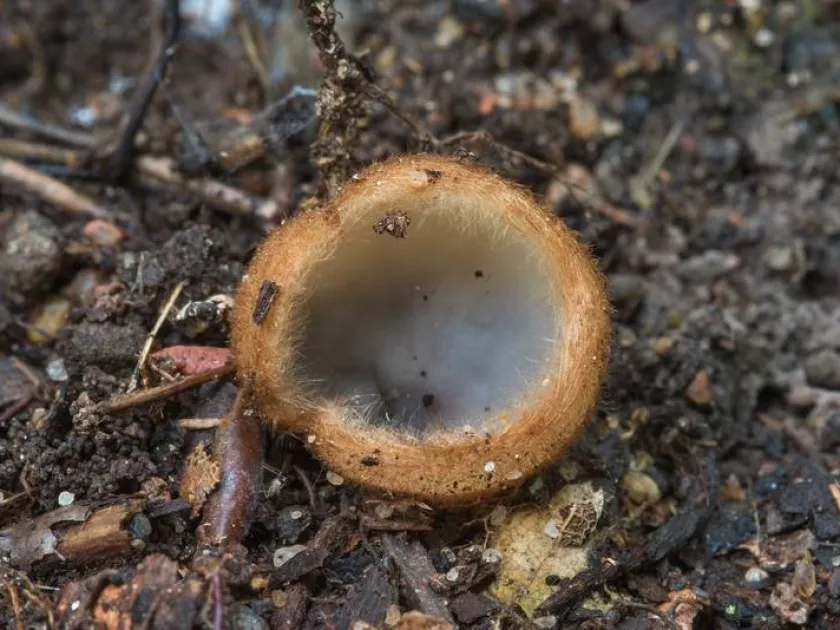
Humaria hemisphaerica presents as small, cup-shaped fruiting bodies known as apothecia. Their exterior is typically whitish and covered with fine hairs, giving them a fuzzy appearance.
The interior of the cup is smooth, ranging in color from pale white to light yellow or ochre. They often appear in clusters on damp soil or decaying organic matter.
While the fungus is a saprotroph, its appearance on cultivation surfaces can indicate issues with excessive moisture or poor sanitation within the growing environment.
Plants may show reduced vigor if the fungus colonizes the root zone heavily, as the fungal mat can act as a physical barrier to water absorption and air exchange.
Identification often requires careful inspection of the fruiting body structure, as they can visually resemble various other species of small cup fungi.
Pathogen
The causal agent is the fungus Humaria hemisphaerica, a member of the Ascomycota division. It is primarily a soil-dwelling organism that thrives on dead organic material.
The life cycle of the pathogen is closely tied to the presence of debris or rich humus. It reproduces via spores that are dispersed into the air when conditions are appropriate.
The fungus is not a typical obligate parasite, meaning it does not usually infect healthy plant tissues directly. However, its presence indicates an environment conducive to fungal growth.
Biology of the species allows for the rapid development of fruiting bodies when nutrients are readily available in the substrate. Spores are highly resilient and can persist in soil for long periods.
Environmental adaptation of this species ensures it can inhabit diverse growing conditions, including forest floors and greenhouse substrates.
Conditions for development
Optimal conditions for growth include high humidity, often exceeding 80 percent, combined with shaded and poorly ventilated environments.
The presence of raw organic matter, such as straw or non-decomposed compost, provides the necessary nutrients for the fungus to establish large colonies.
Temperature ranges for fruiting body formation are usually between 15 and 22 degrees Celsius. Stable temperatures without drastic fluctuations favor its rapid expansion.
In greenhouses, poor airflow and constant surface moisture on soil or growing media are the primary drivers for Humaria hemisphaerica outbreaks.
Lack of direct sunlight combined with excessive watering practices creates a microclimate that effectively turns the soil surface into a habitat for this fungus.
Why it matters
The direct economic impact of Humaria hemisphaerica is considered minimal because it does not destroy living plant tissue as an aggressive parasite would.
However, it poses a threat to seedlings and young plants by physically impeding growth, as dense clusters of the fungus can seal the soil surface.
Indirect harm occurs through competition for space and nutrients. The fungus can create an environment where the soil remains overly damp, inviting secondary rot-causing pathogens.
For commercial nurseries, the presence of these fungi is problematic as it affects the quality and aesthetic appearance of the plant containers.
In agricultural settings, its mass occurrence serves as a signal to the agronomist that the soil management plan requires adjustment to improve aeration and drainage.
Protection
The primary control strategy involves strict adherence to proper agronomic practices. Ensuring excellent drainage and consistent ventilation is crucial for prevention.
It is recommended to use pasteurized or sterilized soil in greenhouse environments to eliminate potential fungal spores before planting begins.
Regular removal of organic debris from the soil surface is essential, as this eliminates the food source required for the fungus to thrive.
- Mechanical removal of apothecia to limit spore dispersal.
- Using fungicides, such as copper-based treatments, on surfaces.
- Optimizing irrigation to avoid waterlogged soil conditions.
- Improving lighting and air circulation around plant beds.
Cultivating and loosening the top layer of soil regularly can decrease surface humidity and prevent the development of new fruiting bodies.
Discussion
No discussions yet — be the first.