
Description
Symptoms
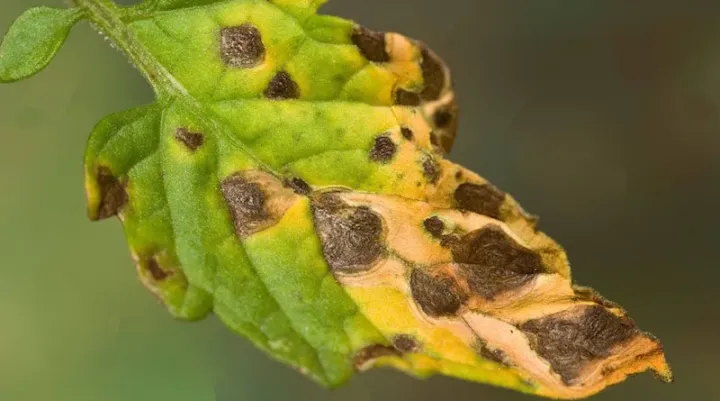
The primary symptom of infection is the development of round or oval spots on the leaves. These spots gradually expand and often display a characteristic concentric zonation pattern.
Initial signs typically appear on the lower leaves, as they are the first to encounter soil-borne spores or areas of higher humidity. Over time, the infection spreads to leaf stalks and stems.
Under conditions of high humidity, a dark, velvety layer forms on the surface of the lesions. This represents the fungal spore-bearing structures, which facilitate the rapid spread of the disease.
As the disease progresses, the affected leaves turn yellow, curl up, and eventually drop prematurely. In severe cases, stem deformation occurs, leading to a general stunt in plant development.
In hops, macrosporiosis manifests as necrotic lesions on leaf blades, which significantly reduces the plant's photosynthetic efficiency. This negatively impacts the quality and yield of the hop cones.
Pathogen
The causative agent of macrosporiosis is a group of imperfect fungi belonging to the genus Macrosporium. These microscopic organisms proliferate through conidia that spread via wind, raindrops, and insect activity.
This pathogen acts as a facultative parasite, capable of surviving for long periods in plant debris, soil, or even on seeds. Its development is strongly correlated with plant stress, which compromises the host's natural defenses.
Unlike highly specialized pathogens, this fungus affects a wide range of agricultural crops. Common hops (Humulus lupulus) are particularly susceptible, with the fungus causing premature drying and tissue necrosis.
The biology of the fungus allows it to penetrate plant tissues through stomata or mechanical injuries on the epidermis. As it consumes the host tissue, the fungus releases toxins that cause localized cell death.
The fungus can infect plants at all stages of growth, from seedlings to the ripening phase. Controlling the infection requires a thorough understanding of the fungal life cycle within the specific environment of the farm.
Conditions for development
Macrosporiosis development is favored by high air humidity (above 80%) and moderate temperatures ranging from 20 to 25 degrees Celsius. These conditions are optimal for conidia germination.
Frequent rainfall, morning dews, and fog during the growing season significantly accelerate the pathogen's spread. These conditions ensure that fungal spores are easily dispersed across the field.
Poor agricultural practices, such as overcrowding of crops and lack of proper aeration, create a microclimate highly favorable to fungal growth. Areas with restricted airflow are the first to show symptoms.
A deficiency in essential nutrients, particularly micronutrients, lowers the plant's resistance to invasion. Weakened plants lack the necessary immune response to stop the fungus from colonizing their tissues.
Intense development of the disease is often observed in the second half of summer when diurnal temperature fluctuations cause heavy condensation to form on leaf surfaces, fueling the fungal cycle.
Why it matters
The main damage caused by macrosporiosis is the drastic reduction in the plant's photosynthetic leaf area. This disrupts the plant's metabolism and leads to a critical decrease in crop productivity.
In perennial crops, the disease triggers premature leaf shedding, preventing the plant from accumulating sufficient energy reserves for winter. This significantly reduces the plant's cold hardiness.
Infection of reproductive organs reduces both the marketability and the overall quality of the yield. For crops like hops, this means a loss of essential oils and bittering agents required for industrial use.
Chronic infection drains the plant's resources, leaving it vulnerable to secondary pathogens. Consequently, weakened plants often succumb to winter temperatures or other environmental stresses.
Massive outbreaks of the fungus can lead to yield losses of 30–50% in years with favorable weather conditions. This causes significant economic losses due to both reduced quantity and lower produce grade.
Protection
Effective prevention begins with strict crop rotation and the thorough removal of all plant residues. Deep plowing helps to bury and destroy the inoculum source where the pathogen overwinters.
Using certified, healthy planting material and selecting varieties with genetic resistance to fungal diseases are critical defensive strategies. Continuous monitoring allows for the early detection of disease outbreaks.
Agricultural practices focused on improving plant ventilation are essential for suppressing fungal growth. Timely thinning and weed management help maintain an unfavorable microclimate for the pathogen.
During the growing season, regular fungicide applications are recommended based on the specific crop and regional guidelines. These measures are vital for stopping the infection at its inception.
- Use copper-based products to suppress spore germination.
- Apply systemic fungicides when initial symptoms appear.
- Ensure optimal potassium fertilization to enhance plant resistance.
Pathogens and affected parts
Affects crops · 1
Discussion
No discussions yet — be the first.