
Hirsutella thompsonii
Hirsutella thompsonii
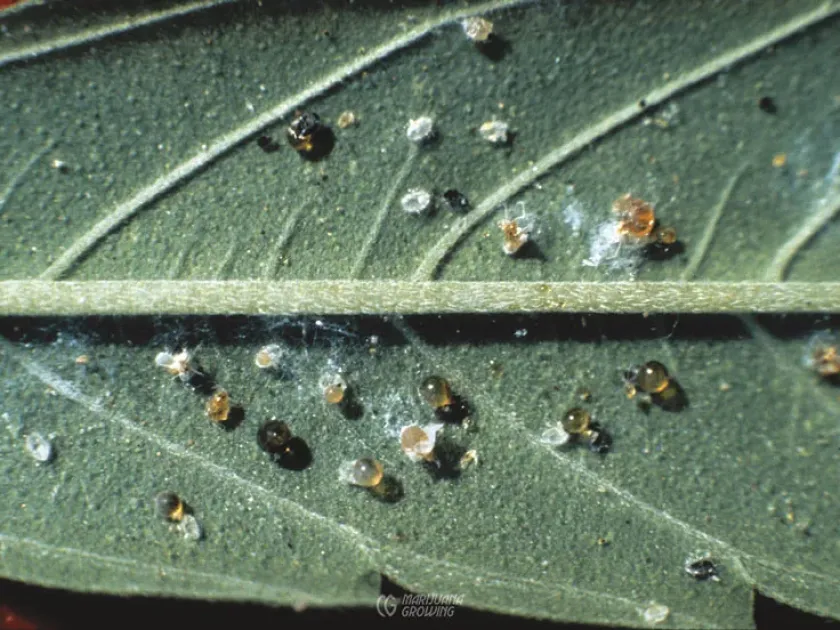
Description
Pathogen
Hirsutella thompsonii is an entomopathogenic fungus that serves as a highly effective biological control agent against various mite species, particularly spider mites and eriophyid mites.
Unlike phytopathogenic diseases, this fungus is beneficial to agriculture because it specifically targets agricultural pests without causing any harm to the host plants.
The biological action involves the attachment of spores to the mite's cuticle, followed by the penetration of the fungus into the body, eventually killing the host.
This fungus is widely studied as a key component of integrated pest management (IPM) programs, offering a sustainable alternative to harsh chemical acaricides.
It is particularly valued in organic farming and protected cropping systems for its ability to regulate pest populations naturally and safely.
Conditions for development
The success of Hirsutella thompsonii as a control agent is strictly dependent on environmental conditions, with high relative humidity being the most critical factor.
Optimal development of the fungal mycelium typically occurs at humidity levels above 80%, which facilitates the germination of conidia on the mite's body.
Temperature plays a vital role, with the most effective growth and infection rates observed within the range of 22 to 28 degrees Celsius.
Exposure to direct sunlight can be detrimental to the spores, so applications are generally recommended during early morning or late evening hours.
In field conditions, periods of natural rainfall or dew contribute significantly to the spread and efficacy of this fungus among pest colonies.
Why it matters
The fungus poses no threat to plant health; its positive impact lies in its role as a natural regulator that maintains a healthy balance in the ecosystem.
By infecting and eliminating mite populations, the fungus prevents the extensive damage caused by these pests, such as leaf chlorosis and stunted plant growth.
The target pests stop feeding shortly after infection, which provides an immediate reduction in the damage pressure on the treated vegetation.
Since it is a biological organism, it does not leave toxic residues on the crops, making it a safe choice for food safety and environmental protection.
The use of this fungus minimizes the risk of pesticide resistance, as it works through a natural infection process that is difficult for mites to develop immunity against.
Protection
To maximize the efficacy of Hirsutella thompsonii, growers should ensure that the product is applied in conditions that favor spore survival and germination.
The use of specialized adjuvants or wetting agents is highly encouraged to improve the adhesion of the fungal spores to the target mites and leaf surfaces.
Care must be taken to avoid the application of chemical fungicides simultaneously, as these can inhibit the activity of the beneficial fungus.
In controlled environments like greenhouses, maintaining appropriate humidity levels post-application can drastically improve the success rate of the biological treatment.
- Ensure high relative humidity during and after application.
- Avoid mixing with incompatible chemical fungicides.
- Apply during low light hours to protect spore viability.
- Monitor pest density to time the application correctly.
Discussion
No discussions yet — be the first.