
Western root rot
Heterobasidion occidentale
Description
Symptoms
Symptoms of Western root rot are often subtle in the early stages, as the damage occurs primarily below the soil surface. As the infection progresses, trees show reduced annual terminal growth and thinner, chlorotic needles.
Resinosis, characterized by excessive resin flow at the base of the stem, is a common defensive response in some conifer species. This symptom indicates that the tree is attempting to compartmentalize the fungal infection.
Internal examination of the roots or the stump reveals a distinct white-pocket rot. The decayed wood often appears brown and stringy, with white mycelial mats visible between the bark and wood or within the wood tissues.
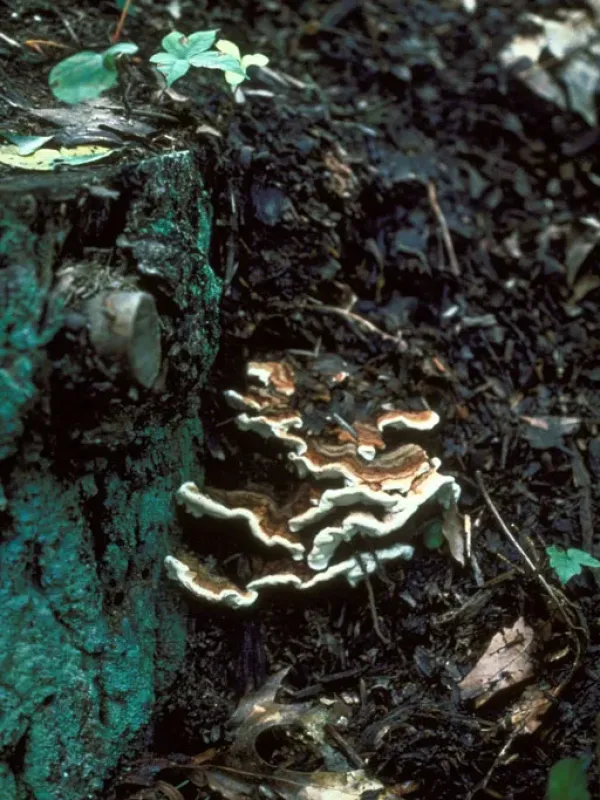
The fungus produces perennial, shelf-like fruiting bodies (conks) at the base of infected trees or on the underside of old stumps. These are typically tough, woody, and possess a reddish-brown upper surface with a creamy-white porous underside.
A definitive sign of an advanced infection is windthrow, where trees fall over due to the loss of root strength. Such trees often display broken, decayed roots, indicating that the fungus has hollowed out the structural root system.
Pathogen
The causal agent of this disease is the fungus Heterobasidion occidentale, a basidiomycete belonging to the family Bondarzewiaceae. This pathogen is specifically adapted to infect various conifer species, causing severe root and butt rot.
Previously associated with the broader Heterobasidion annosum species complex, genetic studies have confirmed H. occidentale as a distinct species with unique ecological and host-pathogen interactions. It is particularly prevalent in Western North American forest ecosystems.
The fungus acts as both a primary pathogen, attacking healthy hosts, and as a persistent saprotroph that survives in stumps and woody debris. This dual nature makes it an incredibly resilient inhabitant of forest soils.
Infection primarily occurs through the dispersal of basidiospores landing on fresh stumps or wounds. Once established, the mycelium spreads to adjacent trees through root-to-root contact, forming expanding disease centers known as infection gaps.
The pathogen utilizes specialized enzymes to break down lignin and cellulose within the host's root system and the lower bole. This degradation compromises the structural integrity of the tree, leading to decay and eventually death.
Conditions for development
The disease thrives in conditions where there is significant forest management activity, such as thinning or harvesting. Freshly cut stumps provide the most critical entry point for spores to colonize the substrate.
High soil moisture and moderate temperatures provide an ideal environment for the growth of the fungus. It remains active throughout the year in many climates, making continuous infection possible if susceptible hosts are present.
Soil type influences the rate of spread, as well-drained, porous soils can facilitate faster mycelial growth through root contacts. In dense stands, the close proximity of root systems allows for rapid transmission of the pathogen from tree to tree.
Mechanical damage caused by logging equipment to tree roots and stems creates entry wounds. These injuries bypass the natural defenses of the tree, allowing the fungus to penetrate deep into the woody tissues.
Once established in a stump, the fungus can persist for decades, serving as an active inoculum source. This long-term survival strategy ensures that new seedlings planted in the area are at high risk of immediate infection.
Why it matters
Western root rot is a major driver of mortality in coniferous forests, leading to significant economic losses for the timber industry. The degradation of the lower trunk makes the wood unsuitable for high-quality lumber production.
The disease disrupts forest structure by creating canopy gaps, which alter the local microclimate and biodiversity. These gaps can lead to the invasion of secondary pathogens and wood-boring insects, further stressing the remaining forest.
In terms of ecological impact, the loss of mature trees results in the depletion of carbon sequestration capacity and degradation of soil stabilization. This can affect the long-term hydrological health of forested watersheds.
The disease creates management challenges, as infected sites may require expensive sanitation treatments to limit spread. In sensitive areas, such as parks or recreation sites, the risk of falling trees poses a safety hazard to the public.
Over time, the cumulative impact of the disease can shift forest composition towards less susceptible species, permanently altering the original character of the woodland. This biological change can have cascading effects on local wildlife habitats.
Protection
The most effective control strategy is the application of biological agents, such as the fungus Phlebiopsis gigantea, to freshly cut stumps. This antagonist outcompetes H. occidentale and prevents spore colonization.
Silvicultural practices should prioritize minimizing root and bark damage during logging operations. Avoiding the creation of wounds is essential to preventing the introduction of the fungus into the stand.
Establishing mixed-species stands is a highly recommended long-term prevention strategy. Planting hardwoods or non-host species creates a biological barrier that interrupts the root-to-root transmission of the disease.
Regular phytopathological monitoring of forest stands is crucial for the early detection of infection pockets. Removing heavily infected trees and their stump systems can help contain the spread in localized areas.
Restoration of sites after a severe outbreak may require a waiting period before replanting, or the selection of tree species that are naturally resistant to this specific pathogen. Informed management remains the best defense against root rot.
Discussion
No discussions yet — be the first.