
Eyespot
Herpotrichia herpotrichoides
Description
Symptoms
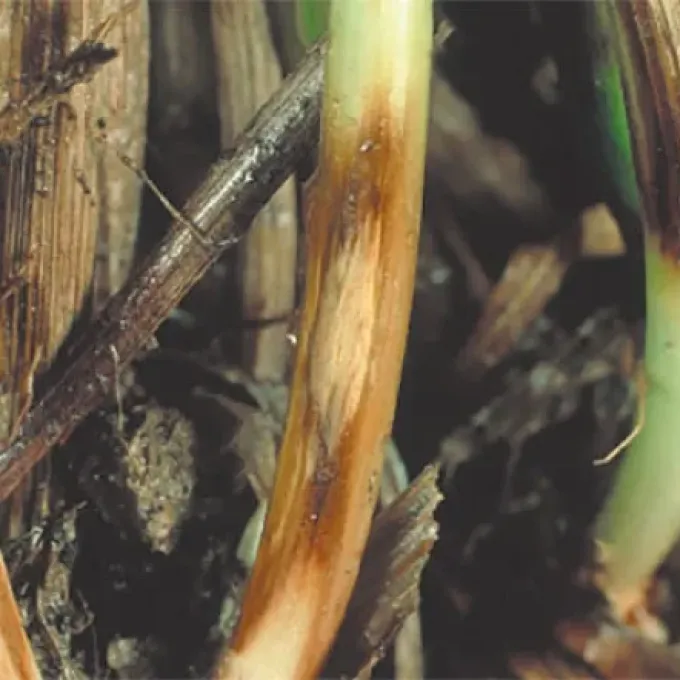
The main diagnostic feature is the appearance of characteristic oval-shaped spots, known as eyespot lesions, on the lower leaf sheaths and stems near the soil surface.
In the center of these lesions, a light or whitish fungal growth often forms, surrounded by a dark brown margin, which visually resembles an eye.
As the pathogen progresses, the stem tissues weaken and disintegrate, often leading to lodging, where stems collapse in various directions.
Infected plants frequently exhibit whiteheads, as the vascular system becomes compromised and nutrients can no longer reach the ear.
Upon examination of the internal stem tissues at the base, a greyish fungal mycelium can often be observed within the hollow space of the stem.
Pathogen
The causal agent of this disease is the fungus Pseudocercosporella herpotrichoides (formerly known as Cercosporella herpotrichoides), which belongs to the class of imperfect fungi.
The pathogen survives in the soil and on crop residues as mycelium, capable of withstanding cold temperatures and overwintering in field conditions.
The infection spreads through conidia, which are produced during wet weather and dispersed by rain splashes or wind onto neighboring plants.
The fungus specializes in attacking the base of cereal stems by penetrating tissues through the leaf sheaths that are in close contact with the moist soil surface.
There are two distinct pathotypes of the fungus, specialized for either wheat or rye, which is an important consideration when planning crop rotations.
Conditions for development
Eyespot disease develops most actively under conditions of cool and wet autumns, as well as prolonged and damp early spring seasons.
The optimal temperature range for infection is between 5 and 15 degrees Celsius, making the disease particularly hazardous for winter cereal crops.
High humidity of both the air and soil in the crown region facilitates the rapid germination of conidia and the penetration of mycelium into plant tissues.
Frequent rainfall during the tillering stage of cereals provides ideal conditions for the splash-dispersal of the fungus from the lower leaves to the stem base.
Excessive stand density and the presence of infected crop debris on the soil surface significantly increase the risk of an epidemic.
Why it matters
The primary economic impact results from yield loss due to premature lodging, which severely complicates the harvesting process and increases losses.
Damage to the vascular system of the stem leads to shriveled grain, which significantly reduces both the test weight and overall grain quality.
During severe epidemic years, crop losses can reach 30 to 50 percent of the potential harvest if no management practices are implemented.
Infected stems become more susceptible to secondary pathogens, further compromising the overall health and immunity of the crop.
Damage to the root system and stem base decreases the winter hardiness of autumn-sown cereals, leading to thin and uneven stands in the spring.
Protection
Effective management begins with strict crop rotation, specifically avoiding planting cereals in the same field more frequently than once every two to three years.
Deep burial of crop residues through tillage is an important cultural practice that limits the development and survival of the pathogen.
The use of resistant cereal cultivars is highly recommended, as it reduces the dependency on chemical fungicides for disease suppression.
Fungicide application during the active tillering stage is considered the most economically justified method for controlling eyespot in winter cereals.
Optimizing seeding rates and providing balanced fertilization help the crop develop stronger tissues, enabling better resistance against pathogen penetration.
Discussion
No discussions yet — be the first.